
inkl. MwSt., zzgl. Versand · netto 3.449,00 €
Technische Daten
12.192m x 2.438m x 2.591m
3,750 kg
26,730 kg
67.7 m³
Ausstattung
- ✓ Corten-Stahl-Konstruktion
- ✓ Wind- und wasserdicht
- ✓ ISO 668 konform
- ✓ Gabelstaplertaschen
- ✓ CSC-zertifiziert
- ✓ Abschließbare Frachttüren
Online bestellen
4.104,31 € inkl. MwSt. · Versand 892,50 € inkl. MwSt. (Sidelifter)
Zahlung per Überweisung (Bankverbindung sofort nach der Bestellung) oder per Karte / Wallet über Stripe. Bis zu 9 Einheiten sofort bestellbar, größere Mengen auf Anfrage.
Technische Daten im Detail
| Abmessungen | |
|---|---|
| Abmessungen (L x B x H) | 12.192m x 2.438m x 2.591m |
Ähnliche Container
Beliebte Umbauten
Warum sich ein 40 Fuß Standardcontainer rechnet
Ein 40 Fuß Standardcontainer wird vor allem aus einem Grund gekauft: Er liefert den günstigsten umschlossenen, abschließbaren und wettergeschützten Kubikmeter, den Sie auf einen Hof stellen können. Mit 67,7 m³ fasst er etwa das Doppelte einer Zwanzig-Fuß-Einheit, kostet in der Anschaffung aber nicht das Doppelte, in der Anlieferung nicht das Doppelte und in der Vorbereitung des Untergrunds ebenfalls nicht das Doppelte. Das ist das kaufmännische Argument, und es trägt, sofern das Grundstück zwölf Meter Stahl auch aufnehmen kann.
Genau um diese Einschränkung geht es hier. Das Volumen je Euro ist schnell gerechnet. Ob eine 12,192 m lange Box durch die Toreinfahrt, um die Kurve und auf waagerechte Auflager kommt, entscheidet dagegen darüber, ob die Rechnung aufgeht. Es folgen die geprüften Daten, ein ehrlicher Blick auf den Gewichtsvergleich mit kleineren Einheiten, eine Erklärung der angegebenen Ausstattungsmerkmale und eine realistische Darstellung der Anforderungen an Transport und Zufahrt.
Geprüfte Außenmaße und Gewichte
| Angabe | Wert |
|---|---|
| Außenlänge | 12,192 m |
| Außenbreite | 2,438 m |
| Außenhöhe | 2,591 m |
| Leergewicht (Tara) | 3.750 kg |
| Nutzlast | 26.730 kg |
| Volumen | 67,7 m³ |
Innenmaße sind für diese Einheit nicht hinterlegt. Wenn Ihr Vorhaben von der lichten Innenlänge, Innenbreite oder Innenhöhe abhängt, etwa bei einer Regalanlage, bei einem eingelagerten Fahrzeug oder bei einem Ausbau, lassen Sie diese Maße am konkret angebotenen Container aufnehmen.
Volumen je Euro und woher der Vorteil kommt
Zwei Zwanzig-Fuß-Einheiten bedeuten zwei Türseiten, zwei Verschlusssysteme, zwei Absetzvorgänge und zwei Untergrundvorbereitungen. Eine Vierzig-Fuß-Einheit bietet einen durchgehenden Raum von 67,7 m³, eine Anlieferung, vier zu nivellierende Ecken und eine Türseite, die gesichert werden muss. Für alles, was von einer ununterbrochenen Länge profitiert, also Langholz, Rohre, Lüftungskanäle, Profile, Gerüstmaterial oder Regale an beiden Wänden mit freiem Gang dazwischen, ist die lange Box nicht nur je Kubikmeter günstiger, sondern je Kubikmeter besser nutzbar.
Der Vorteil ist real, aber an drei Bedingungen geknüpft: Die Fläche muss vorhanden sein, die Anlieferung muss machbar sein, und Sie müssen das Volumen tatsächlich brauchen. Eine halb leere lange Box ist ein schlechteres Geschäft als eine gut gefüllte kurze.
Der Gewichtsvergleich, über den selten gesprochen wird
Ein Detail überrascht viele Käufer. Das Leergewicht beträgt 3.750 kg, die Nutzlast 26.730 kg. Verglichen mit dem, was zwei kürzere Einheiten zusammen aufnehmen dürfen, liegt die lange Box darunter. Der Grund ist konstruktiv: Ein längerer Boden spannt weiter zwischen den Auflagern, und der zertifizierte Wert berücksichtigt diese Spannweite, statt sich einfach zu verdoppeln.
In der Lagerpraxis begrenzt das selten, weil auf den meisten Höfen eher das Volumen als die zulässige Masse ausgeht. Relevant wird es bei wirklich dichter Ware über die gesamte Fläche, etwa Sackware, Befestigungsmaterial, Werkzeug, Fliesen oder Metallhalbzeug. Planen Sie dann nach Gewicht, verteilen Sie die Last über die Länge statt sie in der Mitte zu konzentrieren, und rechnen Sie nicht damit, dass die doppelte Länge die doppelte Masse trägt.
Was die angegebenen Ausstattungsmerkmale bedeuten
Für diese Einheit sind angegeben: Konstruktion aus Corten-Stahl, wind- und wasserdicht, konform zu ISO 668, abschließbare Cargotüren, verstärkte Eckbeschläge, strapazierfähiger Boden und mehrpunktige Türverriegelung. Diese Begriffe lohnen eine Erklärung, denn jeder davon ist im Betrieb spürbar.
- Corten-Stahl: Wetterfester Stahl bildet an offenen Stellen eine festhaftende Oxidschicht, die den weiteren Abtrag verlangsamt, statt wie bei unlegiertem Stahl schichtweise abzuplatzen. Das erklärt, warum Containerwände Jahrzehnte Salzluft überstehen.
- Wind- und wasserdicht: Die Box hält Wetter an Dach, Nähten und Türdichtungen draußen. Das ist eine Aussage zum Wetterschutz, nicht zum Feuchteschutz im Inneren. Kondensat in einer ungedämmten Stahlbox ist ein eigenes Thema und wird über Belüftung und Lagerpraxis beherrscht.
- ISO 668: Die Norm regelt Außenmaße, Lage der Eckbeschläge und Klassifizierung von Frachtcontainern. Sie sorgt für weltweite Austauschbarkeit, sodass jedes normgerechte Chassis, jeder Spreader und jedes Zurr- und Stapelsystem passt.
- Verstärkte Eckbeschläge: Die acht Beschläge nehmen jeden Hub und jede Stapellast auf. Sie sind die Schnittstelle zu Kran, Spreader und Twistlocks, und ihr Zustand entscheidet über die sichere Handhabung.
- Strapazierfähiger Boden auf stählernen Querträgern, damit Hubwagen oder Kleinstapler im Inneren arbeiten können statt alles von Hand bewegen zu müssen.
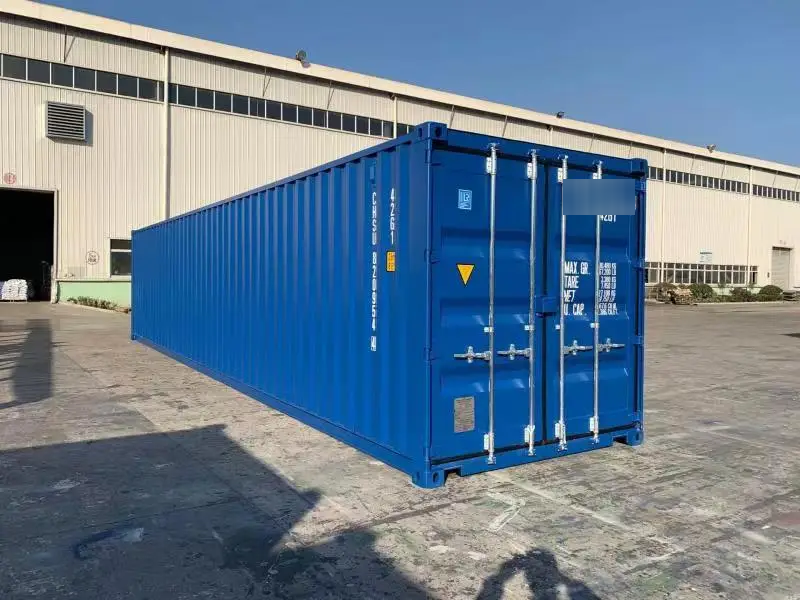
- Mehrpunktverriegelung: Die senkrechten Verschlussstangen greifen oben und unten in Nocken, jeder Türflügel wird also an mehreren Punkten gehalten. Das verbessert die Dichtwirkung und die Sicherung, weil es keinen einzelnen Angriffspunkt gibt.
Zwölf Meter auf das Grundstück bringen
Diese Frage gehört an den Anfang. Eine 12,192 m lange Box kommt auf einem Fahrzeug, das länger ist als sie selbst, und dieses Fahrzeug muss ankommen, sich stellen, absetzen und wieder abfahren. Arbeiten Sie die Strecke in dieser Reihenfolge durch.
Zuerst Zufahrtsstraße und Einfahrt. Ein langer Solo-Lkw oder ein Sattelzug braucht eine breite Schleppkurve, die deutlich breiter ausfällt als das Fahrzeug selbst. Torpfosten, Bordsteine, Poller, parkende Fahrzeuge und Stadtmobiliar verengen sie. Zweitens die lichte Höhe auf der gesamten Strecke, nicht nur am Tor. Die Box misst 2,591 m, beim Kranhub hängt die Last jedoch weit höher, sodass Freileitungen, Äste, Vordächer und Höhenbegrenzungen zählen. Drittens die Aufstellposition: Ein Ladekran muss seine Stützen auf tragfähigem Boden ausfahren und bis zum Zielpunkt reichen. Viertens die Ausfahrt. Ein Fahrzeug, das nicht wenden kann, muss die gesamte Strecke zurücksetzen, und das ist auf engen Grundstücken manchmal ausgeschlossen.
Wenn hier etwas unklar ist, beschreiben Sie die Situation schon bei der Anfrage offen. Belag, Gefälle, Torbreiten und Hindernisse über Kopf ändern Verfahren und Preis. Ein Absetzkipper braucht etwa eine gerade, ausreichend lange Strecke nach hinten und einigermaßen ebenen Boden und ersetzt keinen Kranhub über eine Mauer.
Eine lange Box waagerecht aufstellen
Jeder Container wird an den Eckbeschlägen abgestützt, und bei der langen Einheit macht die Spannweite dazwischen das Nivellieren kritisch. Liegt eine Ecke tiefer, verwindet sich der Rahmen über die Länge. Das erste Symptom sind Türen, die angehoben oder gedrückt werden müssen. Bleibt es unkorrigiert, belastet der Verzug die Dichtungen und die Box zieht Wasser.
Setzen Sie mindestens vier feste Auflagepunkte, wirklich waagerecht zueinander und nicht ungefähr. Bei weichem oder aufgefülltem Boden helfen zusätzliche Auflager entlang der Länge, die Last zu verteilen und die Durchbiegung der unteren Längsträger zu begrenzen, besonders bei schwerer, gleichmäßig verteilter Ladung. Halten Sie die Unterseite frei von stehendem Wasser und Bewuchs, damit Luft zirkuliert und die Querträger trocken bleiben.
Stapeln und Umsetzen
Genormte Eckbeschläge erlauben das Stapeln über Twistlocks, die formschlüssig in die Langlöcher greifen und die Einheiten miteinander verbinden. Ob und wie hoch gestapelt werden darf, hängt von der Zulassung der konkreten Einheit, vom Untergrund und von der Windlast am Standort ab. Klären Sie das im Einzelfall, statt von einem allgemeinen Erfahrungswert auszugehen, und lassen Sie das Stapeln von Fachleuten ausführen.
Nur eine Türseite verändert die Planung
Die Standard-Trockenbox hat Cargotüren nur an einer Stirnseite. Auf zwölf Metern hat das Folgen. Ware am hinteren Ende liegt zwölf Meter von der Öffnung entfernt. Ordnen Sie den Grundriss deshalb nach Zugriffshäufigkeit: schnelldrehende Güter nahe der Tür, Langsamdreher hinten. Regale an beiden Längsseiten mit Mittelgang halten alles erreichbar. Beleuchtung ist wichtiger als bei einer kurzen Box, weil das Tageslicht der Türseite die Rückwand nicht erreicht.
Typische Einsätze der langen Box
In der Praxis landet die Vierzig-Fuß-Einheit dort, wo Fläche vorhanden und Volumen knapp ist. Auf Bauhöfen und Baustellen dient sie als Material- und Werkzeuglager, im Garten- und Landschaftsbau als Winterquartier für Geräte, im Handel als Saisonlager, in Handwerksbetrieben als ausgelagerte Werkstattfläche und bei Vereinen und Kommunen als Depot für Veranstaltungstechnik. Für Langgut wie Rohre, Profile, Lüftungskanäle und Gerüstmaterial gibt es kaum eine günstigere geschlossene Alternative.
Auch als Hülle für einen Ausbau ist die Länge attraktiv, weil sich Nutzungen hintereinander anordnen lassen, etwa Lagerbereich und Arbeitsplatz in einer Einheit. Sobald Fenster, Türen oder Trennwände geplant werden, sollten Sie die Innenmaße am konkreten Container aufnehmen lassen, denn hinterlegt sind sie für diese Einheit nicht.
Wann die lange Box die falsche Wahl ist
Drei Fälle sollten Sie ehrlich prüfen. Ist die Zufahrt wirklich eng, kosten zwei kürzere Einheiten oft weniger als eine lange plus die nötigen Sondermaßnahmen. Soll die Einheit auf dem Gelände wandern, ist eine zwölf Meter lange Box deutlich unbeweglicher. Und wenn der Platzbedarf schrittweise wächst, verteilt der Kauf kleinerer Einheiten die Ausgabe und lässt mehr Freiheit bei der Anordnung.
Trifft nichts davon zu und ist Platz zum Aufstellen und Beladen vorhanden, bleibt der 40 Fuß Standardcontainer die wirtschaftlichste große Lagereinheit und eignet sich ebenso als Hülle für Werkstatt, Lager oder größeren Ausbau. Vergleichen Sie ihn mit einer High-Cube-Ausführung, wenn die Innenhöhe zählt, und mit einer gebrauchten langen Box, wenn das Budget führt, jeweils über die Kosten frei Standort und über das realistisch nutzbare Volumen.
Häufig gestellte Fragen
Ist ein 40 Fuß Standardcontainer günstiger als zwei 20-Fuß-Einheiten?
Je Kubikmeter meist ja, denn Sie zahlen eine Anlieferung, eine Türseite und einen Satz Auflagepunkte statt zweimal. Für Langgut ist die durchgehende Länge zusätzlich besser nutzbar. Ausnahmen sind enge Zufahrten, bei denen Sondermaßnahmen den Vorteil aufzehren, und Fälle, in denen der Platzbedarf schrittweise wächst.
Warum ist die Nutzlast nicht doppelt so hoch wie bei 20 Fuß?
Das Leergewicht beträgt 3.750 kg, die Nutzlast 26.730 kg, also weniger als zwei kürzere Einheiten zusammen aufnehmen dürfen. Der Grund ist konstruktiv: Der längere Boden spannt weiter zwischen den Eckauflagern, und die zertifizierten Werte berücksichtigen diese Spannweite. Bei dichter Ware nach Gewicht planen und die Last über die Länge verteilen.
Welche Zufahrt brauche ich für die Anlieferung?
Das Fahrzeug ist länger als die 12,192 m lange Box und benötigt eine breite Schleppkurve, freie lichte Höhe auf der gesamten Strecke, tragfähigen Boden für die Kranstützen und eine Möglichkeit zur Ausfahrt. Beschreiben Sie bei der Anfrage Belag, Gefälle, Torbreiten und Hindernisse über Kopf, denn beides beeinflusst Verfahren und Preis.
Was bedeutet konform zu ISO 668?
ISO 668 regelt Außenmaße, Lage der Eckbeschläge und Klassifizierung von Frachtcontainern. Die Konformität sorgt für weltweite Austauschbarkeit, sodass normgerechte Chassis, Spreader, Stapelrahmen und Twistlocks passen. Die Norm beschreibt den Container selbst, nicht den Anbieter, und sie ist eine Maß- und Klassifizierungsnorm und kein Gütesiegel.
Wie sollte die Einheit aufgestellt werden?
Auf vier festen Auflagepunkten unter den Eckbeschlägen, wirklich waagerecht zueinander. Über zwölf Meter Spannweite verwindet eine tiefer liegende Ecke den Rahmen. Das zeigt sich zuerst an schwergängigen Türen und belastet auf Dauer die Dichtungen. Auf weichem oder aufgefülltem Boden helfen zusätzliche Auflager entlang der Länge. Unterseite frei von Wasser und Bewuchs halten.
Passende Container & Ausstattungsoptionen
Ähnliche Produkte