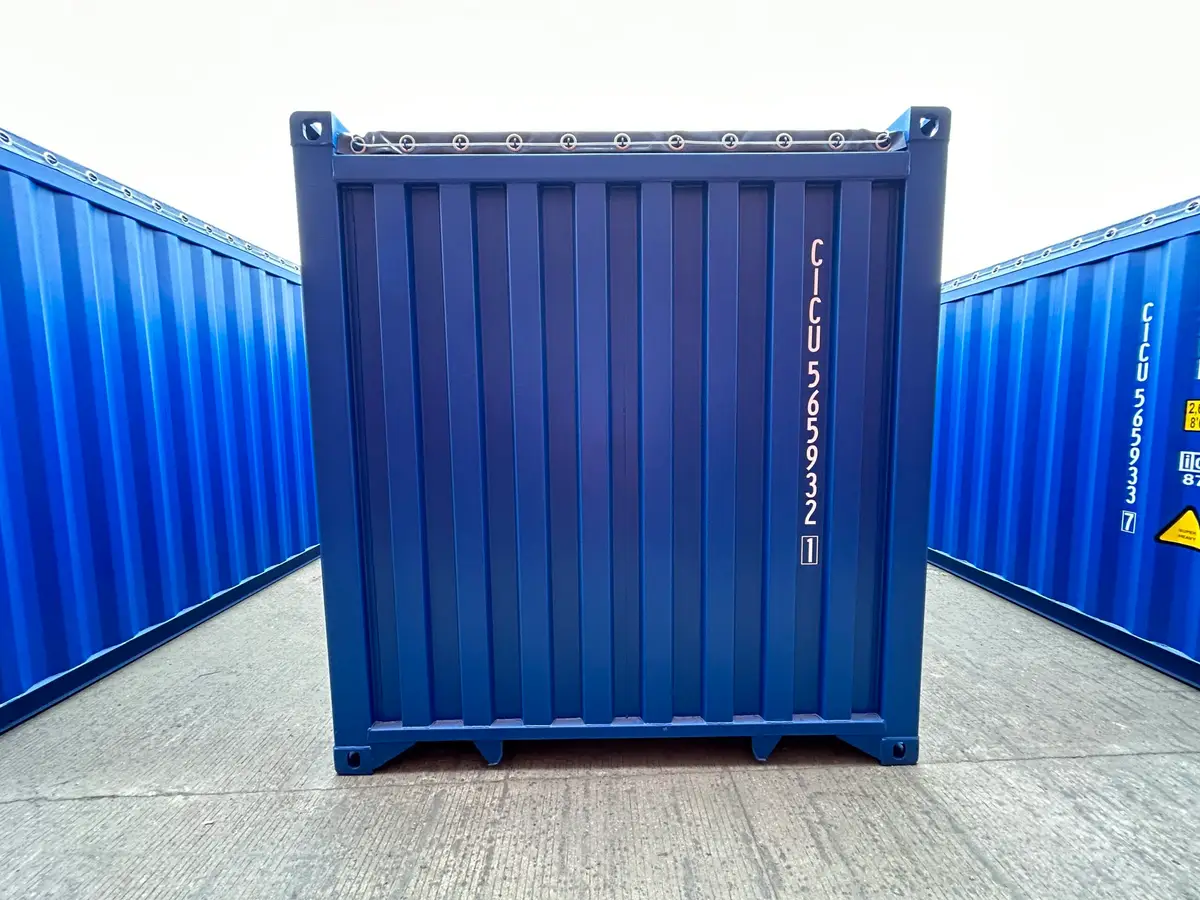
inkl. MwSt., zzgl. Versand · netto 5.899,00 €
Technische Daten
1219.2 x 243.79 x 259.11 cm
4,000 kg
66.8 m³
Online bestellen
7.019,81 € inkl. MwSt. · Versand 892,50 € inkl. MwSt. (Sidelifter)
Zahlung per Überweisung (Bankverbindung sofort nach der Bestellung) oder per Karte / Wallet über Stripe. Bis zu 4 Einheiten sofort bestellbar, größere Mengen auf Anfrage.
Technische Daten im Detail
| Abmessungen | |
|---|---|
| Außenlänge | 1219.2 cm |
| Außenbreite | 243.79 cm |
| Außenhöhe | 259.11 cm |
| Innenlänge | 1203.20 cm |
| Innenbreite | 235.20 cm |
| Innenhöhe | 239.50 cm |
| Breite | 234.01 cm |
| Höhe | 227.99 cm |
| Gewichte und Kapazität | |
| Bodenfläche innen | 28.37 m² |
| Volumen | 66.80 m³ |
| Nettogewicht | 4000 kg |
| Max. Bruttogewicht | 30480 kg |
| Weitere Angaben | |
| Innenbodenfläche | 28.37 m² |
Ähnliche Container
Beliebte Umbauten
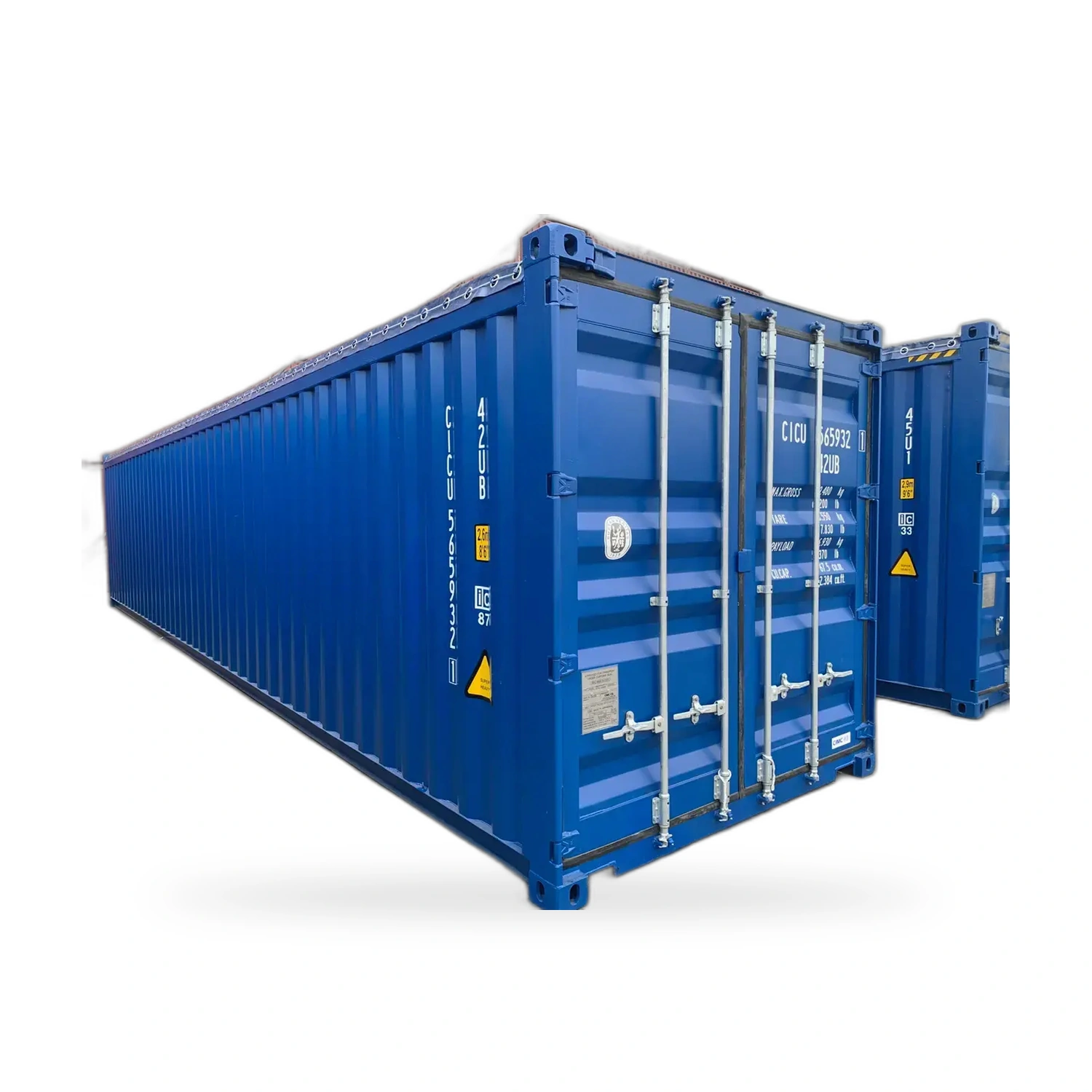
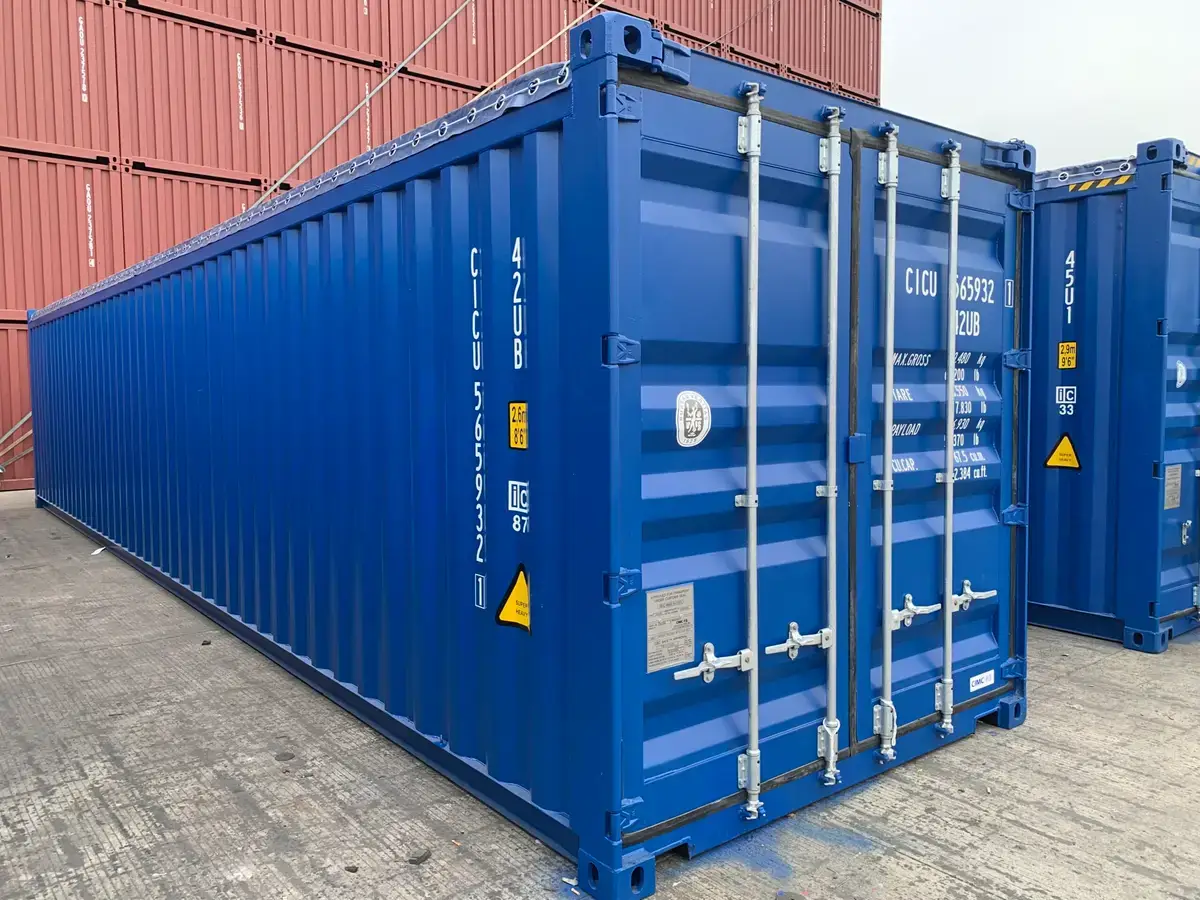
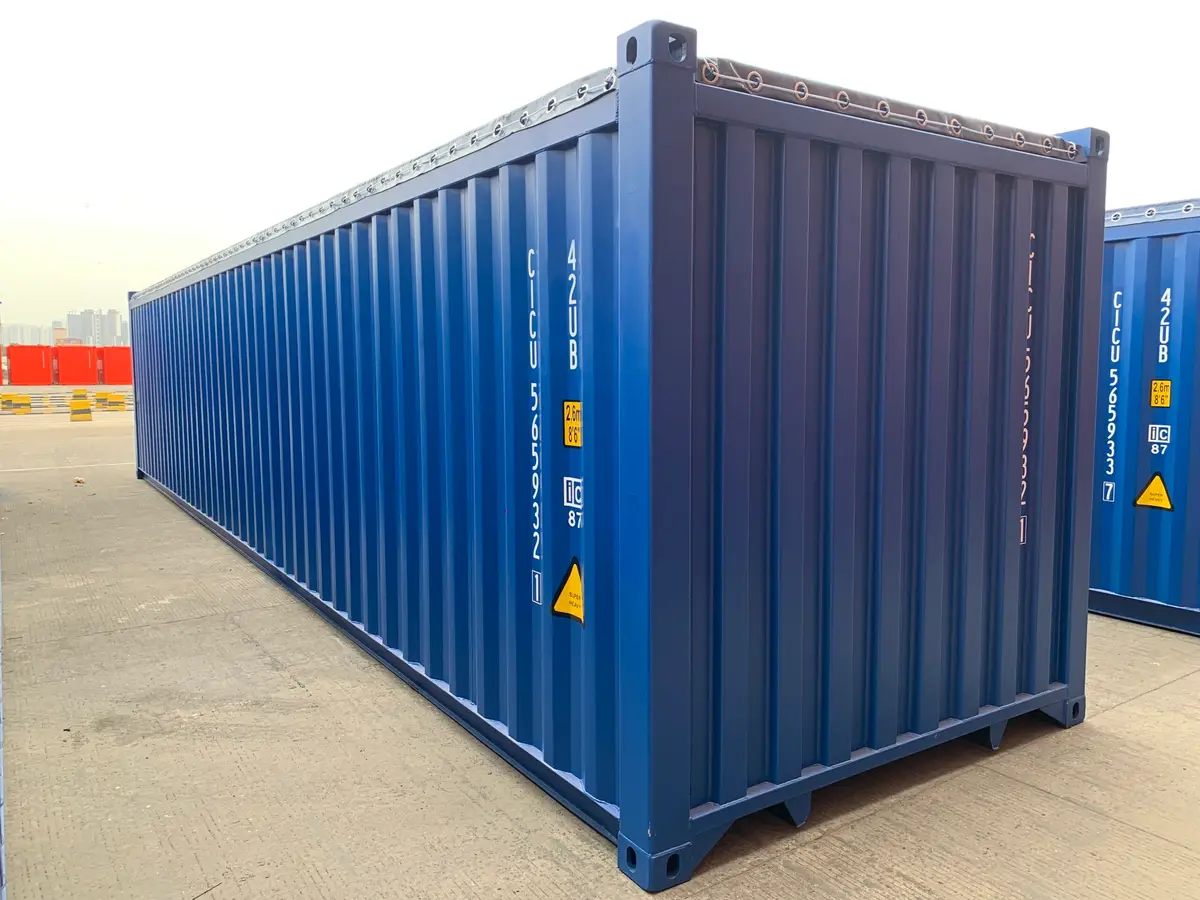
Einen 40ft Open Top Container neu richtig spezifizieren
Ein Neukauf verschiebt die Fragestellung. Beim Gebrauchtgerät bewerten Sie, was andere damit gemacht haben. Wer einen 40ft Open Top Container neu beschafft, entscheidet dagegen vorab, wie die Einheit aussehen soll: Planenmaterial und Befestigung, Anzahl der Dachspriegel, Ausführung des Türquerträgers, Anzahl und Lage der Zurrösen, Beschichtungssystem sowie Kennzeichnung und Dokumente. Diese Festlegungen bestimmen das Verhalten des Containers über viele Jahre, und sie kosten jetzt einen Bruchteil dessen, was eine spätere Nachrüstung verlangt.
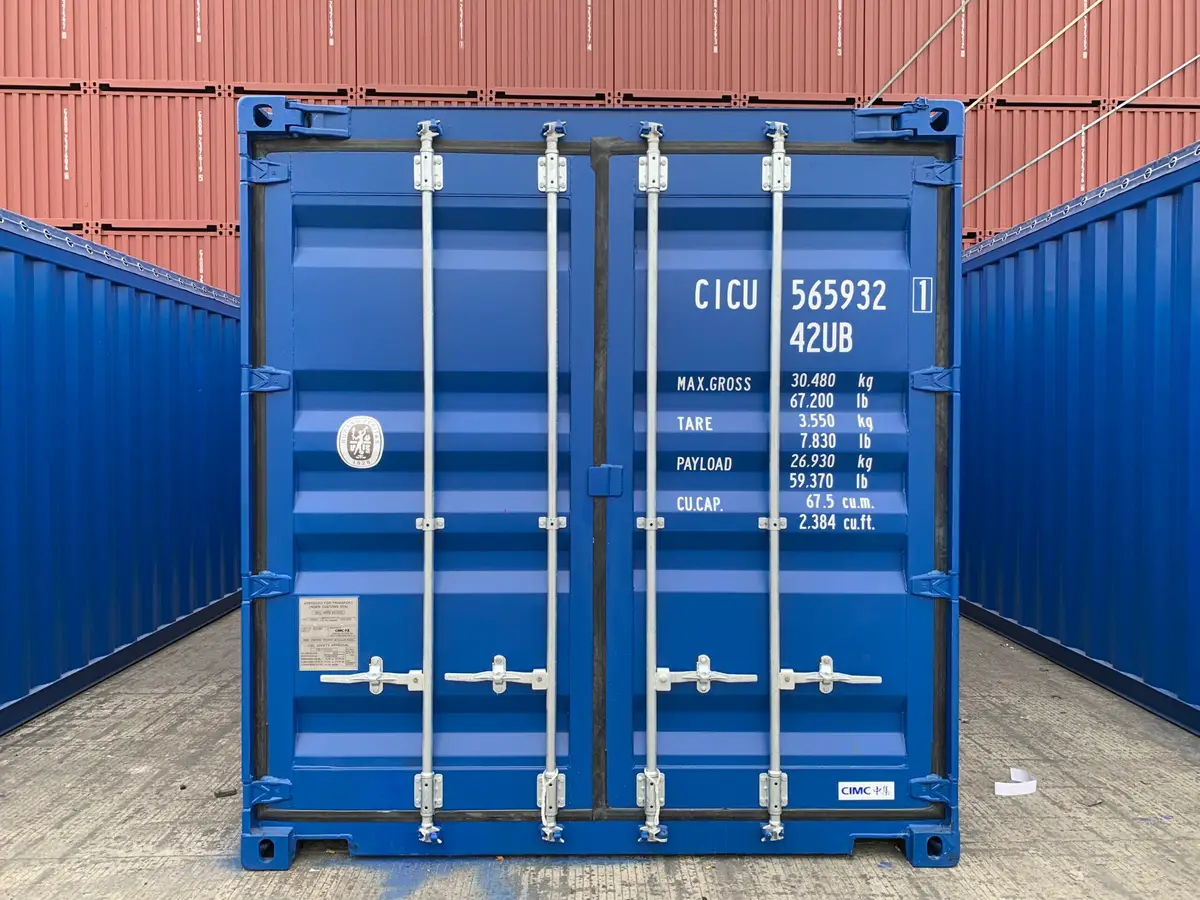
Die Maße gibt der Normfußabdruck vor. Innenlänge 1203,20 cm, Innenbreite 235,20 cm, Innenhöhe 239,50 cm, daraus 28,37 m² Bodenfläche und 66,80 m³ Volumen. Die Außenmaße betragen 1219,20 cm mal 243,79 cm mal 259,11 cm, die Türöffnung 234,01 cm in der Breite und 227,99 cm in der Höhe. Zulässiges Gesamtgewicht 30.480 kg, Leergewicht 4.000 kg. Kaufentscheidend ist die Differenz zwischen 239,50 cm Innenhöhe und 227,99 cm Türhöhe: Dieser Höhenbereich ist ausschließlich von oben erreichbar, und genau dafür gibt es die Bauform.
Ein Wort zur Bezeichnung. Als neu oder als Einwegcontainer gelten Einheiten, die ab Werk in der Regel eine einzige beladene Fahrt in die Verkaufsregion hinter sich haben, weil ein Leertransport um die halbe Welt kaum günstiger wäre als ein beladener. Stahl, Boden, Beschichtung und Plane sind praktisch unbenutzt, und die Einheit kommt ohne Beulen, Flicken und zusammengewürfelte Ersatzteile an. Lassen Sie sich dennoch bestätigen, welche der beiden Bezeichnungen für das angebotene Gerät gilt und ob Plane und Spriegelsatz ab Werk zur Einheit gehören.
Typische Einsatzfälle für eine neue Einheit
Der Neukauf lohnt vor allem dort, wo die Einheit über Jahre im eigenen Umlauf bleibt und der Anfangszustand den Aufwand am Ende bestimmt. Klassische Fälle sind der werkseigene Maschinenversand, bei dem jede Sendung gleich aussehen soll und der Container ein sauberes Erscheinungsbild abgibt, der Anlagenbau mit wiederkehrenden Modulen gleicher Höhe sowie Betreiber, die den Container als dauerhaftes Betriebsmittel auf dem Werksgelände einsetzen und täglich von oben beladen. Auch für Ladung, die empfindlich auf Feuchtigkeit oder auf Rückstände früherer Ladungen reagiert, ist ein unbenutzter Boden ein echtes Argument.
Steht dagegen nur ein einzelner Transport an und danach kein weiterer Bedarf, ist eine gebrauchte Einheit meist die wirtschaftlichere Wahl, sofern Plane, Spriegel und Türquerträger geprüft wurden. Wer jedoch Verfügbarkeit zu festen Terminen, eine definierte Ausstattung und einen kalkulierbaren Zustand braucht, fährt mit einem 40ft Open Top Container neu besser als mit jeder Gebrauchtlösung und behält zusätzlich die Freiheit, Zurrösen und Beschichtung auf den eigenen Anwendungsfall abzustimmen.
Ein Vergleich lohnt außerdem mit dem Hardtop. Dessen abnehmbares Stahldach bietet vollen Wetterschutz und mehr Sicherheit gegen unbefugten Zugriff, verlangt zum Öffnen aber ein Hebezeug und bringt zusätzliches Eigengewicht mit. Das Planendach ist schneller geöffnet und im Handling leichter, bleibt dafür ein Verschleißteil. Für häufige Kranbeladung und wechselnde Ladungshöhen spricht die Plane, für lange Standzeiten im Freien und empfindliche Güter das feste Dach.
Beladung von oben und Kranplanung
Die Beladung von oben wirkt einfach und birgt trotzdem die meisten Risiken. Plane ab, Spriegel heraus, Ladung durch die vom oberen Längsträger begrenzte Öffnung absenken. Über den reibungslosen Ablauf entscheiden dann vor allem folgende Punkte.
- Anschlaggeometrie: Die Gehänge laufen über der Ladung zusammen, ihre wirksame Breite an der Dachlinie ist daher größer als das Ladegut selbst. Rechnen Sie das vorher aus und setzen Sie eine Traverse ein, wenn die Gurte sonst an den Längsträgern anliegen würden.
- Hakenhöhe: Der Kranhaken muss über die Außenhöhe von 259,11 cm hinaus die gesamte Anschlaghöhe über dem Ladegut freigeben.
- Absetzplan: Absetzpunkt vorher festlegen, markieren und Unterleghölzer zuerst auslegen. Schweres Nachschieben auf einem neuen Boden beschädigt genau diesen Boden.
- Freimaß: Das Teil in eine Fläche von 1203,20 cm mal 235,20 cm einplanen, mit echtem Spiel für Hände, Verpackung und Zurrmittel.
- Massenverteilung: Last über die Länge verteilen und die 30.480 kg zulässiges Gesamtgewicht einschließlich Verpackung und Sicherungsmitteln einhalten.
Bei ausgeschwenktem Türquerträger ist zusätzlich die Beladung durch die Tür möglich, was an kranfreien Tagen den Ausschlag geben kann. Der Stapler setzt die Ladung dann direkt ab, statt sie von oben einzufädeln.
Überhohe Ladung und die korrekte Anmeldung
Ragt das Ladegut über die Containerwände hinaus, liegt Übermaß in der Höhe vor, und das ist ebenso eine Frage der Anmeldung wie der Physik. Reedereien, Terminals und Frachtführer benötigen die tatsächlichen Maße der fertigen Ladeeinheit, gemessen vom Boden bis zum höchsten Punkt. Diese Zahl bestimmt die Stauung an Bord, die Durchfahrtshöhen unter Brücken und Portalen sowie die Frage nach Genehmigung oder Begleitung auf der Straße. Messen Sie das Teil so, wie es tatsächlich reist, inklusive Wiege, Verpackung und gegebenenfalls Abdeckung, und geben Sie allen Beteiligten denselben Wert. Zu niedrig geschätzte Höhen führen zu Umschlägen auf Ihre Kosten.
Steht die Ladung über die Wände hinaus, lässt sich die Plane meist nicht mehr eben darüber ziehen. Entscheiden Sie deshalb früh, ob unter der Plane, unter einer eigens über die Ladung gespannten Abdeckung oder ohne Plane mit separat eingehüllter Ladung transportiert wird. Diese Wahl verändert den Wetterschutz und mitunter die zollrechtliche Behandlung und gehört daher in die Planung, nicht auf die Laderampe.
Ladungssicherung unter dem Planendach
Zurrösen sind das Bauteil, das im Neukauf regelmäßig zu knapp bestellt und danach jahrelang vermisst wird. Legen Sie Anzahl und Position vorab fest, denn nachträglich eingeschweißte Punkte zerstören genau das Beschichtungssystem, für das Sie bezahlt haben. Danach kommt es auf die Anwendung an.
- An Zurrösen und Rahmen sichern, steile Niederzurrung mit flacher Direktzurrung kombinieren.
- Antirutschmatten unterlegen, damit Reibung einen Teil der Sicherungsarbeit übernimmt, gerade auf einem neuen, glatten Boden.
- Mit Kanthölzern ausklotzen, statt die Ladung direkt gegen beschichtete Seitenwände zu stellen.
- Scharfe Kanten abpolstern, denn eine Plane findet jede scharfe Ecke innerhalb einer Reise.
- Vorspannung nach den ersten Fahrbewegungen kontrollieren, sofern Zugang besteht, da sich Ladung und Verpackung setzen.
Die Plane wird so aufgezogen, dass sie quer eine Wölbung bildet und Wasser nach außen abführt. Jeder Spriegel wird eingesetzt, das Zurrseil läuft gleichmäßig gespannt durch jede Öse, und nichts bleibt so lose, dass es flattert. Flattern verschleißt eine neue Plane schneller als Sonneneinstrahlung, und eine durchhängende Plane sammelt Wasser, das im Winter erhebliches Gewicht bedeutet. Wo eine zollsicher verschließbare Abdeckung verlangt wird, gehören der ununterbrochene Seilverlauf und korrekt sitzende Spriegel zur Voraussetzung.
Werterhalt im laufenden Betrieb
Eine neue Einheit verdient Pflege, und diese ist wenig spektakulär. Lagern Sie die Plane trocken, gefaltet statt zerknüllt und frei von Sand, denn Schleifstaub zwischen den Falten lässt das Material reißen. Halten Sie den Spriegelsatz vollständig bei der Einheit und kennzeichnen Sie ihn, wenn Sie mehrere Container betreiben. Bessern Sie Lackschäden zügig aus, besonders tiefe Kratzer an den oberen Längsträgern und rund um den Türquerträger, wo beim Beladen Kontakt entsteht. Eine intakte Beschichtung ist der wichtigste Schutz eines neuen Containers. Türbeschläge und Bolzen des Querträgers regelmäßig fetten, damit sie nie den festgerosteten Zustand erreichen, an dem gebrauchte Einheiten scheitern.
Bei der Übernahme lohnt trotz Neuzustand ein kurzer Rundgang. Prüfen Sie, ob der Spriegelsatz vollständig ist und jeder Spriegel sauber in seiner Auflagetasche sitzt, ob die Plane faltenfrei und ohne Transportschäden anliegt, ob sich der Türquerträger leichtgängig lösen und wieder verriegeln lässt und ob die Türen ohne Nachdrücken schließen. Kontrollieren Sie außerdem den Boden auf Transportspuren sowie Anzahl und Lage der Zurrösen gemäß Bestellung. Abweichungen sind bei der Übernahme in Minuten geklärt und später nur noch mit Aufwand.
Auch die Aufstellung zählt. Setzen Sie den Container waagerecht auf Blöcke unter den vier Eckbeschlägen, damit der Rahmen nicht verwindet, halten Sie den Unterbau frei von Staunässe und Bewuchs, und lassen Sie ringsum genug Platz zum vollständigen Öffnen der Türen und für den Prüfrundgang. Ein verwundener Stand ist der häufigste Grund dafür, dass Türen an einem intakten Container nicht mehr sauber schließen. Fragen Sie nach den mitgelieferten Unterlagen einschließlich des CSC-Schilds, das die Zulassung für den internationalen Verkehr und die Prüftermine dokumentiert, und heben Sie diese auf, denn ein späterer Käufer wird genau danach fragen.
Was ein Angebot enthalten sollte
- Planenspezifikation, Befestigungsart und Verfügbarkeit einer Ersatzplane.
- Anzahl der Dachspriegel und Bestätigung eines vollständigen, zueinander passenden Satzes.
- Ausführung des Türquerträgers, schwenkbar oder abnehmbar.
- Anzahl und Position der Zurrösen im Innenraum.
- Beschichtungssystem, Kennzeichnung sowie mitgelieferte Schilder und Dokumente.
- Anlieferung mit Zufahrt, Stellfläche und Absetzverfahren am Zielort.
Häufig gestellte Fragen
Was sollte man festlegen, wenn ein 40ft Open Top Container neu bestellt wird?
Planenmaterial und Befestigung, Anzahl und Passung der Dachspriegel, Ausführung des Türquerträgers, Anzahl und Position der Zurrösen, Beschichtungssystem sowie mitgelieferte Unterlagen. Vor der Auslieferung sind das günstige Entscheidungen, danach teure. Nachträglich eingeschweißte Zurrpunkte beschädigen genau die Beschichtung, für die soeben bezahlt wurde.
Welche Innenmaße hat die Einheit?
Innenlänge 1203,20 cm, Innenbreite 235,20 cm, Innenhöhe 239,50 cm, daraus ergeben sich 28,37 m2 Bodenfläche und 66,80 m3 Volumen. Die Türöffnung misst 234,01 cm in der Breite und 227,99 cm in der Höhe. Die Außenmaße betragen 1219,20 cm mal 243,79 cm mal 259,11 cm, das zulässige Gesamtgewicht 30.480 kg bei 4.000 kg Leergewicht.
Wie plane ich die Kranbeladung von oben?
Ermitteln Sie die wirksame Breite der Anschlagmittel an der Dachlinie, denn die Gurte laufen über der Ladung zusammen und können am oberen Längsträger anliegen. Eine Traverse löst das. Prüfen Sie die Hakenhöhe über der Außenhöhe von 259,11 cm zuzüglich Anschlaghöhe, markieren Sie den Absetzpunkt, legen Sie Unterleghölzer vorher aus und planen Sie echtes Seitenspiel.
Was gilt bei überhoher Ladung?
Dann liegt Übermaß in der Höhe vor. Anzumelden ist das tatsächliche Maß vom Boden bis zum höchsten Punkt, inklusive Wiege und Verpackung. Dieser Wert bestimmt Stauung an Bord, Durchfahrtshöhen und die Routenplanung auf der Straße. Zusätzlich ist zu entscheiden, ob unter der Plane, unter einer über die Ladung gespannten Abdeckung oder ohne Plane mit separat eingehüllter Ladung transportiert wird.
Wie bleibt die Plane lange brauchbar?
Alle Spriegel einsetzen, damit die Plane eine Wölbung bildet und seitlich entwässert, das Zurrseil gleichmäßig spannen, damit nichts flattert, und scharfe Ecken der Ladung abpolstern. Lagern Sie die Plane trocken, gefaltet und sandfrei, denn Schleifstaub zwischen den Falten lässt das Material reißen. Stehendes Wasser vor Frost entfernen, da Eis Gewicht bringt und das Gewebe dehnt.
Passende Container & Ausstattungsoptionen
Ähnliche Produkte