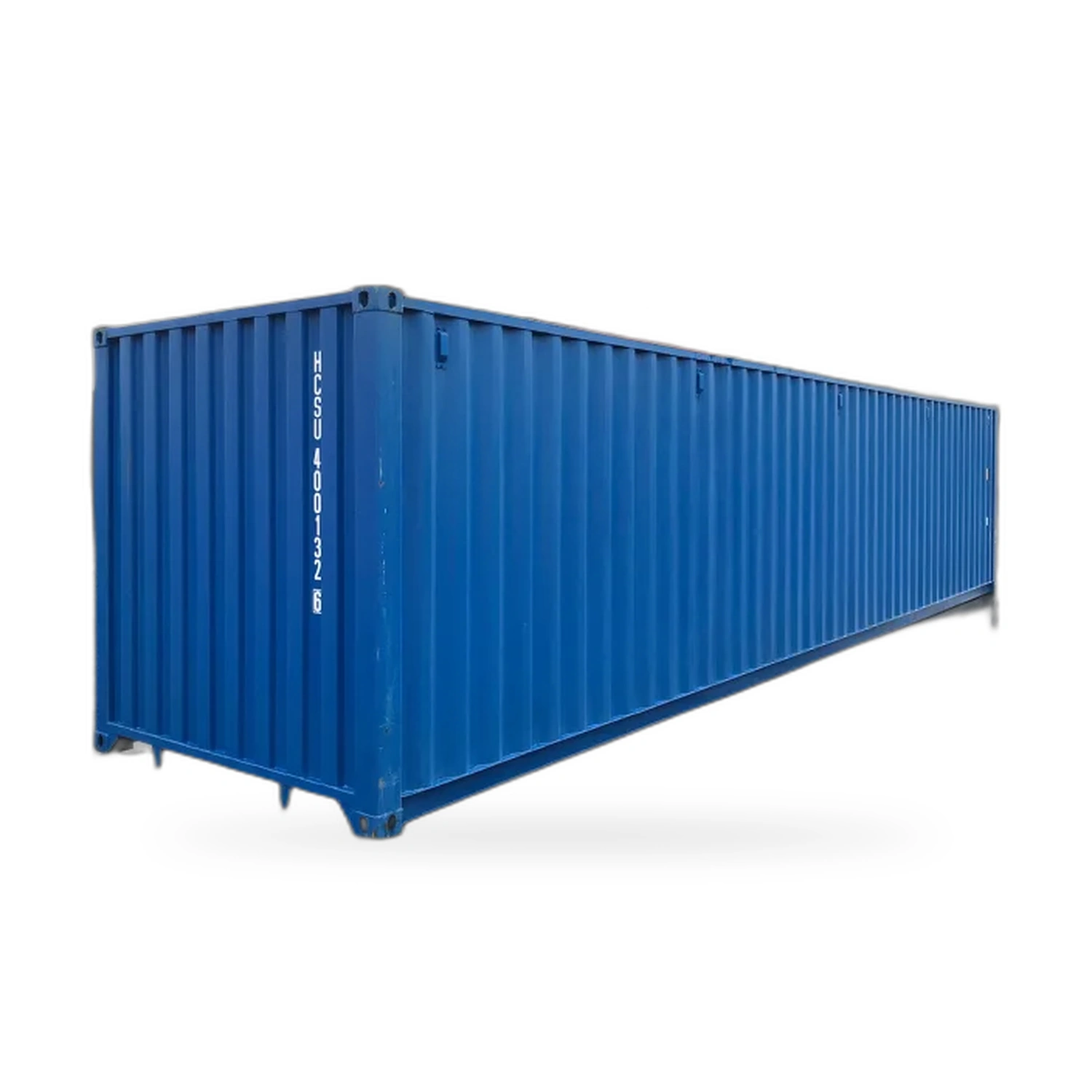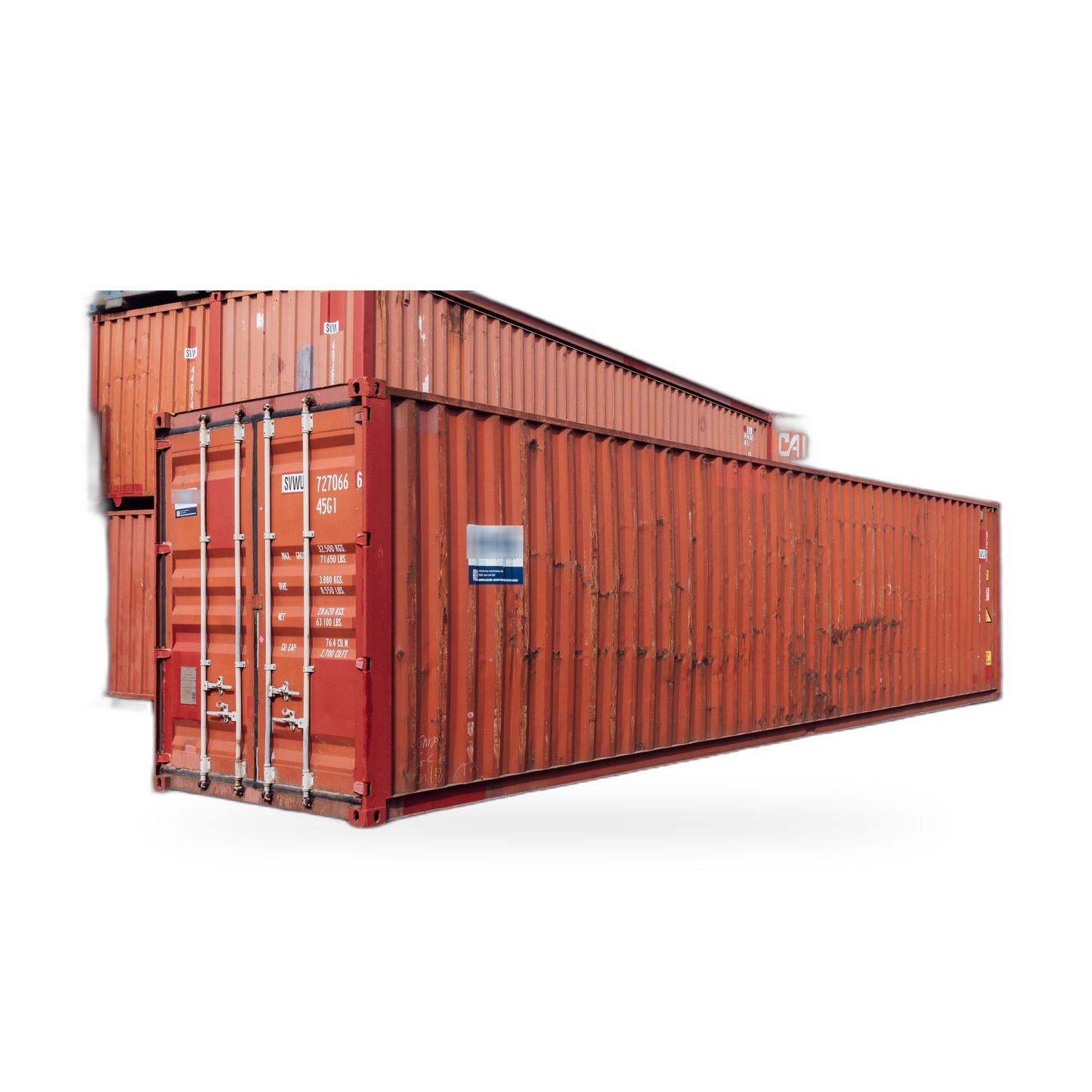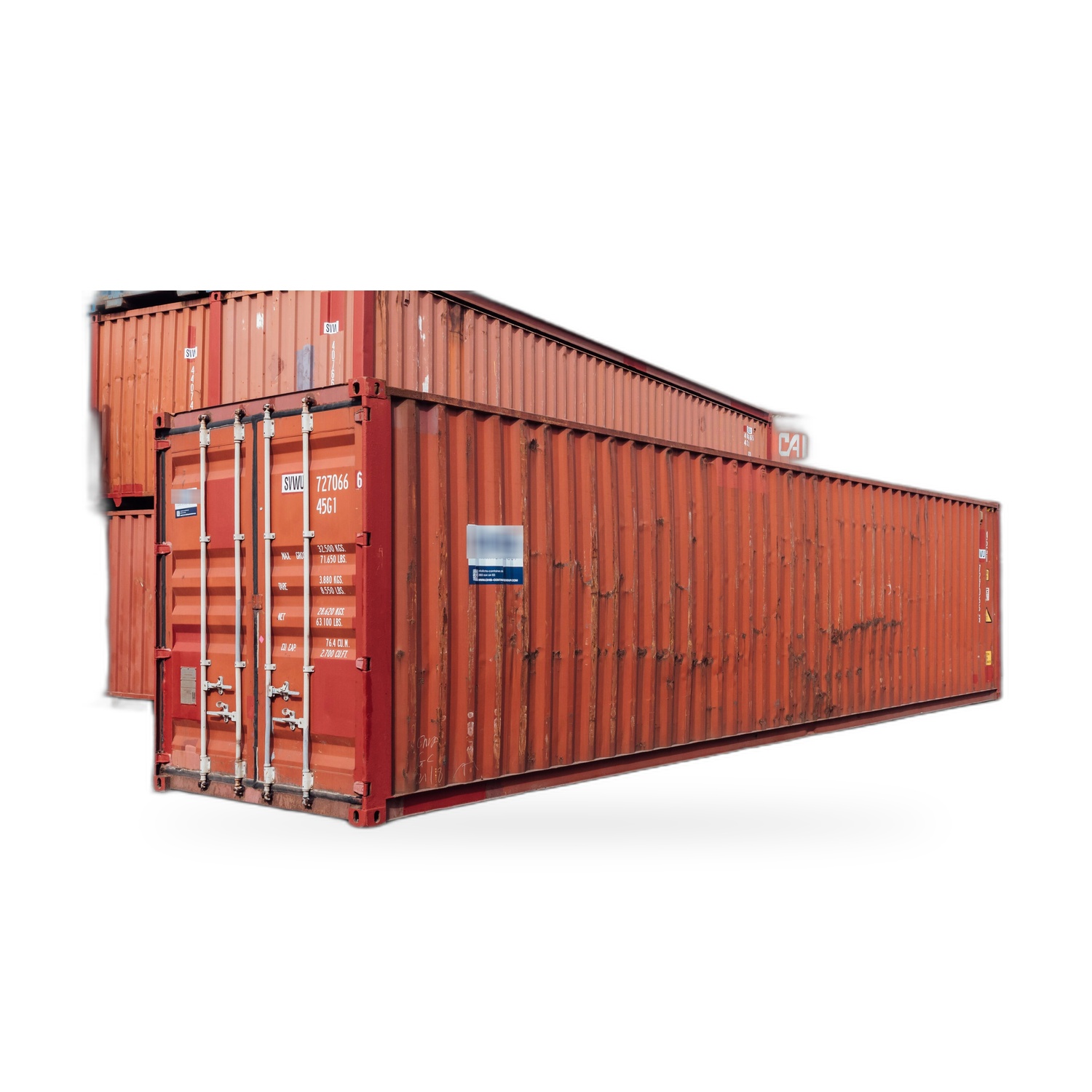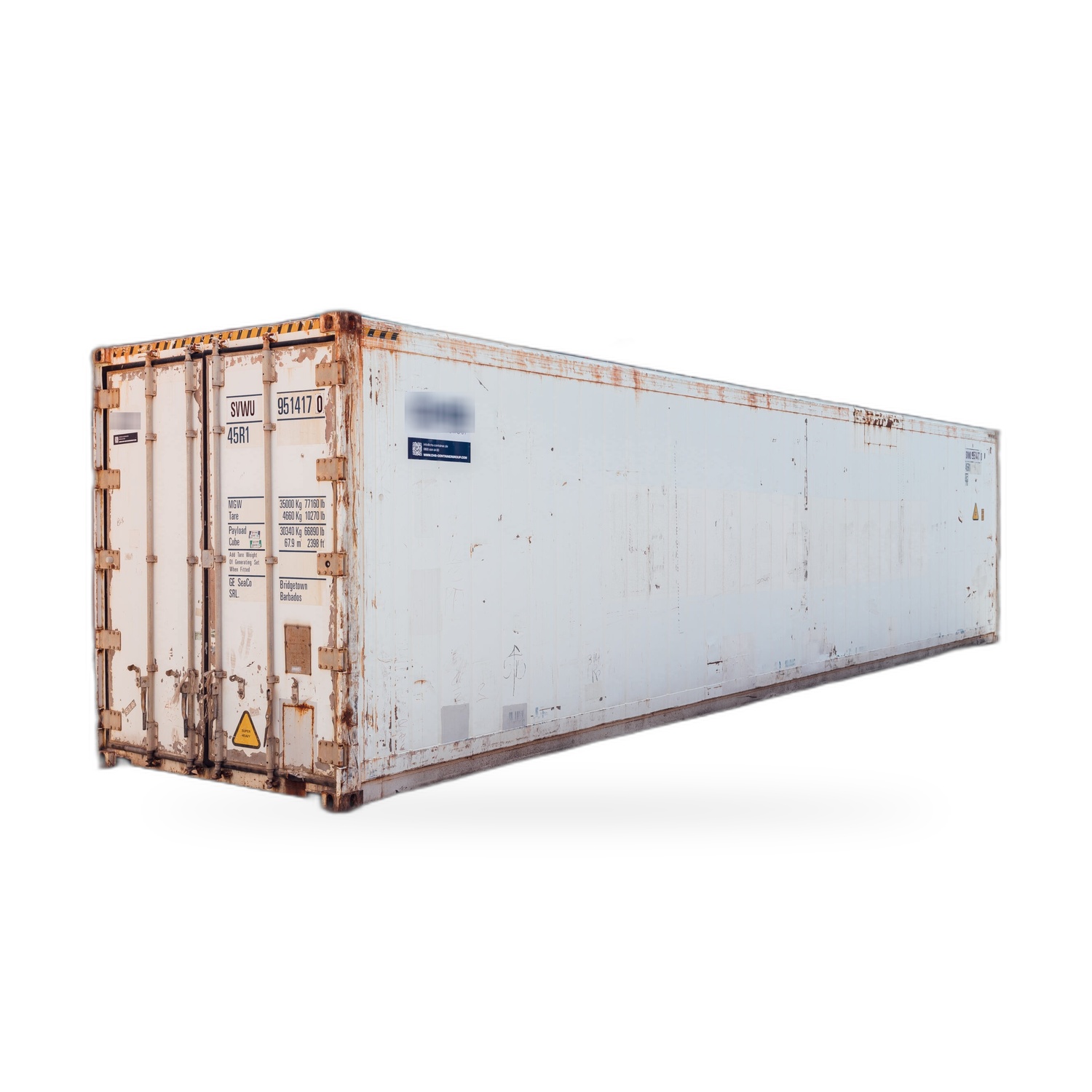
inkl. MwSt., zzgl. Versand · netto 3.000,00 €
Technische Daten
1219.20 x 243.33 x 289.61 cm
6,000 kg
78 m³
Online bestellen
3.570,00 € inkl. MwSt. · Versand 892,50 € inkl. MwSt. (Sidelifter)
Zahlung per Überweisung (Bankverbindung sofort nach der Bestellung) oder per Karte / Wallet über Stripe. Bis zu 10 Einheiten sofort bestellbar, größere Mengen auf Anfrage.
Technische Daten im Detail
| Abmessungen | |
|---|---|
| Außenlänge | 1219.20 cm |
| Außenbreite | 243.33 cm |
| Außenhöhe | 289.61 cm |
| Innenlänge | 1183.39 cm |
| Innenbreite | 234.70 cm |
| Innenhöhe | 265.51 cm |
| Gewichte und Kapazität | |
| Bodenfläche innen | 29.43 m² |
| Volumen | 78.00 m³ |
| Nettogewicht | 6000 kg |
| Max. Bruttogewicht | 45000 kg |
| Weitere Angaben | |
| Innenbodenfläche | 29.43 m² |
Ähnliche Container
Beliebte Umbauten
Schwerlast im Fokus: warum ein 40ft High Cube Flat Rack gebraucht gekauft wird
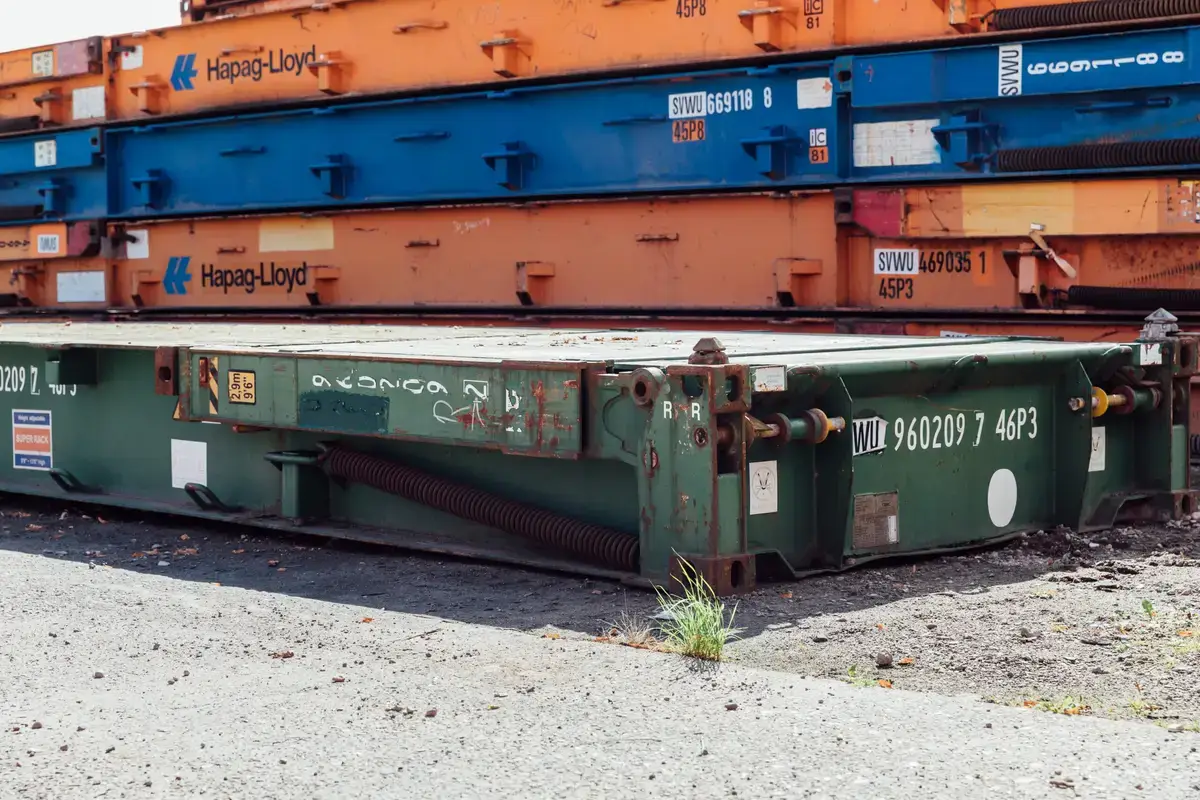
Im Mittelpunkt steht die Belastbarkeit. Ein 40ft High Cube Flat Rack gebraucht zu beschaffen bedeutet, ein Ladedeck von 1183,39 cm Länge und 234,70 cm Breite zu erhalten, also 29,43 m² durchgehende Ladefläche, ausgelegt auf 45.000 kg zulässiges Gesamtgewicht. Das Leergewicht beträgt 6.000 kg, rechnerisch bleiben damit 39.000 kg Nutzlast. Diese vier Zahlen beschreiben ein klares Einsatzprofil: lange, schwere, formstabile Teile, die über ihre gesamte Länge unterstützt werden müssen. Turbinengehäuse, Maschinenbetten, Stahlbau, Mastsegmente, Schienenfahrzeuge, große Tanks und komplette Fertigungslinien gehören in diese Kategorie.
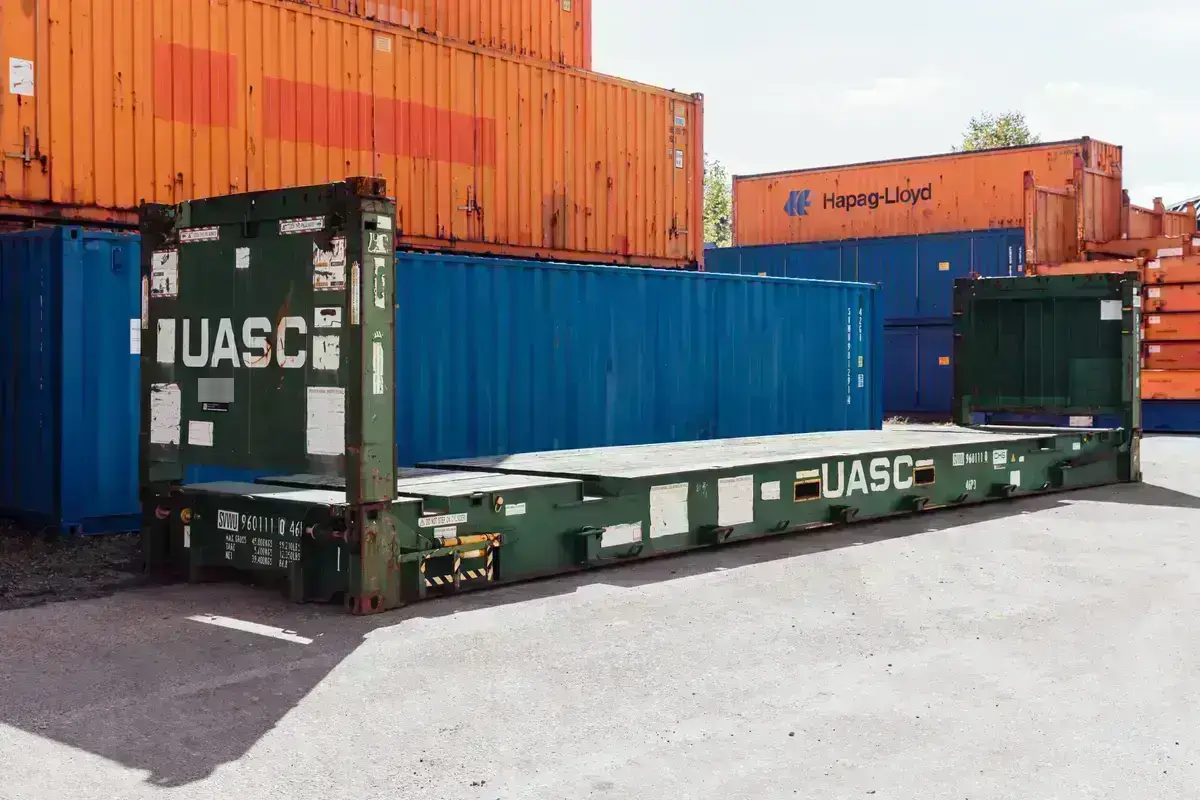
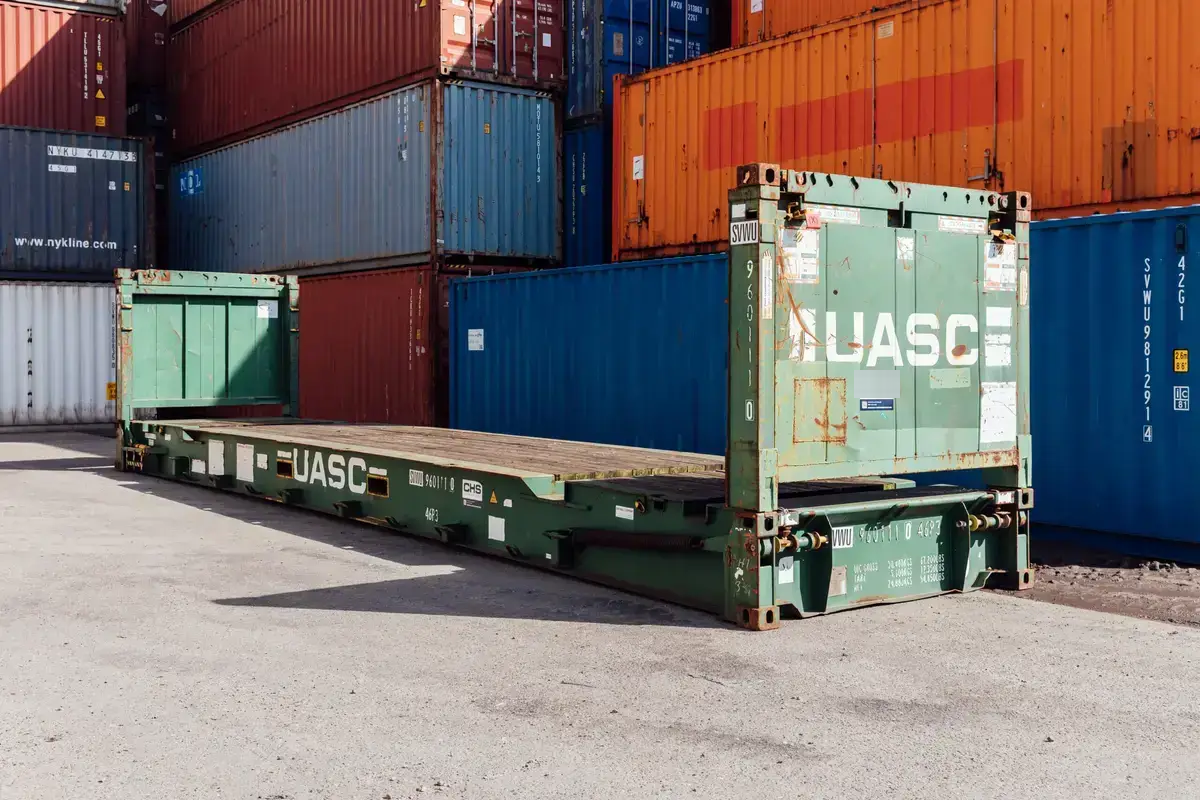
Die Bezeichnung Rack statt Container ist dabei zutreffend. Es gibt kein Dach, keine Seitenwand und keine Tür, sondern ein Deck, zwei Stirnkonstruktionen und die Eckbeschläge, über die Spreader, Chassis und Twistlocks die Einheit wie einen 40-Fuß-Container behandeln. Genau diese Kompatibilität macht das Format wirtschaftlich: Ladung, die sonst über die gesamte Strecke Spezialfahrzeuge und Großraumgenehmigungen erfordern würde, läuft auf dem Seeteil und weiten Teilen des Landtransports mit Standardequipment.
Deckmaße und Gewichte auf einen Blick
| Maß | Wert |
|---|---|
| Innenlänge | 1183,39 cm |
| Innenbreite | 234,70 cm |
| Innenhöhe | 265,51 cm |
| Außenlänge | 1219,20 cm |
| Außenbreite | 243,33 cm |
| Außenhöhe | 289,61 cm |
| Ladefläche | 29,43 m² |
| Volumenhülle | 78,00 m³ |
| Zulässiges Gesamtgewicht | 45.000 kg |
| Leergewicht (Tara) | 6.000 kg |
| Nutzlast rechnerisch | 39.000 kg |
Der Zusatz High Cube bezieht sich auf die Stirnkonstruktion, die 265,51 cm über dem Deck steht, sowie auf die Außenhöhe von 289,61 cm. Höhere Ladung findet damit seitliche Abstützung, und die Sicherungspunkte liegen höher. Die 78,00 m³ sind ein rechnerischer Hüllwert für den Raum zwischen Deck und Stirnwänden. Er dient der ersten Grobprüfung, ob ein Teil überhaupt in diese Gerätefamilie gehört, ist aber keine harte Grenze wie das Volumen eines geschlossenen Containers, denn Ladung auf dem Flat Rack darf nach Anmeldung der Übermaße darüber hinausragen.
Gleiches Gesamtgewicht, andere Aufgabe: 40 Fuß gegen 20 Fuß
Beide Baugrößen sind mit 45.000 kg zulässigem Gesamtgewicht erfasst, was viele Einkäufer überrascht. Der Unterschied liegt im Leergewicht und in der Ladefläche, und er entscheidet darüber, welches Teil auf welche Einheit gehört.
| Kennwert | 40ft High Cube Rack | 20ft Rack |
|---|---|---|
| Ladefläche | 29,43 m² | 14,49 m² |
| Zulässiges Gesamtgewicht | 45.000 kg | 45.000 kg |
| Leergewicht | 6.000 kg | 2.300 kg |
| Nutzlast rechnerisch | 39.000 kg | 42.700 kg |
Die Lesart ist einfach. Die kurze Einheit bietet mit 42.700 kg gegenüber 39.000 kg mehr Nutzlast, weil sie weniger Eigenstahl mitführt. Die lange Einheit bietet mehr als die doppelte Ladefläche und verteilt dieselbe zulässige Gesamtmasse über etwa die doppelte Länge, die Last je laufendem Meter ist also deutlich geringer. Kompakte, dichte Massen wie ein Maschinenfundament oder ein Natursteinblock passen deshalb eher auf das kurze Rack, während alles, was durchgehende Auflage braucht oder nebeneinander gestaut werden soll, auf das 40-Fuß-Deck gehört. Die Auswahl allein nach der Länge, ohne Blick auf die Lastverteilung, ist der häufigste Planungsfehler.
Lange Lasten und die Frage der Durchbiegung
Ein langes Deck ist ein Träger, und ein Träger biegt sich durch. Steht eine einzelne dichte Masse mittig auf 1183,39 cm Decklänge, trägt der Rahmen sie an seiner ungünstigsten Stelle. Die Folge kann eine bleibende Durchbiegung sein, die das Ein- und Ausheben erschwert. Gute Planung vermeidet diesen Fall, statt ihn auszuprobieren.
- Schwere Einzelmassen möglichst über den Stirnkonstruktionen und Querträgern absetzen, nicht in Feldmitte.
- Lange Kanthölzer oder einen Lastverteilungsträger einsetzen, damit die Kraft in mehrere Querträger eingeleitet wird.
- Schwerpunkt mittig und so tief wie möglich halten, damit alle vier Eckbeschläge gleichmäßig tragen.
- Prüfen, ob das Ladegut selbst steif genug für punktuelle Auflager ist; biegeweiche Konstruktionen brauchen einen Bock oder eine Wiege.
- Unterbau, Wiegen, Ketten und Schäkel gehören zur Gesamtmasse und nicht in eine Nebenrechnung.
Gesichert wird im Freien, ohne stützende Seitenwände. Zurren Sie an Rahmen und Zurrpunkten, kombinieren Sie steile Niederzurrung mit flacher Direktzurrung, und nutzen Sie Reibung durch sauberes Deck und Antirutschmatten, statt allein auf Vorspannung zu setzen. Rad- und Kettenfahrzeuge brauchen zusätzlich Keile oder angeschweißte Anschläge.
Deckzustand, Verschleiß und ehrliche Reparaturen
Das Deck trägt die Spuren des Vorlebens. Bei Holzdecks sind Fäulnis an den Bretternden, weiche Stellen um Befestigungen, fehlende oder abgescherte Schrauben und nachträglich eingesetzte, zu dünne Bretter die typischen Befunde. Bei Stahldecks lohnt der Blick auf Beulen zwischen den Querträgern, auf Korrosion in Wassersäcken und auf Bleche, die überschweißt statt ausgetauscht wurden. Kratzer und Riefen von Kettenfahrzeugen sind normaler Verschleiß, ein durchgedrücktes Loch unter einem kleinen Maschinenfuß dagegen ein Hinweis darauf, dass frühere Punktlasten nie verteilt wurden.
Reparaturen sind kein Ausschlussgrund, unerklärte Reparaturen schon. Fragen Sie, was wann und nach welchem Standard ausgeführt wurde. Schweißnähte in der Nähe der Eckbeschläge, an den Enden der Querträger oder quer über einen Längsträger liegen im Kraftfluss und verdienen mehr Aufmerksamkeit als eine kosmetische Ausbesserung im Deck. Peilen Sie beide Längsträger auf Verwindung und das Deck auf eine Senke in der Mitte ab. Kontrollieren Sie Eckbeschläge, Zurrösen und die Rechtwinkligkeit der Stirnkonstruktionen. Klären Sie außerdem den Status des CSC-Schilds, das die Zulassung für den internationalen Verkehr und die Prüftermine dokumentiert.
Typische Sendungen und die Anmeldung von Übermaßen
Auf ein 40-Fuß-Deck kommen vor allem Güter, deren Länge das eigentliche Problem ist: Stahlträger und Profilbündel, Rohrstränge, Brückenteile, Krangerüste, Mastsegmente, Fahrzeugrahmen, Gleisbaumaterial, lange Werkzeugmaschinen, Tanks und Behälter sowie komplette Anlagenmodule. Hinzu kommen Sendungen, bei denen mehrere schwere Einzelstücke gemeinsam reisen sollen und die Ladefläche von 29,43 m² den Ausschlag gibt. Weniger geeignet ist das Format für alles, was nachgiebig ist oder ohne Gestell keine sinnvollen Auflagerpunkte bietet, denn eine offene Plattform stützt nichts ab.
Sobald die Ladung über die Kontur hinausragt, handelt es sich um anmeldepflichtiges Übermaß. Reederei, Terminal und Frachtführer benötigen dann die tatsächlichen Maße der fertigen Ladeeinheit in Länge, Breite und Höhe, gemessen einschließlich Unterbau, Wiege und überstehender Anbauteile, dazu das Gesamtgewicht und die Lage des Schwerpunkts. Wer ein 40ft High Cube Flat Rack gebraucht in einen solchen Verkehr gibt, sollte diese Werte vor der Buchung ermitteln und unverändert an alle Beteiligten weitergeben, denn Übermaßstellplätze werden gesondert disponiert und kalkuliert.
Im Landvorlauf entscheidet zusätzlich die Achslastverteilung. Ein zulässiges Gesamtgewicht sagt nichts darüber aus, wie sich die Masse auf die Achsen des Zugfahrzeugs verteilt, und ein Schwerpunkt weit außerhalb der Deckmitte kann eine an sich zulässige Sendung unfahrbar machen. Klären Sie deshalb vor dem Verladen, an welcher Stelle des Decks das schwerste Teil stehen soll, statt diese Frage dem Kranfahrer zu überlassen.
Ein weiterer Punkt wird oft zu spät geklärt: die Anschlagpunkte am Ladegut selbst. Viele Maschinen besitzen Hebeösen für den Werkstatteinsatz, nicht aber für das Heben mit angebautem Zubehör oder mit gefüllten Tanks. Fragen Sie beim Hersteller nach den freigegebenen Punkten und nach dem Gewicht in Transportkonfiguration, und lassen Sie sich eine Zeichnung mit Schwerpunktangabe geben. Diese Unterlage vereinfacht später sowohl die Kranplanung als auch die Ladungssicherung, und sie beantwortet im Schadensfall die Frage, ob fachgerecht angeschlagen wurde.
Leerhandling, Stapeln und Lagerung
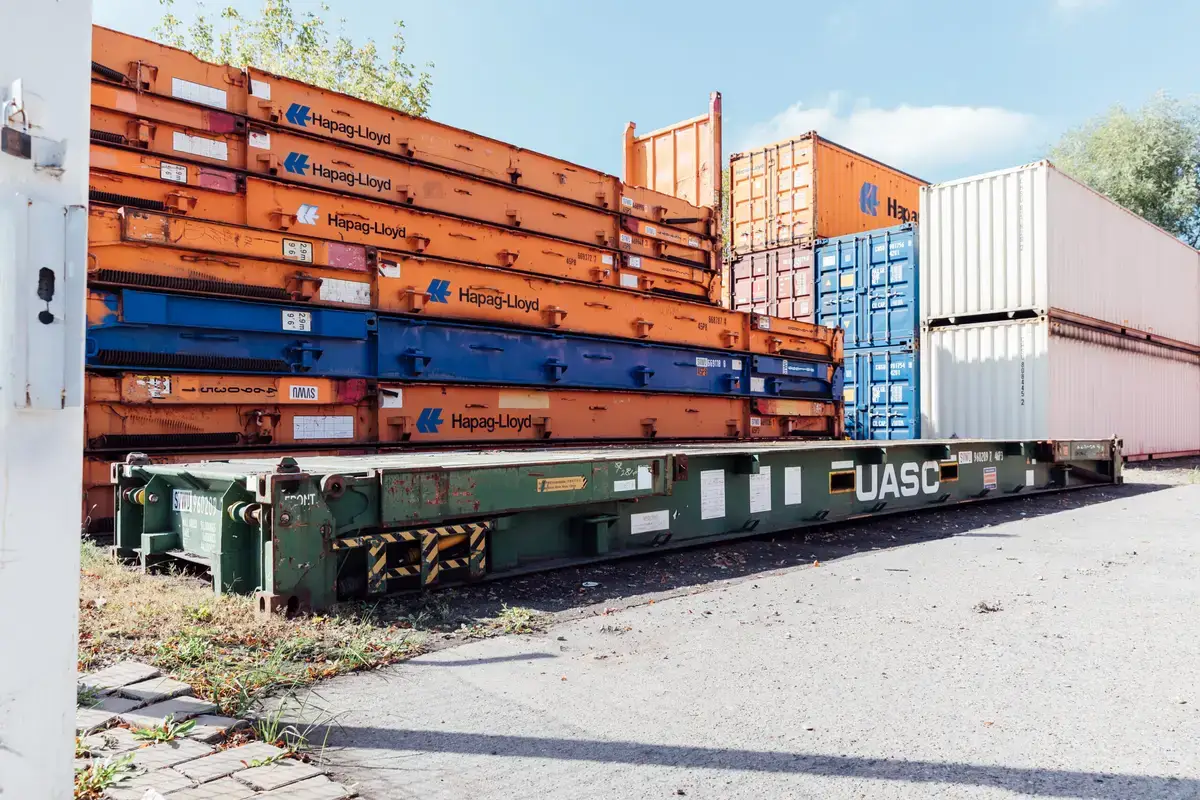
Leere Racks sind teuer zu bewegen, weil sie groß sind und überwiegend Luft transportieren. Wo sich die Stirnkonstruktionen klappen lassen, kann ein Satz Leereinheiten gebündelt werden, sodass mehrere Racks etwa den Platz einer Einheit belegen. Genau deshalb dominiert die klappbare Bauart die Mietflotten. Lassen Sie sich für die konkrete Einheit bestätigen, ob die Stirnwände klappbar sind, denn feste Ausführungen existieren und verhalten sich im Hof völlig anders. Beim Stapeln gilt: Die Lasten laufen über Eckpfosten und Eckbeschläge, die Einheiten müssen also fluchten und verriegelt werden, und der Untergrund darf unter den punktuellen Ecklasten nicht ungleichmäßig nachgeben.
Stationäre Nutzung nach dem Seeverkehr
Ein Rack mit gutem Rahmen und müdem Blech bleibt ein nützliches Betriebsmittel. Das Deck dient als Maschinenstandfläche, als Unterbau für Tank oder Notstromaggregat, als Montagetisch, als Verladeplattform an der Rampe oder als Fahrplatte über weichem Boden. Da die Belastbarkeit weit über der üblicher Hofausstattung liegt, begrenzt in der Regel der Untergrund und nicht der Stahl. In dieser Rolle sind ein abgelaufenes CSC-Schild und Oberflächenkorrosion gegen einen niedrigeren Preis gut vertretbar, sofern Rahmen und Querträger in Ordnung sind.
Was vor der Bestellung geklärt sein sollte
- Deckmaße, Außenmaße und zulässiges Gesamtgewicht für die konkrete Einheit bestätigen lassen.
- Klappbarkeit und Verriegelung der Stirnkonstruktionen dokumentieren lassen.
- Detailfotos von Deck, allen vier Eckbeschlägen und jeder Reparaturstelle anfordern.
- Schriftlich festhalten, ob seetauglich oder stationär verkauft wird, und wie der CSC-Status ist.
- Hebevorgang am Zielort planen: Gerät, Anschlagseite, Tragfähigkeit der Aufstellfläche.
- Sicherungskonzept mit Unterbau, Matten, Ketten und Wiegen vor Anlieferung bereithalten.
Häufig gestellte Fragen
Wie viel Nutzlast bietet ein 40ft High Cube Flat Rack gebraucht?
Erfasst sind 45.000 kg zulässiges Gesamtgewicht bei 6.000 kg Leergewicht, rechnerisch also 39.000 kg Nutzlast. Darin sind Ladegut, Wiegen, Unterleghölzer, Matten und Zurrmittel gemeinsam enthalten. Straßen- und Bahnlimits auf Ihrer Route können den praktisch nutzbaren Wert erheblich senken, deshalb sollten diese Grenzen vor der Planung einer schweren Sendung feststehen.
Worin unterscheidet sich das 40-Fuß-Rack vom 20-Fuß-Rack?
Beide sind mit 45.000 kg zulässigem Gesamtgewicht erfasst. Die 40-Fuß-Einheit wiegt jedoch 6.000 kg statt 2.300 kg, sodass 39.000 kg statt 42.700 kg Nutzlast bleiben. Dafür bietet sie 29,43 m2 statt 14,49 m2 Ladefläche. Kompakte schwere Massen passen auf das kurze Rack, lange Bauteile mit durchgehender Auflage auf das lange.
Welche Maße hat das Ladedeck?
Das Deck misst innen 1183,39 cm mal 234,70 cm und ergibt 29,43 m2. Die Stirnkonstruktionen stehen 265,51 cm über dem Deck, die Außenmaße betragen 1219,20 cm mal 243,33 cm mal 289,61 cm. Die rechnerische Volumenhülle liegt bei 78,00 m3 und dient der Grobprüfung, nicht als feste Grenze für Übermaßladung.
Wie erkenne ich ein müdes Deck?
Bei Holzdecks an Fäulnis an den Bretternden, weichen Stellen um Schrauben und nachträglich eingesetzten dünneren Brettern. Bei Stahldecks an Beulen zwischen den Querträgern, Korrosion in Wassersäcken und überschweißten Blechen. Ein eingedrücktes Loch unter einer kleinen Auflagefläche zeigt, dass eine frühere Punktlast nicht verteilt wurde. Lassen Sie sich Reparaturen und deren Ausführung erläutern.
Lassen sich leere Flat Racks stapeln?
Klappbare Ausführungen legen ihre Stirnkonstruktionen flach, sodass mehrere Leereinheiten etwa den Platz einer belegen. Feste Bauarten gibt es ebenfalls, deshalb sollte die Ausführung bestätigt werden. Beim Stapeln müssen die Einheiten fluchten und verriegelt sein, damit die Lasten über Eckpfosten und Eckbeschläge laufen. Der Untergrund darf unter den Ecklasten nicht ungleich nachgeben.
Passende Container & Ausstattungsoptionen
Ähnliche Produkte