
inkl. MwSt., zzgl. Versand · netto 4.799,00 €
Technische Daten
1219.20 x 243.79 x 259.11 cm
4,000 kg
67.01 m³
Online bestellen
5.710,81 € inkl. MwSt. · Versand 892,50 € inkl. MwSt. (Sidelifter)
Zahlung per Überweisung (Bankverbindung sofort nach der Bestellung) oder per Karte / Wallet über Stripe. Bis zu 10 Einheiten sofort bestellbar, größere Mengen auf Anfrage.
Technische Daten im Detail
| Abmessungen | |
|---|---|
| Außenlänge | 1219.20 cm |
| Außenbreite | 243.79 cm |
| Außenhöhe | 259.11 cm |
| Innenlänge | 1203.20 cm |
| Innenbreite | 235.20 cm |
| Innenhöhe | 239.50 cm |
| Breite | 234.01 cm |
| Höhe | 227.99 cm |
| Gewichte und Kapazität | |
| Bodenfläche innen | 28.37 m² |
| Volumen | 67.01 m³ |
| Nettogewicht | 4000 kg |
| Max. Bruttogewicht | 30480 kg |
| Weitere Angaben | |
| Innenbodenfläche | 28.37 m² |
Ähnliche Container
Beliebte Umbauten
Ein Container ohne Stirnwand
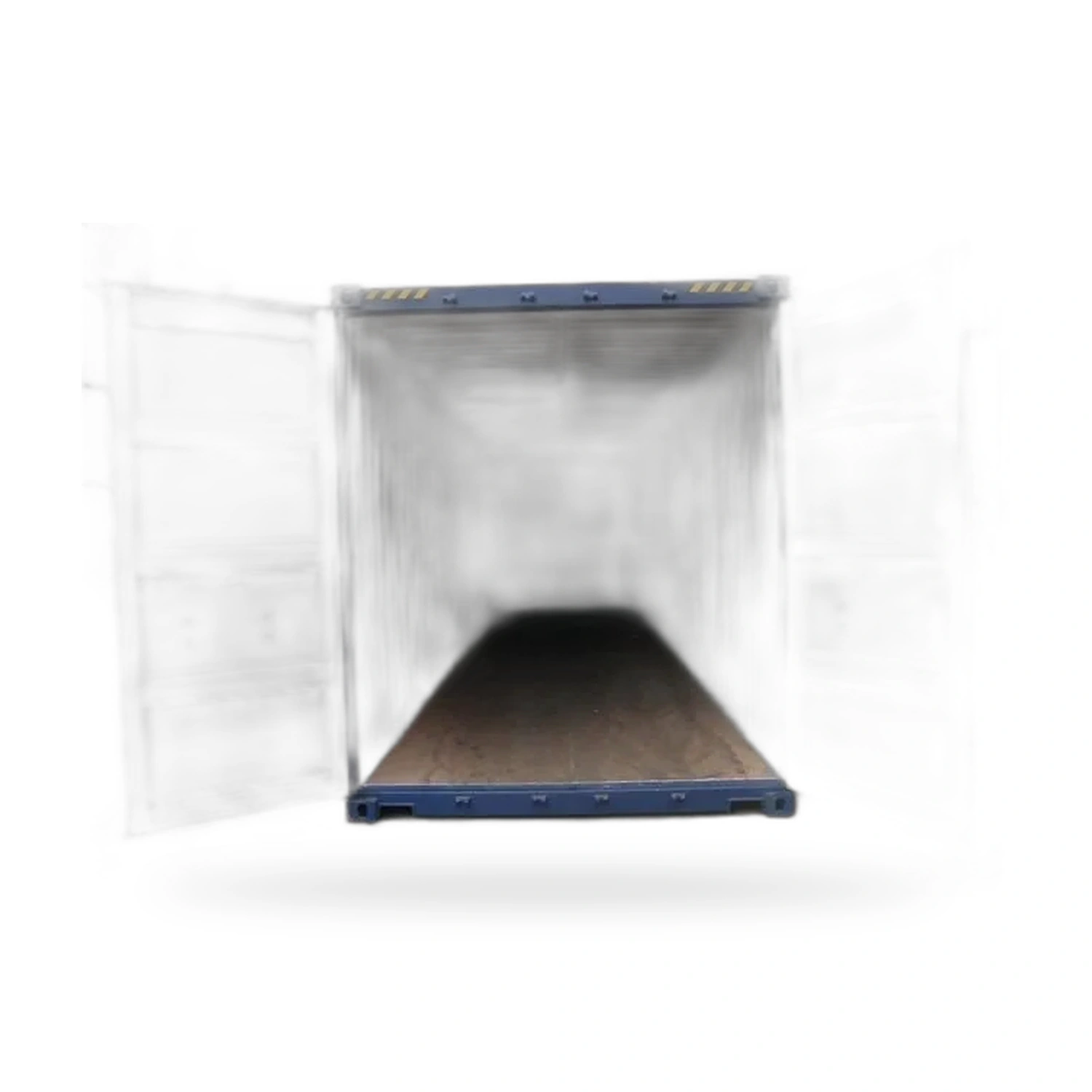
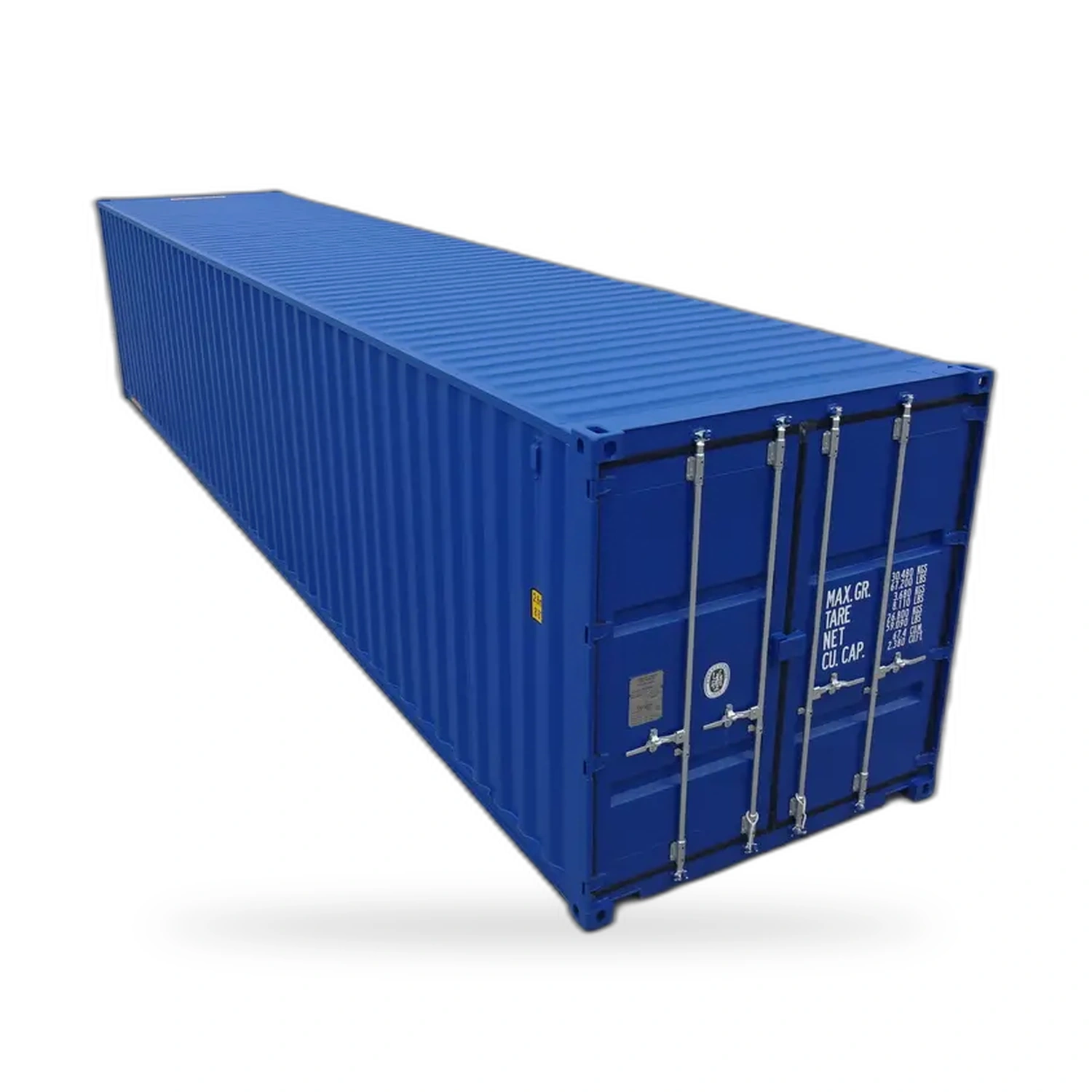
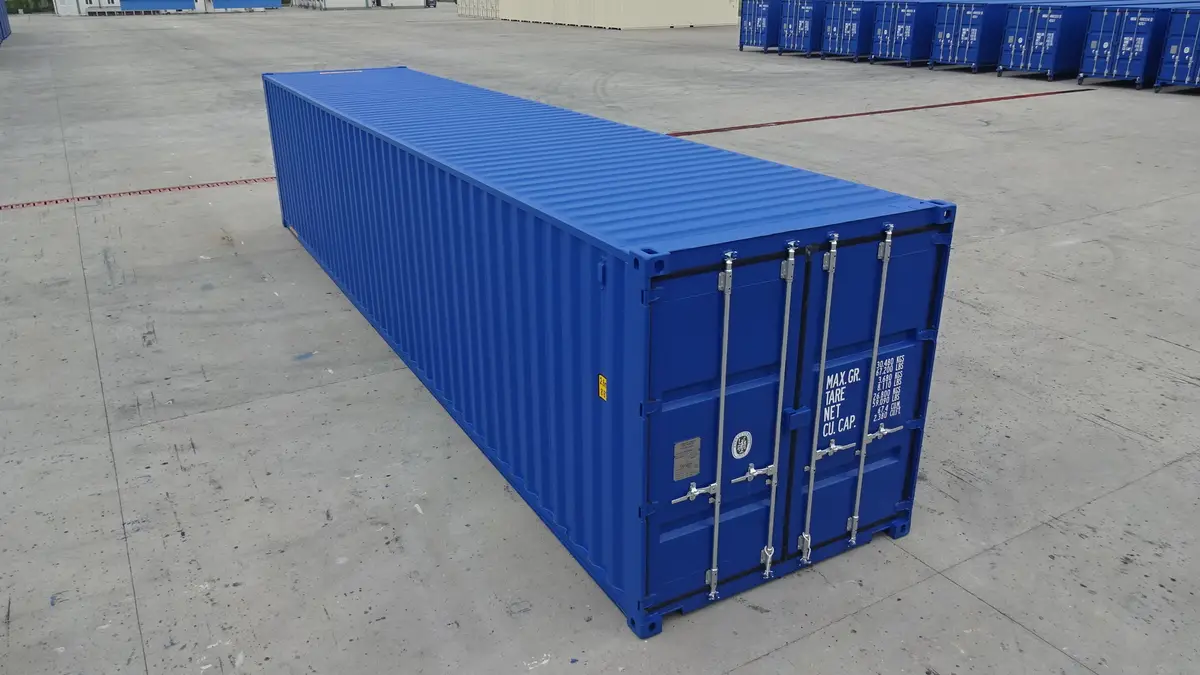
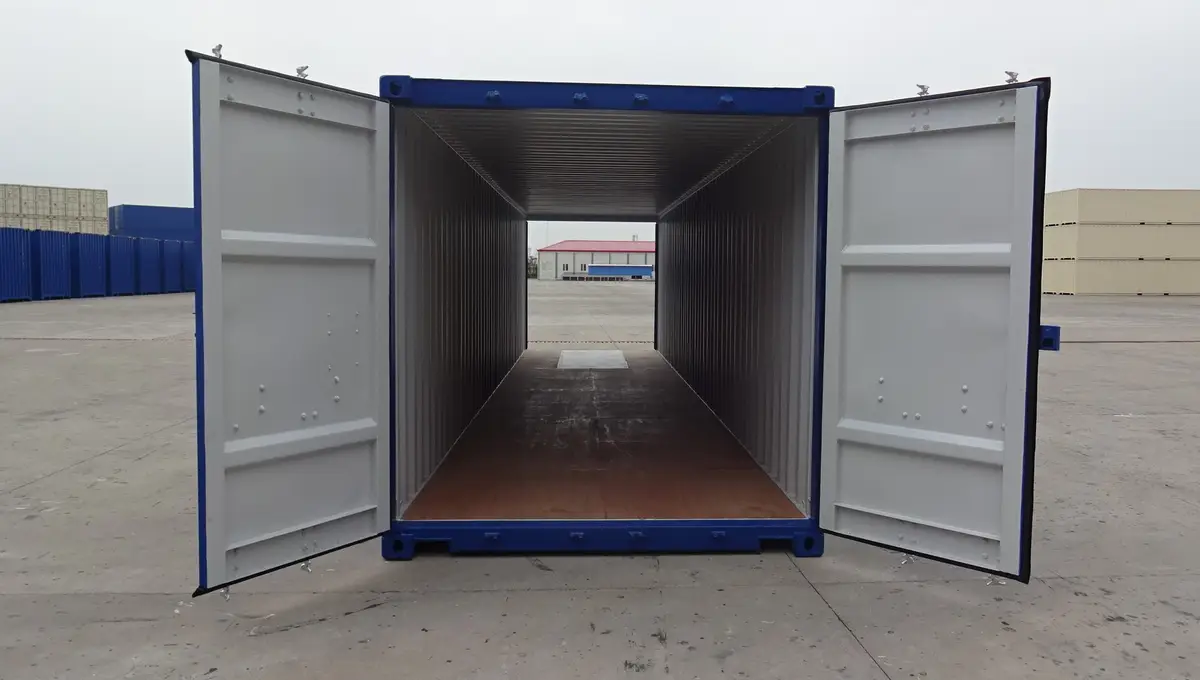
Jeder gewöhnliche Seecontainer hat ein Ende, das sich öffnen lässt, und eines, das geschlossen bleibt. Wer einen 40ft Tunnelcontainer neu kauft, verzichtet bewusst auf diese geschlossene Stirnwand und erhält stattdessen an beiden Enden vollständige Türen. Erfasst sind eine Innenlänge von 1203,20 cm, eine Innenbreite von 235,20 cm und eine Innenhöhe von 239,50 cm, daraus ergeben sich 28,37 m² Ladefläche und 67,01 m³ Volumen. Beide Türöffnungen messen 234,01 cm in der Breite und 227,99 cm in der Höhe. Diese Symmetrie ist der eigentliche Zweck der Bauform. Sie verändert, wie Ware durch den Container läuft, und sie verändert, was der Container statisch leistet. Beides gehört verstanden und nicht nur bestellt.
Technische Daten
| Angabe | Wert |
|---|---|
| Innenlänge | 1203,20 cm |
| Innenbreite | 235,20 cm |
| Innenhöhe | 239,50 cm |
| Außenlänge | 1219,20 cm |
| Außenbreite | 243,79 cm |
| Außenhöhe | 259,11 cm |
| Türöffnung Breite | 234,01 cm |
| Türöffnung Höhe | 227,99 cm |
| Ladefläche | 28,37 m² |
| Volumen | 67,01 m³ |
| Zulässiges Gesamtgewicht | 30.480 kg |
| Leergewicht (Tara) | 4.000 kg |
Zieht man die Tara vom zulässigen Gesamtgewicht ab, bleiben 26.480 kg Nutzlast. Das Leergewicht von 4.000 kg verdient einen Blick: Ein zweites Türende wiegt mehr als eine gesickte Stirnwand, weil Rahmenprofil, Türquerträger, Türschwelle sowie die Türflügel mit Scharnieren, Nocken und Verschlussstangen schwerer sind als ein einzelnes Stahlblech. Dieses Mehrgewicht ist kein Ballast, es hält das offene Ende davon ab, zur Schwachstelle zu werden.
Der Warenfluss ist das eigentliche Argument
First in, first out
Ein einseitig zu öffnender Container ist ein Stapel. Was zuerst hineingeht, kommt zuletzt heraus. Bei Ware mit Verfallsdatum verwaltet man dieses Problem mit Listen und Hoffnung. Mit Türen an beiden Enden wird aus dem Stapel eine Warteschlange: Ware geht vorne hinein und hinten in der Reihenfolge ihres Eingangs wieder heraus. Für Verbrauchsmaterial, Chemikalien mit begrenzter Lagerfähigkeit, Saisonware und Ersatzteile mit Wartungsintervall verschwindet damit eine ganze Klasse täglicher Handgriffe. Ebenso entfällt die Übung, den halben Container auf den Hof zu räumen, um an eine Palette ganz hinten zu kommen. Genau dort entstehen sonst Beschädigungen und Zeitverlust.
Beladen von beiden Seiten
Wer einen Vierzigfußcontainer von einer Seite belädt, setzt die letzten Paletten zwölf Meter vom Tageslicht entfernt ab. Der Stapler fährt jedes Mal die volle Länge, die Sicht ist schlecht, und die Spielzeit steigt mit jedem Meter. Zwei Öffnungen erlauben zwei Teams, gleichzeitig zur Mitte hin zu arbeiten, was die Arbeitstiefe für jedes Team nahezu halbiert. Auch mit nur einem Team hilft es, die hintere Hälfte durch die hintere Tür zu stauen, diese zu schließen und den Rest von vorn zu erledigen. Dient der Container als Puffer zwischen Fertigung und Versand, kann ein Ende zur Linie und das andere zur Rampe zeigen.
Durchfahren und Durchgehen
Bei einer lichten Öffnung von 234,01 cm Breite und 227,99 cm Höhe an beiden Enden wird aus der Sackgasse ein überdachter Durchgang. Kleingeräte, Aufsitzmäher, Kehrmaschinen, kompakte Raupenfahrzeuge, Quads und schmale Stapler lassen sich an einem Ende hinein und am anderen wieder hinausfahren, statt über die volle Länge rückwärts zu rangieren. Das ist ein echter Sicherheitsgewinn, denn blindes Rückwärtsfahren in einem langen Stahlkasten bei schlechtem Licht gehört zu den vermeidbaren Risiken auf dem Betriebshof. Für Personen gilt dasselbe: Als Lager, Werkstatt, Trockenraum, Waschplatz oder überdachte Verbindung zwischen zwei Arbeitsbereichen ist ein Durchgang schlicht besser als ein totes Ende.
Lange und sperrige Güter
Alles Lange lässt sich leichter handhaben, wenn beide Enden offen sind. Rohre, Kanthölzer, Profile, Gerüstrohre, Leitern, Lüftungskanäle, Rollenware, Masten und lange Kisten können von der Seite eingeschoben werden, an der Platz ist. Das zählt, wenn der Container an einem Zaun oder einer Wand steht und nur vor einem Ende Rangierfläche liegt. Das Beladen von beiden Enden gibt außerdem Freiheit beim Aufbau des Stauplans, weil nicht zwingend vom tiefsten Punkt nach vorn gearbeitet werden muss. Maßgeblich ist dabei nicht die Innenhöhe, sondern die Türöffnung: 227,99 cm gegenüber 239,50 cm Innenhöhe, und was auf Gabelzinken liegt, wird zusätzlich angehoben.
Was das zweite Türende konstruktiv bedeutet
Aussteifung und Verwindung
Ein Seecontainer ist eine selbsttragende Schale. Seine Steifigkeit entsteht aus dem Zusammenspiel der gesickten Wandbleche mit dem Rahmen, und die geschlossene Stirnwand eines gewöhnlichen Containers gehört zu den Blechen, die der Parallelogrammverformung entgegenwirken. Wird dieses Blech durch eine Öffnung ersetzt, müssen Eckpfosten, Türquerträger, Türschwellen, Dach- und Untergurte sowie der Bodenaufbau die Aufgabe übernehmen. Hersteller gleichen das mit kräftigeren Rahmenprofilen an den Türenden aus, was sich im erfassten Leergewicht niederschlägt. Für den Betrieb heißt das nichts Dramatisches, aber etwas Konkretes: Eine ebene Auflage unter allen vier Eckbeschlägen ist beim Tunnelcontainer wichtiger als beim Standardcontainer, weil weniger Blechsteifigkeit zur Verfügung steht, um Unebenheiten aufzunehmen. Beton, Bahnschwellen oder lastverteilende Platten, waagerecht ausrichten, und beide Türseiten schließen lassen, bevor das Lieferfahrzeug abfährt.
Zwei weitere Punkte folgen daraus. Gehoben und gestapelt wird ausschließlich über die Eckbeschläge, niemals mit Gurten um den Korpus. Und wer später umbauen will, sollte bedenken, dass jede Tür, jedes Fenster und jeder Lüftungsschlitz in einer Seitenwand weitere Scheibenfläche aus einer Konstruktion nimmt, die bereits ein Wandblech abgegeben hat. Solche Änderungen gehören am konkreten Objekt geplant.
Ein Punkt, der bei der Planung gern vergessen wird, betrifft die Ladungssicherung. Ein einseitiger Container bietet an der geschlossenen Stirnwand einen festen Anschlag, gegen den gestaut werden kann. Diese Fläche entfällt hier an beiden Enden, gesichert wird also über seitliche Zurrösen, Sperrstangen und den Bodenaufbau. Fragen Sie deshalb vor der Bestellung nach Anzahl und Lage der Zurrösen, und planen Sie bei schweren Einzellasten von vornherein mit Staupolstern oder einer Verkeilung, statt darauf zu setzen, dass sich die Ladung schon irgendwo anlegt.
Dichtungen und Sicherung
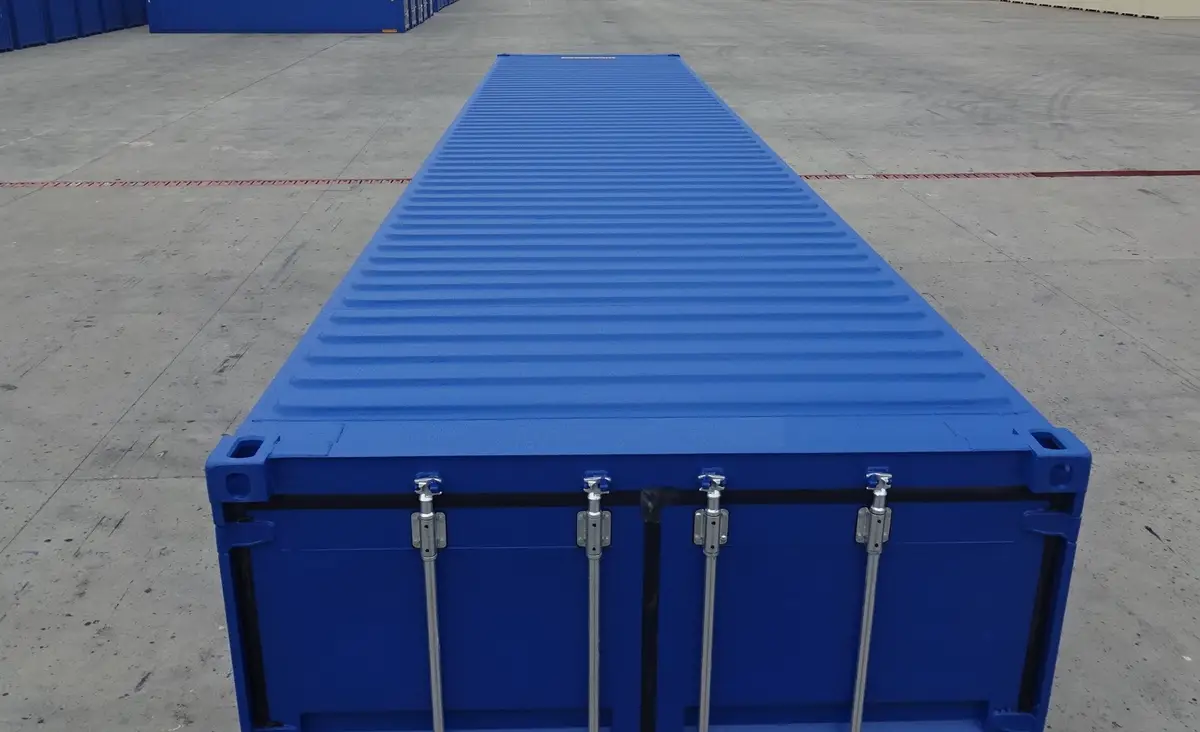
Zwei Türenden bedeuten die doppelte Dichtungslänge und die doppelte Beschlagmenge. Die Dichtungen entscheiden darüber, ob der Container trocken bleibt, also müssen beide Sätze sauber anliegen und gelegentlich gepflegt werden. Nocken und Halter an beiden Enden fetten, und daran denken, dass genau das Scharnier festgeht, das an der nie geöffneten Seite sitzt. Bei der Sicherung gilt: Ein Container ist so stark wie sein schwächeres Ende. Legen Sie vor der Bestellung fest, wie beide Enden gesichert werden, fragen Sie nach der vorhandenen Verriegelung und klären Sie, ob ein Schlosskasten oder ein Vorhangschloss beidseitig oder nur an einem Ende vorgesehen ist.
Aufstellung und Zufahrt
Der Vorteil verschwindet, wenn nur ein Ende erreichbar ist. Planen Sie den Standort so, dass an beiden Enden Stand- und Rangierfläche bleibt, und denken Sie daran, dass die Türflügel weit ausschwenken und freien Boden über den ganzen Schwenkbereich brauchen. Soll durchgefahren werden, müssen An- und Abfahrt tragfähig sein, und die Höhe der Türschwelle gehört gegen das geprüft, was hineinfahren soll. Werden zwei Einheiten stirnseitig aneinandergestellt, entsteht mit dieser Bauform ein durchgehender Lauf, eine übliche Lösung für die Lagerung langer Güter.
Beispiele aus der Praxis
Drei Situationen tauchen immer wieder auf. Erstens der Materialpuffer zwischen Anlieferung und Fertigung: Ein Ende zeigt zur Rampe, das andere zur Halle, die Ware läuft in einer Richtung durch, und niemand räumt mehr um. Zweitens die Lagerung langer Güter in Handel und Handwerk, etwa Rohre, Kanthölzer, Profile und Gerüstteile, die von der jeweils freien Seite entnommen werden. Drittens die Nutzung als überdachter Arbeitsbereich, etwa als Wasch- oder Prüfplatz, in den ein Gerät hineinfährt, bearbeitet wird und auf der anderen Seite wieder hinausfährt. In allen drei Fällen ist der Gewinn derselbe: kürzere Wege, weniger Rangieren, weniger Handgriffe je Vorgang. Rechnen Sie den Vorteil ruhig einmal in Minuten je Ladung durch, denn dort und nicht im Anschaffungspreis entscheidet sich, ob sich die Bauform für Ihren Betrieb trägt.
Warum ein 40ft Tunnelcontainer neu bestellt wird
Für viele Betriebe rechnet sich ein 40ft Tunnelcontainer neu vor allem wegen der gleichmäßigen Qualität an beiden Enden: Beschläge, die nie überdreht wurden, Dichtungen, die nie gequetscht wurden, ein sauberer Boden und ein Innenraum ohne Rückstände früherer Ladung. Das wiegt hier schwerer als beim Standardcontainer, denn eine gebrauchte Tunnelbauform hat doppelt so viele Türbeschläge, die beim Umschlag gelitten haben können, und ausgerechnet die Türausrichtung ist im Nachhinein teuer zu korrigieren. Wird ein 40ft Tunnelcontainer neu geliefert, steht außerdem eine unbeschädigte Hülle für Verkleidung, Dämmung, Beschriftung oder Ausbau zur Verfügung.
Wann diese Bauform nicht passt
Steht der Container an einer Wand, in einer Reihe oder in einer Ecke, in der nur ein Ende je zugänglich ist, bezahlen Sie eine Öffnung, die Sie nicht nutzen, und pflegen eine zweite Dichtungsebene ohne Gegenwert. Wer maximal viele innere Befestigungspunkte und ein durchgehendes Regal an einer festen Stirnwand braucht, ist mit dem einseitigen Container besser bedient. Und wenn die Ladung so dicht ist, dass die Masse und nicht der Zugriff die Grenze bildet, schwächt das die Begründung deutlich. Wo Zugriff, Rotation und Durchsatz zählen, und das ist in Lager und Leichtindustrie der Regelfall, ist die Rechnung eindeutig.
Häufig gestellte Fragen
Worin unterscheidet sich ein 40ft Tunnelcontainer neu vom Standardcontainer?
Der Standardcontainer hat eine geschlossene gesickte Stirnwand und einen Türsatz. Diese Bauform hat an beiden Enden vollständige Türen mit je 234,01 cm Breite und 227,99 cm Höhe. Ware kann dadurch hindurchlaufen statt durch dieselbe Öffnung hinein und wieder heraus, was Rotation, beidseitiges Beladen und das Durchfahren mit Kleingeräten ermöglicht.
Ist ein Tunnelcontainer weniger stabil?
Er ist anders gebaut, nicht schlicht schwächer. Die geschlossene Stirnwand steift gegen Verwindung aus, bei zwei Türenden übernehmen Eckpfosten, Türquerträger, Türschwellen, Gurte und Bodenaufbau diese Aufgabe, und die Hersteller setzen kräftigere Rahmenprofile ein. Praktisch bedeutet das: ebene Auflage unter allen vier Eckbeschlägen ist besonders wichtig, gehoben wird nur an den Eckbeschlägen.
Wie hoch ist die Nutzlast?
Erfasst sind 30.480 kg zulässiges Gesamtgewicht und 4.000 kg Leergewicht, es bleiben also 26.480 kg Nutzlast auf 28,37 Quadratmetern Ladefläche und 67,01 Kubikmetern Volumen. Die Tara liegt höher als bei einem einseitigen Container, weil zweiter Türrahmen, Flügel, Scharniere und Verschlussstangen schwerer sind als ein einzelnes Wandblech.
Kann man mit einer Maschine hindurchfahren?
Beide Öffnungen messen 234,01 cm in der Breite und 227,99 cm in der Höhe, kompakte Geräte, Aufsitzmäher, Kehrmaschinen, Quads und schmale Stapler können je nach eigenen Maßen hindurchfahren. Prüfen Sie das Gerät gegen die Türöffnung, prüfen Sie die Schwellenhöhe und sorgen Sie für tragfähigen Untergrund an beiden Enden. Das erspart Rückwärtsfahren über die volle Länge.
Sind zwei Türenden dichtungs- und sicherheitstechnisch ein Nachteil?
Die Dichtungslänge und die Beschlagmenge verdoppeln sich, beide Dichtungssätze und beide Verschlussgestänge brauchen also gelegentlich Pflege, besonders am selten geöffneten Ende. Bei der Sicherung gilt: Die Einheit ist so stark wie ihr schwächeres Ende. Legen Sie vorab fest, wie beide Enden verschlossen werden, und fragen Sie nach der ab Werk vorhandenen Verriegelung.
Passende Container & Ausstattungsoptionen
Ähnliche Produkte