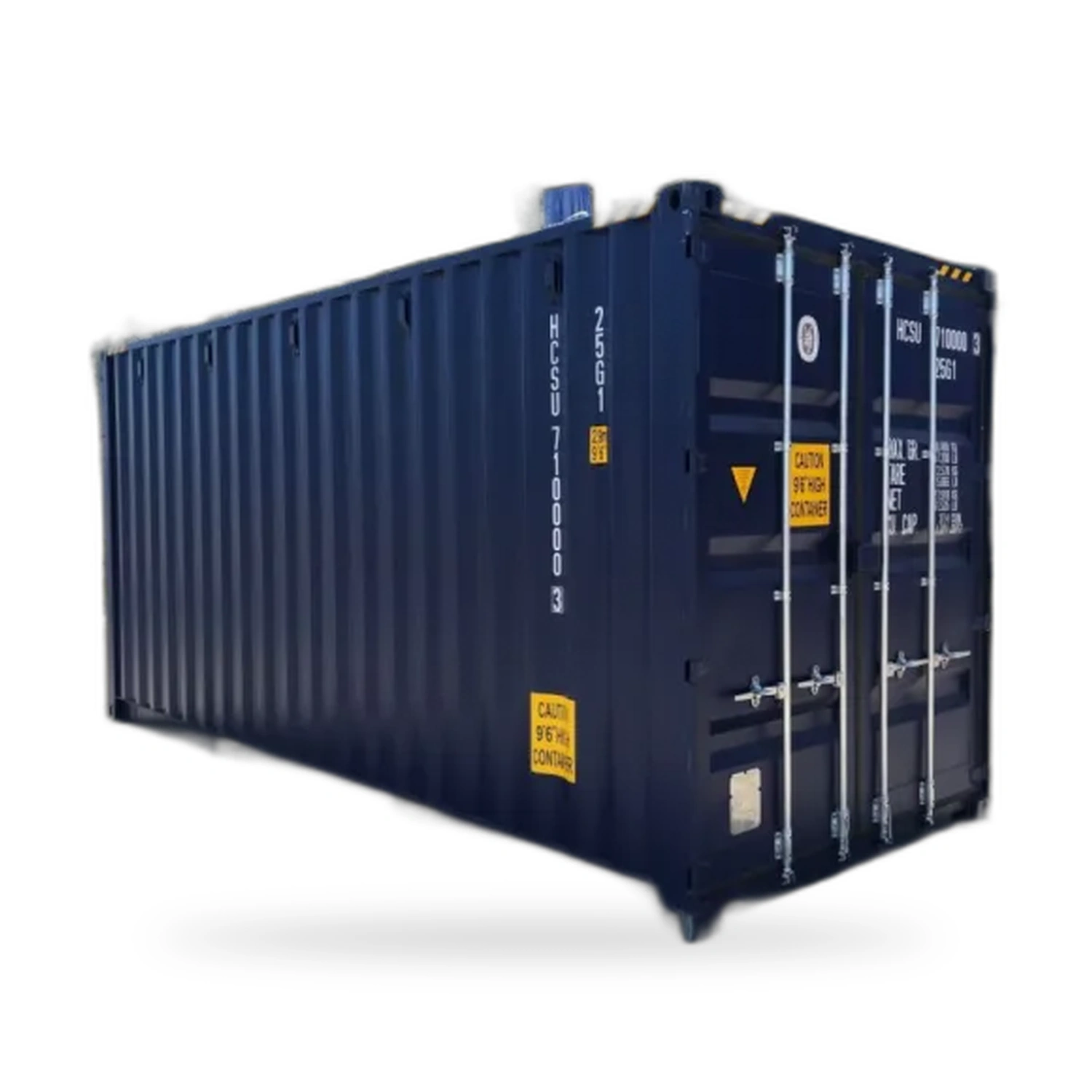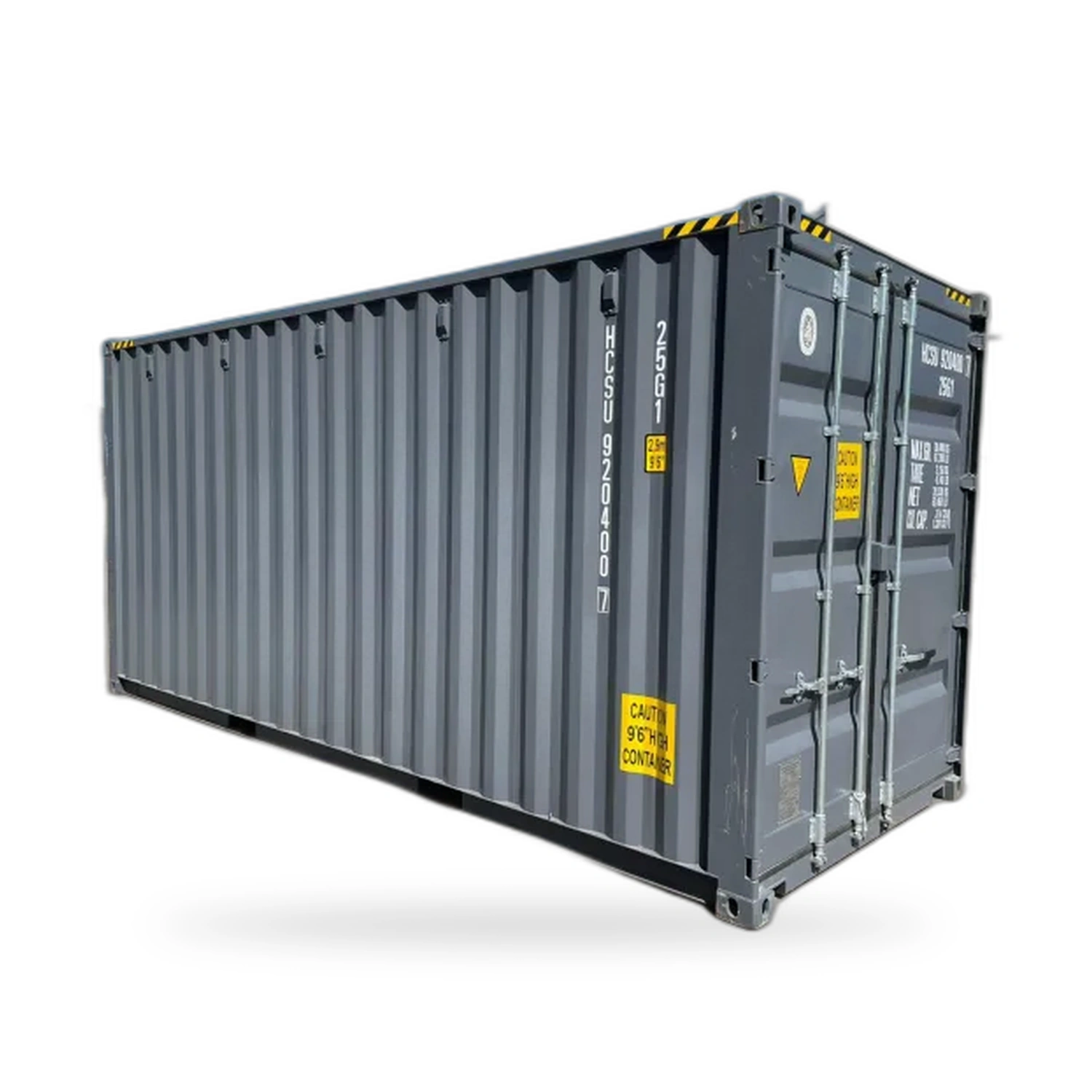
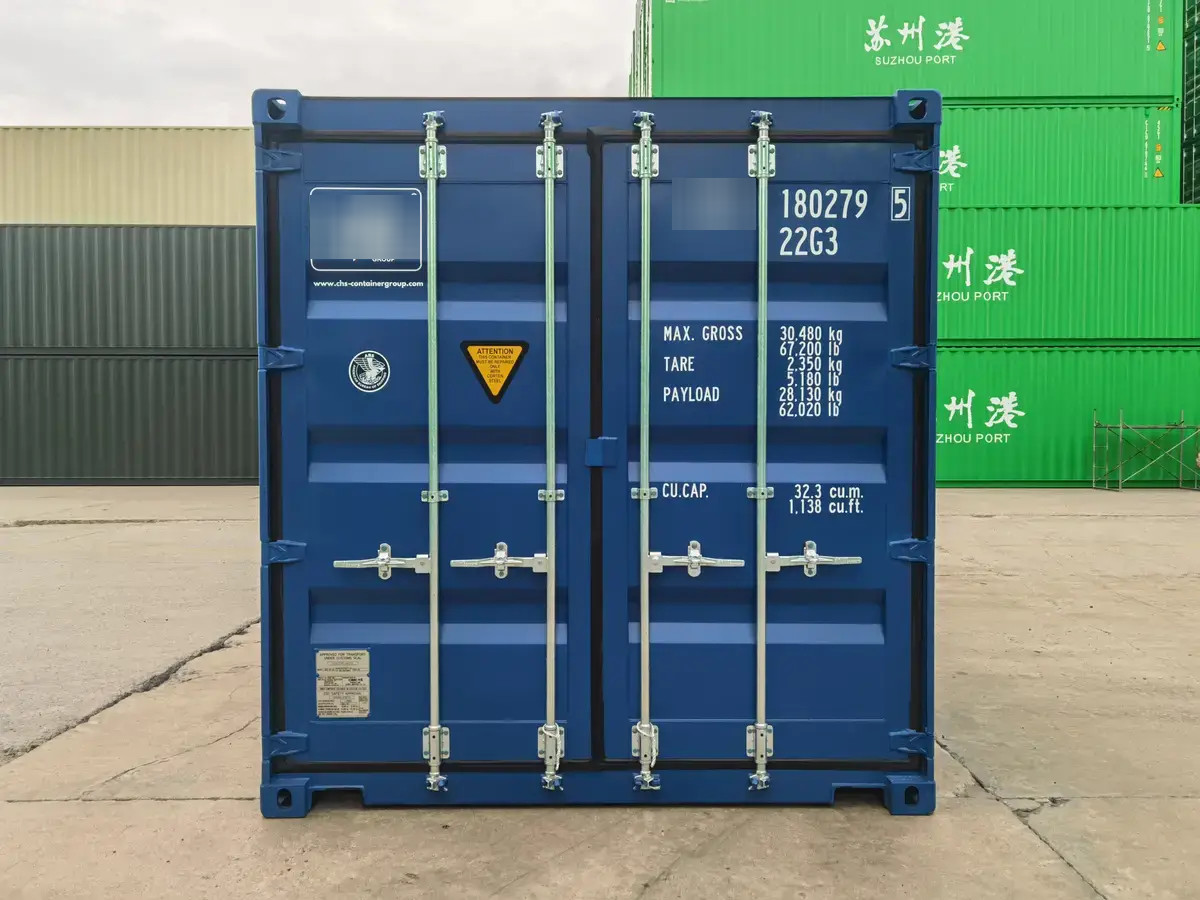
inkl. MwSt., zzgl. Versand · netto 4.050,00 €
Technische Daten
600.46 x 243.79 x 259.11 cm
2,300 kg
33.16 m³
Online bestellen
4.819,50 € inkl. MwSt. · Versand 702,10 € inkl. MwSt. (Kranwagen)
Zahlung per Überweisung (Bankverbindung sofort nach der Bestellung) oder per Karte / Wallet über Stripe. Bis zu 10 Einheiten sofort bestellbar, größere Mengen auf Anfrage.
Technische Daten im Detail
| Abmessungen | |
|---|---|
| Außenlänge | 600.46 cm |
| Außenbreite | 243.79 cm |
| Außenhöhe | 259.11 cm |
| Innenlänge | 589.79 cm |
| Innenbreite | 222.40 cm |
| Innenhöhe | 260.40 cm |
| Breite | 222.60 cm |
| Höhe | 249.40 cm |
| Gewichte und Kapazität | |
| Bodenfläche innen | 13.84 m² |
| Volumen | 33.16 m³ |
| Nettogewicht | 2300 kg |
| Max. Bruttogewicht | 30480 kg |
| Weitere Angaben | |
| Innenbodenfläche | 13.84 m² |
Ähnliche Container
Beliebte Umbauten
20ft Container mit segmentierter Seitentür: Aufbau und Idee
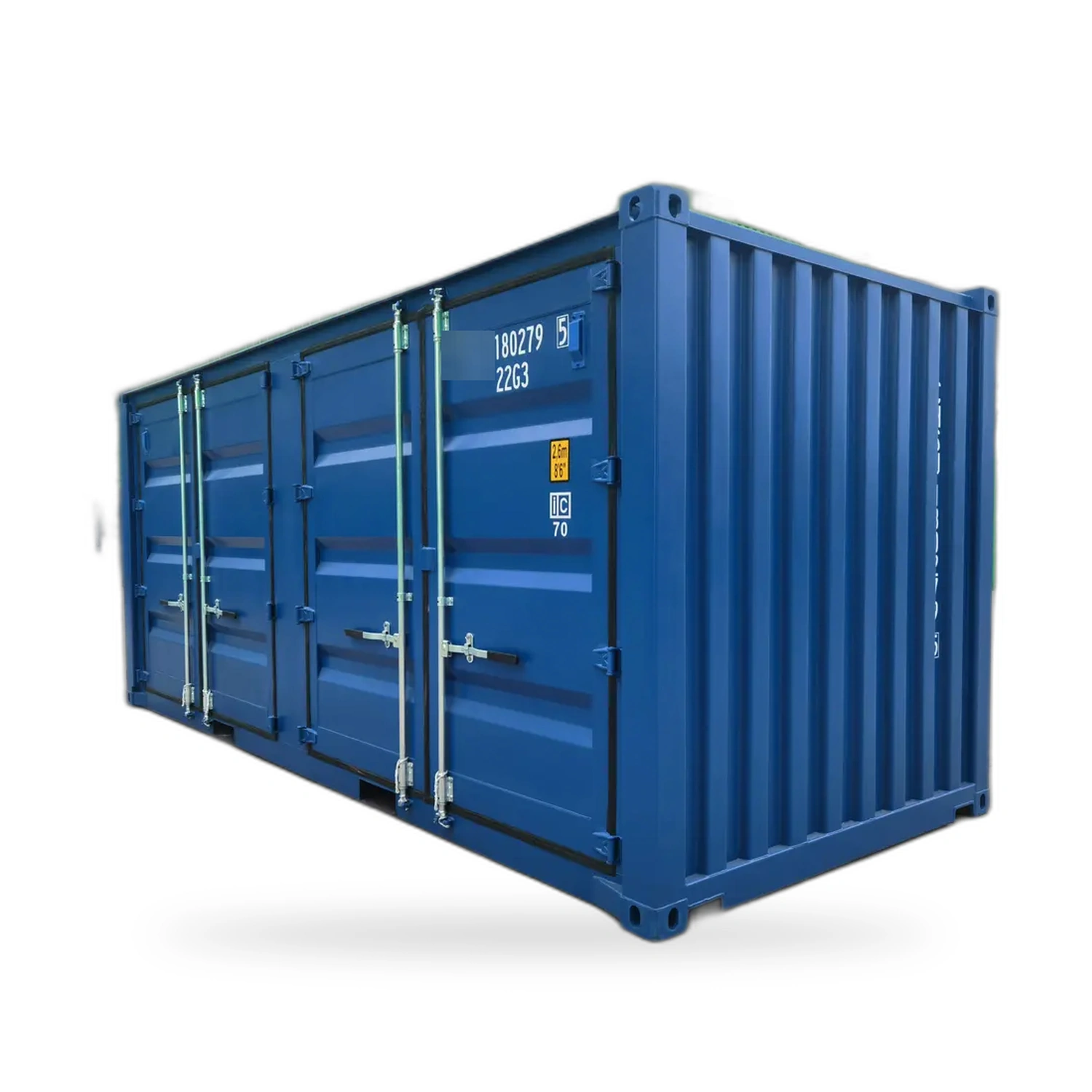
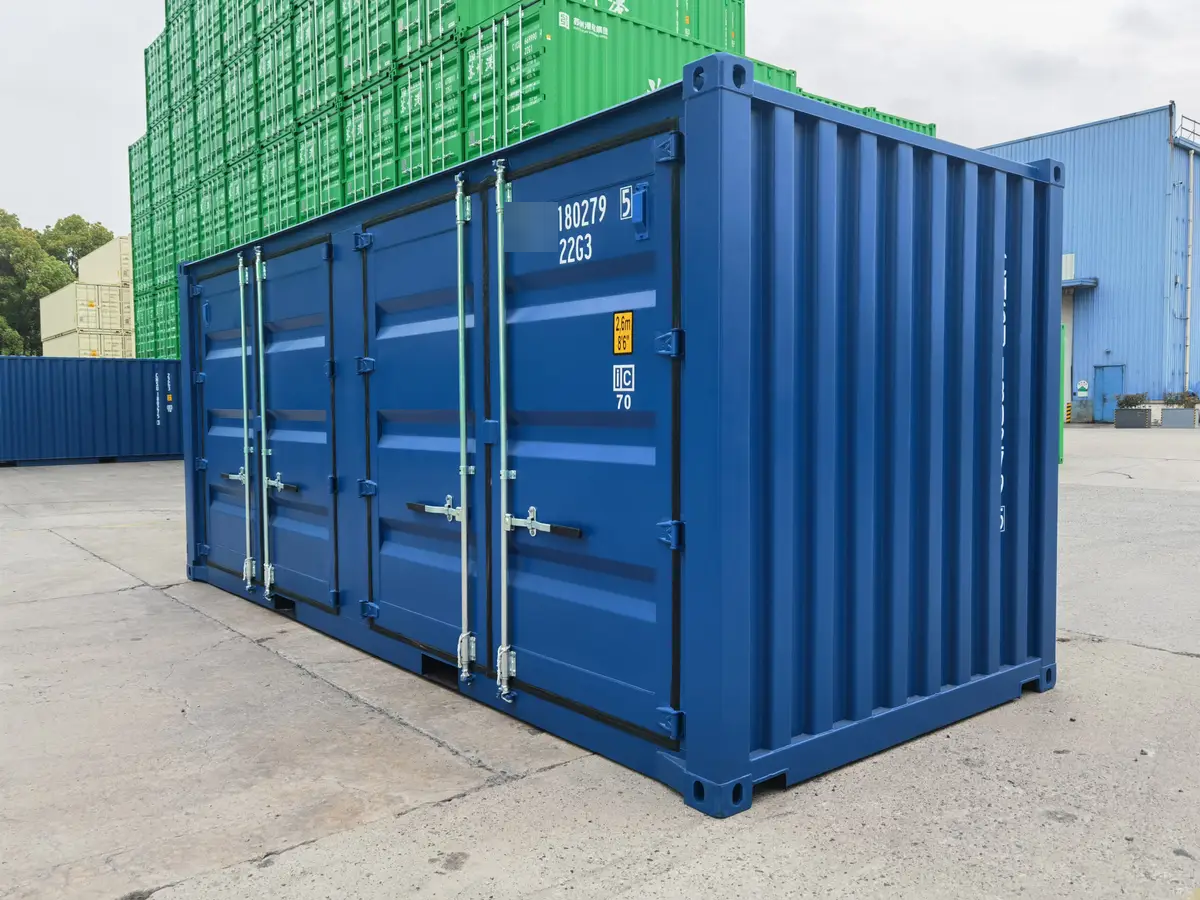
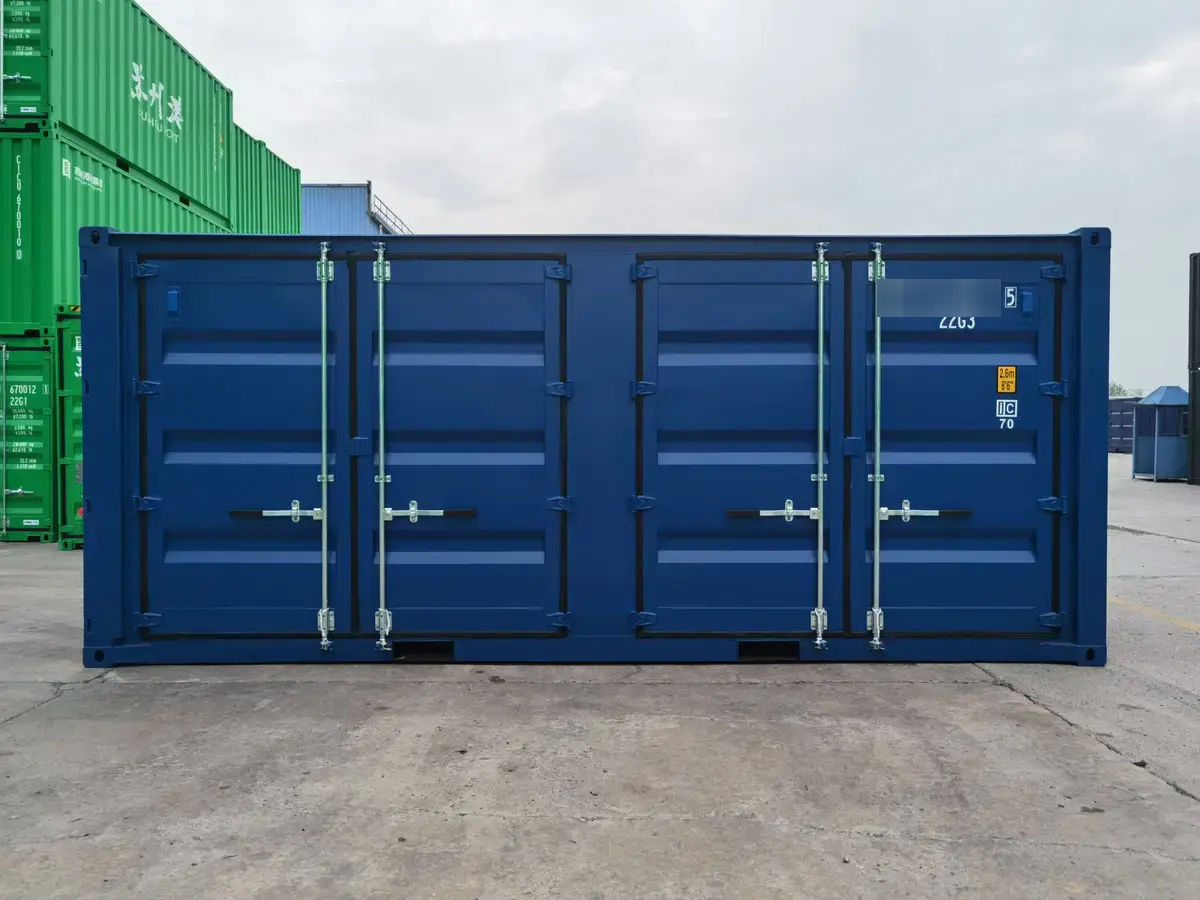
Nimmt man einem Standardcontainer eine Längsseite weg, entsteht die Bauform, um die es hier geht. Ein 20ft Container mit segmentierter Seitentür ersetzt die feste Wellblechwand nicht durch ein einziges riesiges Türblatt, sondern durch mehrere schmalere, angeschlagene Segmente, die sich nacheinander aufklappen und an die Stirnseiten zurückschwenken lassen. Die Stirntür bleibt erhalten. Das Ergebnis ist ein Behälter, an dem entlanggegangen werden kann, statt nur hineinzusehen.
Die Segmentierung ist eine konstruktive Notwendigkeit und kein Werbebegriff. Ein einteiliges Türblatt dieser Länge würde in den Bändern durchhängen, wäre bei Wind kaum beherrschbar und bräuchte einen Schwenkradius, den kaum ein Hof hergibt. Mehrere schmale Flügel bleiben von Hand bewegbar, halten die Bandbelastung im Rahmen und erlauben es, nur den Teil der Längsseite zu öffnen, der gerade gebraucht wird.
Zugang über die gesamte Länge
Beim klassischen Stirntürcontainer läuft alles durch eine Öffnung. Die erste Palette hinein ist die letzte Palette heraus, Gassen müssen vorab geplant werden, und was hinten liegt, wird nur erreichbar, wenn davor Platz geschaffen wird. Die offene Längsseite hebt diese Reihenfolge auf. Jeder Stellplatz auf der Ladefläche ist direkt von außen erreichbar, die Einlagerungsreihenfolge bestimmt die Auslagerung nicht mehr.
Das wirkt sich auf mehr aus als auf die Zeit. Kommissionierung in kleinen Mengen wird im Container überhaupt erst sinnvoll, weil niemand mehr über die Ladung steigen muss. Mischladungen lassen sich nach Empfänger ordnen statt nach dem, was durch die Stirntür passt. Werkzeuglager, Ersatzteillager und Eventlager profitieren unmittelbar. Und lange Güter wie Rohre, Kanthölzer, Profile, Lüftungskanäle oder Strangware werden seitlich über die volle Innenlänge eingelegt, statt durch die Stirnöffnung eingefädelt zu werden.
Staplerzugriff und die Geometrie der Seitenbeladung
Der Zeitgewinn ist eine Frage der Geometrie, nicht der Kraft. Ein Frontstapler, der durch die Stirntür belädt, muss mit der eigenen Baulänge in den Container einfahren, bevor die Gabel die hinteren Stellplätze erreicht. Davor wird eine tiefe Rangierfläche zum geraden Ausrichten gebraucht, und ein Teil der Fahrt erfolgt ohne freie Sicht. Bei der Seitenbeladung fährt der Stapler quer zur Längsseite an, setzt ab und fährt zurück. Der Gabelweg entspricht etwa der Innenbreite statt der Innenlänge.
Erfasst sind eine Seitenöffnungsbreite von 222,60 cm und eine Seitenöffnungshöhe von 249,40 cm. Die Öffnungshöhe ist der Wert, der gegen die Bauhöhe des eingefahrenen Hubmasts geprüft werden sollte. Ein Mast, der nicht unter den Sturz passt, fällt sonst erst bei der Anlieferung auf. Ebenso lohnt die Frage, welche Segmente einzeln zu öffnen sind, denn wer nur eine Lücke von zwei Metern braucht, muss an einem windigen Tag nicht die gesamte Flanke aufschwenken.
Was das Öffnen einer Längsseite statisch bedeutet
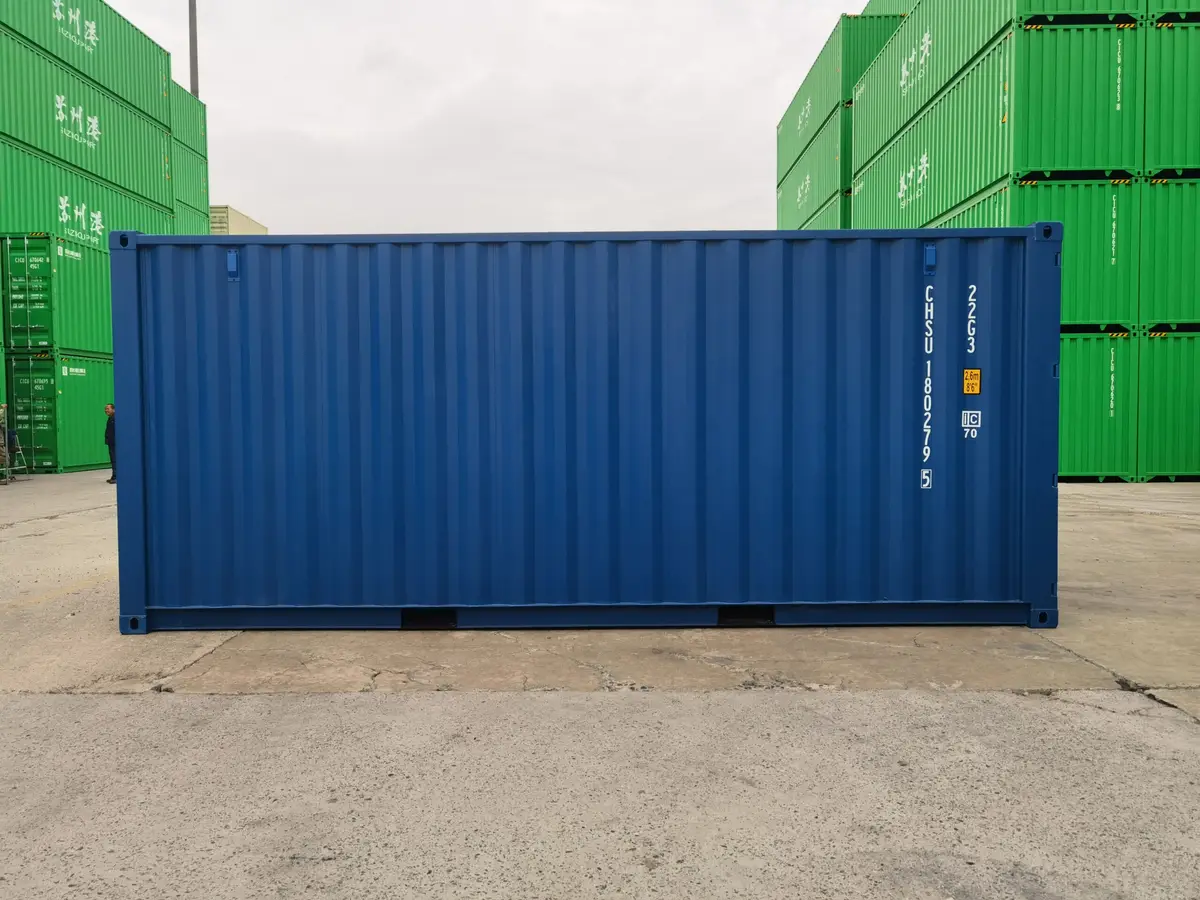
Die Wellblechwand eines Containers ist keine Verkleidung, sondern eine mittragende Schale. Sie nimmt Schubkräfte auf und verhindert, dass sich der Kasten unter seitlicher Belastung zum Parallelogramm verzieht. Fällt diese Schale weg, muss die Aufgabe an anderer Stelle übernommen werden: von einem verstärkten Türrahmen, von den oberen und unteren Längsträgern und von den Eckpfosten. Diese Bauteile sind bei einem Seitentürcontainer entsprechend kräftiger ausgeführt.
Daraus folgen zwei Dinge, die für die Planung wichtig sind. Erstens die Breite. Für diese Einheit ist eine Innenbreite von 222,40 cm erfasst, während für den Standardcontainer im Zwanzigfuß-Format 235,20 cm erfasst sind. Die Differenz geht an die Türkonstruktion: Rahmen, Bandpfosten, Verschlussstangen und Dichtungen nehmen Innenbreite weg. Wer ein Regalraster plant oder prüft, ob zwei Ladeeinheiten nebeneinander stehen, rechnet mit dem schmaleren Wert.
Zweitens das Verhalten beim Umsetzen. Die Bauform reagiert empfindlicher darauf, verwunden abgesetzt zu werden. Die Aufstellung erfolgt auf ebenen, gleichmäßig tragenden Auflagerpunkten. Türen, die auf ebener Fläche sauber schließen, können auf einer verwundenen Fläche klemmen. Gehoben wird an den Eckbeschlägen und ausschließlich bei geschlossenen, verriegelten Flügeln.
Erfasste Maße
Die folgenden Werte sind für diese Einheit hinterlegt. Eine Innenhöhe wird hier bewusst nicht genannt, weil der erfasste Wert nicht zur erfassten Außenhöhe passt. Die Innenhöhe sollte im Angebot für die konkret gelieferte Einheit bestätigt werden.
| Maß | Erfasster Wert |
|---|---|
| Innenlänge | 589,79 cm |
| Innenbreite | 222,40 cm |
| Seitenöffnungsbreite | 222,60 cm |
| Seitenöffnungshöhe | 249,40 cm |
| Außenlänge | 600,46 cm |
| Außenbreite | 243,79 cm |
| Außenhöhe | 259,11 cm |
| Ladefläche | 13,84 m² |
| Volumen | 33,16 m³ |
| Maximales Bruttogewicht | 30.480 kg |
| Leergewicht (Tara) | 2.300 kg |
Dichtungen, Verschluss und Sicherung
Eine geschlossene Wand hat eine Fuge. Eine segmentierte Längsseite hat eine Fuge an jedem Flügel, dazu Kopf- und Bodendichtung sowie eine Dichtung an jedem Anschlagpfosten. Das ist kein Mangel, bedeutet aber, dass deutlich mehr Dichtungslänge zu kontrollieren ist als bei einem Standardcontainer, und Dichtungen entscheiden darüber, ob eine Einheit wind- und wasserdicht bleibt. Der Bodenanschlag sollte frei von Splitt bleiben, denn ein Steinchen unter der Bodendichtung hält einen Flügel jahrelang um einen Millimeter offen.
Der Verschluss folgt derselben Logik. Jeder Flügel hat eigene Verschlussstangen, die oben und unten eingreifen, und die Flügel schließen in einer festgelegten Reihenfolge, damit die Anschlagpfosten korrekt überlappen. Diese Reihenfolge sollte bei der Übergabe gezeigt werden. Ein Flügel, der außer der Reihe zugedrückt wird, verbiegt Verschlussgestänge und Bänder. Sinnvolle Fragen an den Lieferanten: welche Flügel nehmen Vorhängeschlösser auf, ist ein Schlosskasten nachrüstbar, und lassen sich die Flügel im geöffneten Zustand sicher feststellen.
Aufstellung und Platzbedarf
Der Vorteil der Seitenöffnung besteht nur, wenn er nutzbar ist. Einzuplanen sind der Schwenkbereich der Flügel entlang der gesamten Flanke, eine Arbeitsfläche quer dazu für den Stapler und ein Untergrund, der unter dem beladenen Fahrzeug tragfähig bleibt. In einer dicht belegten Reihe braucht die Einheit die Endposition oder eine bewusst freigehaltene Lücke. Auch die Ausrichtung lohnt eine Überlegung: möglichst von der Hauptwindrichtung abgewandt, damit offene Flügel nicht erfasst werden, und zur Betriebsfläche hin, wenn die offene Seite zugleich als Ausgabe oder Auslage dient.
Typische Einsatzfälle
Die Bauform findet sich überall dort, wo der Container nicht nur transportiert, sondern täglich bedient wird. Im Baustellenlager wird Werkzeug morgens ausgegeben und abends zurückgenommen, ohne dass jemand über gestapeltes Material klettert. Im Ersatzteillager eines Fuhrparks lassen sich Regale so anordnen, dass jede Position von außen sichtbar bleibt. Händler für Bauelemente lagern Rohre, Profile, Dachrinnen und Kanthölzer längs ein und entnehmen einzelne Stangen, ohne die gesamte Lage bewegen zu müssen.
Im Veranstaltungsbereich dient die offene Längsseite als Ausgabefläche, im Handel als Auslage, in der Werkstatt als Lichtseite über der Arbeitsbank. Auch als Zwischenlager bei Umbauten ist die Bauform beliebt, weil Möbel und Kartons seitlich eingesetzt und in der Reihenfolge entnommen werden können, in der sie gebraucht werden. Wo dagegen ausschließlich komplette Ladungen bewegt werden und der Behälter zwischen zwei Terminals pendelt, bringt die Seitenöffnung keinen Vorteil, sondern nur zusätzliche Dichtungslänge und zusätzliches Leergewicht.
Kontrolle und Pflege der Beschläge
Eine segmentierte Längsseite lebt von beweglichen Teilen, und bewegliche Teile im Freien brauchen eine kurze Routine. Bänder und Verschlussgestänge werden regelmäßig auf Leichtgängigkeit geprüft und an den vorgesehenen Stellen geschmiert, ohne die Dichtungen zu benetzen. Die Verschlussstangen sollen oben und unten spürbar eingreifen. Ein Flügel, der sich nur mit Nachdruck schließen lässt, weist auf einen verwundenen Rahmen, einen verschmutzten Bodenanschlag oder eine gequetschte Dichtung hin, und diese Ursache sollte geklärt werden, bevor weiter mit Kraft gearbeitet wird.
Nach jedem Umsetzen der Einheit werden Fugenbild, Türgang und Verriegelung erneut geprüft, denn eine ungleichmäßige Auflagerung zeigt sich zuerst an den Türen und erst viel später an der Struktur. Wo Zufahrten im Winter gestreut werden, sollten Beschläge und Schwelle abgespült werden, weil Salzreste genau an den beweglichen Teilen liegen bleiben und dort die Beschichtung angreifen.
Kaufkriterien für einen 20ft Container mit segmentierter Seitentür
Gefragt werden sollte nach allem, was in keiner Maßtabelle steht: welche Segmente einzeln bedienbar sind, wie geöffnete Flügel gesichert werden, welche Innenhöhe die gelieferte Einheit hat, welche Zurrösen an der geschlossenen Längsseite und im Boden vorhanden sind und ob die Einheit für den Seetransport oder für den stationären Einsatz vorgesehen ist. Bei geplantem Ausbau zur Werkstatt oder zum Lager kommen Bodenaufbau und die Frage hinzu, welche Durchbrüche ohne Eingriff in den Türrahmen möglich sind.
Wirtschaftlich lohnt sich die Bauform dort, wo häufig bewegt wird: wöchentliche Be- und Entladung, Kommissionierung statt Komplettversand, oder lange Güter, die um keine Ecke gehen. Für einen Behälter, der einmal gefüllt und nach einem Jahr wieder geöffnet wird, ist der klassische Stirntürcontainer günstiger und einfacher. Entscheidend ist, wie oft die Türen bewegt werden, nicht wie viel hineinpasst.
Häufig gestellte Fragen
Was unterscheidet einen 20ft Container mit segmentierter Seitentür von einer einteiligen Seitentür?
Die Öffnung ist in mehrere angeschlagene Flügel geteilt. Schmale Flügel bleiben von Hand bewegbar, halten die Bandbelastung gering, brauchen weniger Schwenkraum und erlauben es, nur einen Teil der Flanke zu öffnen. Ein einteiliges Türblatt über zwanzig Fuß würde durchhängen, wäre bei Wind schwer beherrschbar und würde erheblich mehr Platz neben dem Container verlangen.
Warum ist die Innenbreite geringer als beim Standardcontainer?
Erfasst sind hier 222,40 cm Innenbreite gegenüber 235,20 cm beim Standardcontainer im Zwanzigfuß-Format. Die Differenz beansprucht die Türkonstruktion mit verstärktem Rahmen, Bandpfosten, Verschlussgestänge und Dichtungen. Für Regalraster, Palettenpläne und alles, was nebeneinander stehen soll, ist deshalb mit dem schmaleren Wert zu rechnen.
Leidet die Statik, wenn eine Längsseite entfällt?
Die Wellblechwand wirkt beim Standardcontainer mittragend und verhindert das Verwinden zum Parallelogramm. Bei der Seitentürvariante übernehmen ein verstärkter Türrahmen, die oberen und unteren Längsträger sowie die Eckpfosten diese Aufgabe. Gehoben wird weiterhin an den Eckbeschlägen, aber nur mit geschlossenen und verriegelten Flügeln, und aufgestellt wird auf ebenen Auflagerpunkten.
Wie viel Platz braucht die Seitenöffnung?
Einzuplanen sind der Schwenkbereich der Flügel über die gesamte Flanke sowie eine quer dazu liegende Arbeitsfläche für den Stapler auf tragfähigem Untergrund. In einer dicht belegten Reihe wird die Endposition oder eine freigehaltene Lücke benötigt. Eine von der Hauptwindrichtung abgewandte Ausrichtung verringert das Risiko, dass offene Flügel erfasst werden.
Welche Innenhöhe hat die Einheit?
Sie wird hier bewusst nicht angegeben. Der erfasste Wert passt nicht zur erfassten Außenhöhe von 259,11 cm, sodass eine Veröffentlichung ein Maß nennen würde, das möglicherweise nicht zur Lieferung passt. Die Innenhöhe sollte im Angebot für die konkrete Einheit ausgewiesen werden, zusammen mit der Seitenöffnungshöhe von 249,40 cm.
Passende Container & Ausstattungsoptionen
Ähnliche Produkte