inkl. MwSt., zzgl. Versand · netto 3.049,00 €
Technische Daten
605.79 x 243.79 x 259.11 cm
2,300 kg
32 m³
Online bestellen
3.628,31 € inkl. MwSt. · Versand 702,10 € inkl. MwSt. (Kranwagen)
Zahlung per Überweisung (Bankverbindung sofort nach der Bestellung) oder per Karte / Wallet über Stripe. Bis zu 10 Einheiten sofort bestellbar, größere Mengen auf Anfrage.
Technische Daten im Detail
| Abmessungen | |
|---|---|
| Außenlänge | 605.79 cm |
| Außenbreite | 243.79 cm |
| Außenhöhe | 259.11 cm |
| Innenlänge | 561.11 cm |
| Innenbreite | 243.80 cm |
| Innenhöhe | 223.30 cm |
| Gewichte und Kapazität | |
| Bodenfläche innen | 14.49 m² |
| Volumen | 32.00 m³ |
| Nettogewicht | 2300 kg |
| Max. Bruttogewicht | 45000 kg |
| Weitere Angaben | |
| Innenbodenfläche | 14.49 m² |
Ähnliche Container
Beliebte Umbauten
Was ein 20ft Flat Rack Container gebraucht im Alltag leistet
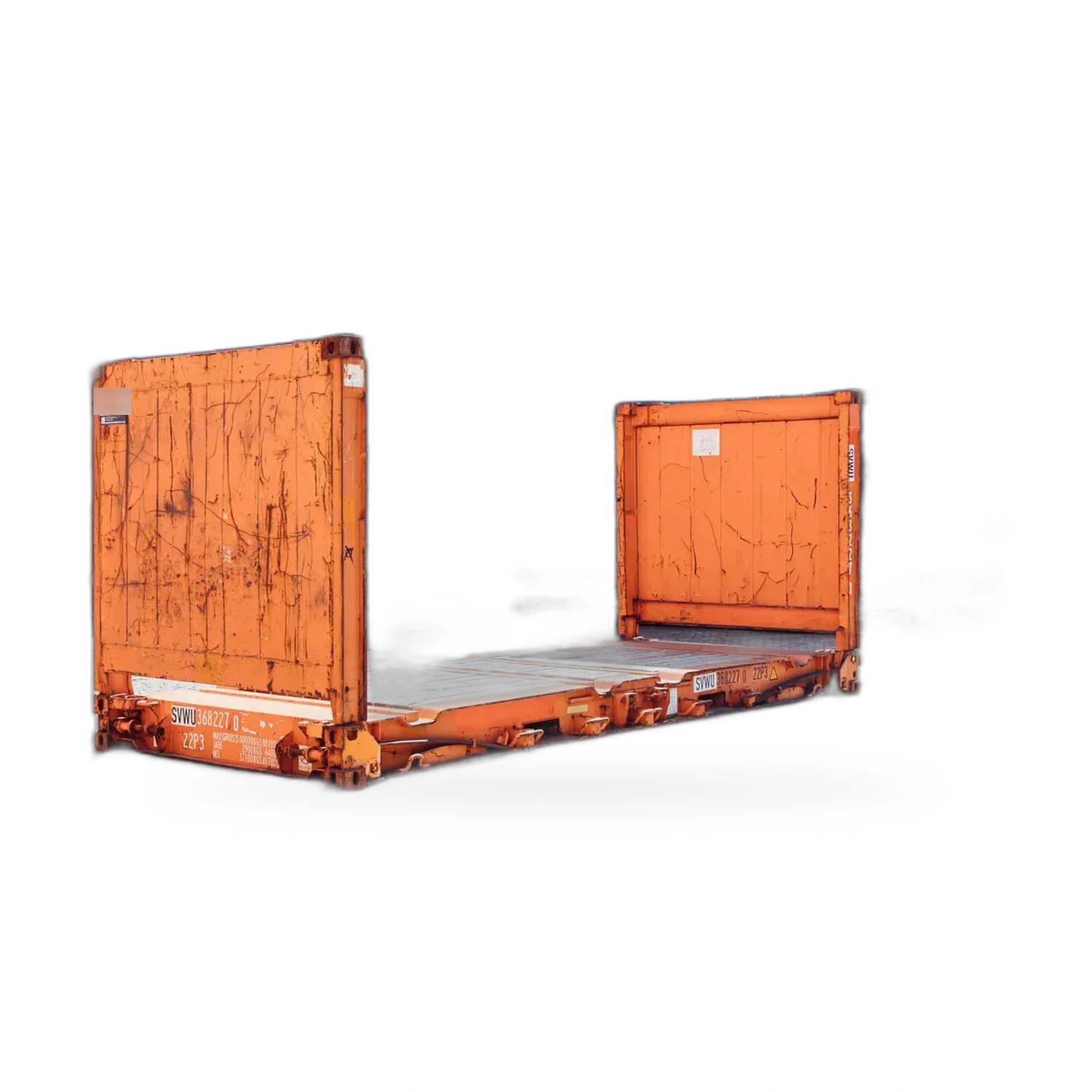
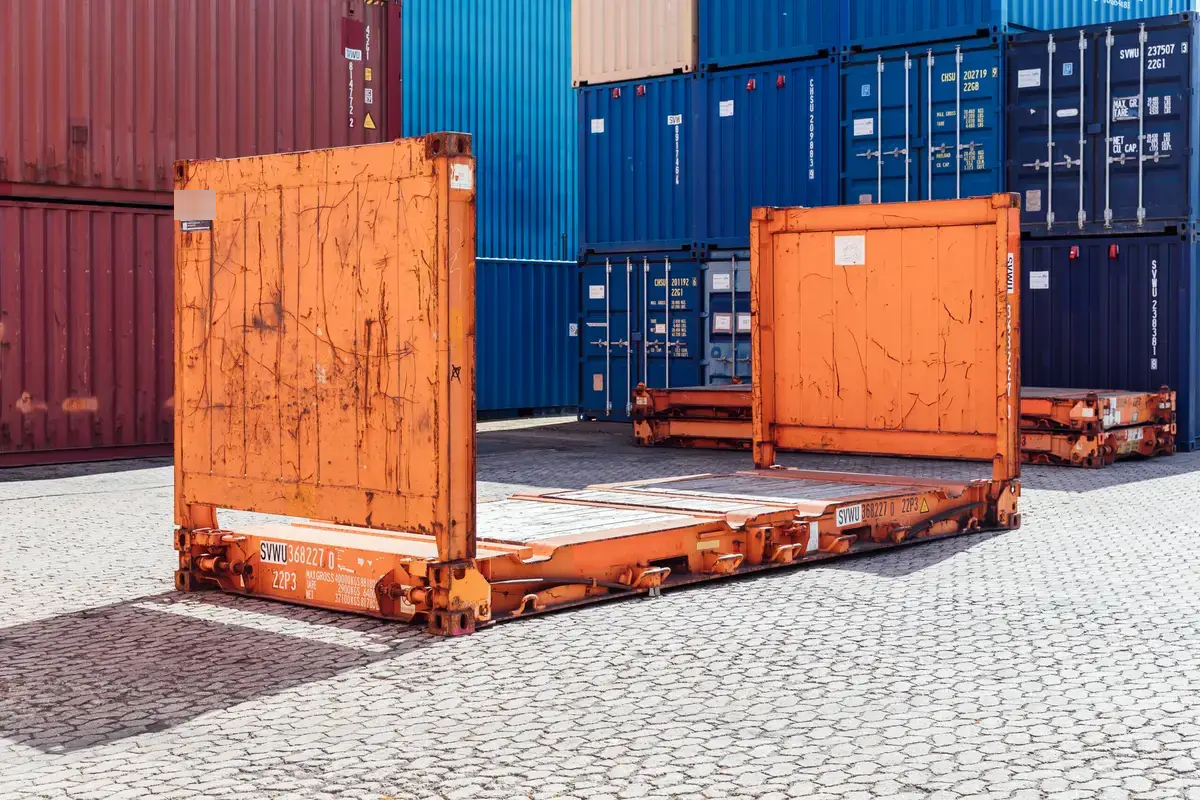
Sperrige Ladung scheitert fast immer an der Türöffnung. Ist ein Bauteil breiter oder höher als der Türrahmen, hilft weder Kran noch Stapler weiter, denn der Standardcontainer gibt die Geometrie vor. Wer einen 20ft Flat Rack Container gebraucht einsetzt, dreht dieses Verhältnis um. Übrig bleiben ein Stahldeck, zwei Stirnwände und vier Eckbeschläge. Beladen wird von oben oder von der Seite, und nicht mehr die Kiste, sondern die Ladung selbst bestimmt das Maß. Im Speditionsdeutsch heißt eine solche Sendung Sperrgut oder Übermaß, und sie wird anders kalkuliert, anders gestaut und anders gesichert als ein normaler Seecontainer.
Diese eine geometrische Entscheidung ist das ganze Produkt. Transformatoren, Pressengestelle, Kranteile, Bootsrümpfe, Rohrbündel, Kettenfahrzeuge, Natursteinblöcke und Betonfertigteile haben eine Eigenschaft gemeinsam: sie sind schwer, starr und im Zuschnitt unpassend. Das Flat Rack gibt ihnen eine ebene Ladefläche mit vier genormten Lastaufnahmepunkten, sodass die Sendung über dieselben Terminals, Kräne, Chassis und Twistlocks läuft wie ein geschlossener Container, obwohl sie in keinen hineinpassen würde.
Innenmaße, Außenmaße und Nutzlast im Überblick
Der Rahmen behält den ISO-Fußabdruck eines 20-Fuß-Containers, damit die üblichen Umschlaggeräte greifen können. Die erfassten Werte dieser Einheit stehen unten. Lassen Sie sich diese Angaben für genau die angebotene Einheit bestätigen, denn Flat Racks unterscheiden sich zwischen Herstellern und Baujahren deutlich stärker als Standardcontainer.
| Maß | Wert |
|---|---|
| Innenlänge | 561,11 cm |
| Innenbreite | 243,80 cm |
| Innenhöhe | 223,30 cm |
| Außenlänge | 605,79 cm |
| Außenbreite | 243,79 cm |
| Außenhöhe | 259,11 cm |
| Ladefläche | 14,49 m² |
| Volumenhülle | 32,00 m³ |
| Zulässiges Gesamtgewicht | 45.000 kg |
| Leergewicht (Tara) | 2.300 kg |
| Nutzlast rechnerisch | 42.700 kg |
Zwei Zahlen sind entscheidend. Aus 45.000 kg zulässigem Gesamtgewicht abzüglich 2.300 kg Leergewicht ergeben sich rechnerisch 42.700 kg Nutzlast. Zum Vergleich: für den 20ft Standardcontainer sind 30.480 kg zulässiges Gesamtgewicht bei 13,84 m² Bodenfläche erfasst. Das Flat Rack belegt denselben Stellplatz auf Schiff und Chassis, bietet 14,49 m² Ladefläche und ist deutlich höher belastbar. Der Grund liegt im kurzen Kraftfluss: Ladung auf das Deck, Deck in die Querträger, Querträger in die schweren Längsträger und Eckpfosten, von dort direkt in die Eckbeschläge, an denen Spreader und Twistlocks angreifen. Dach und Seitenwände entfallen, das verbleibende Stahlprofil ist dafür kräftiger ausgelegt.
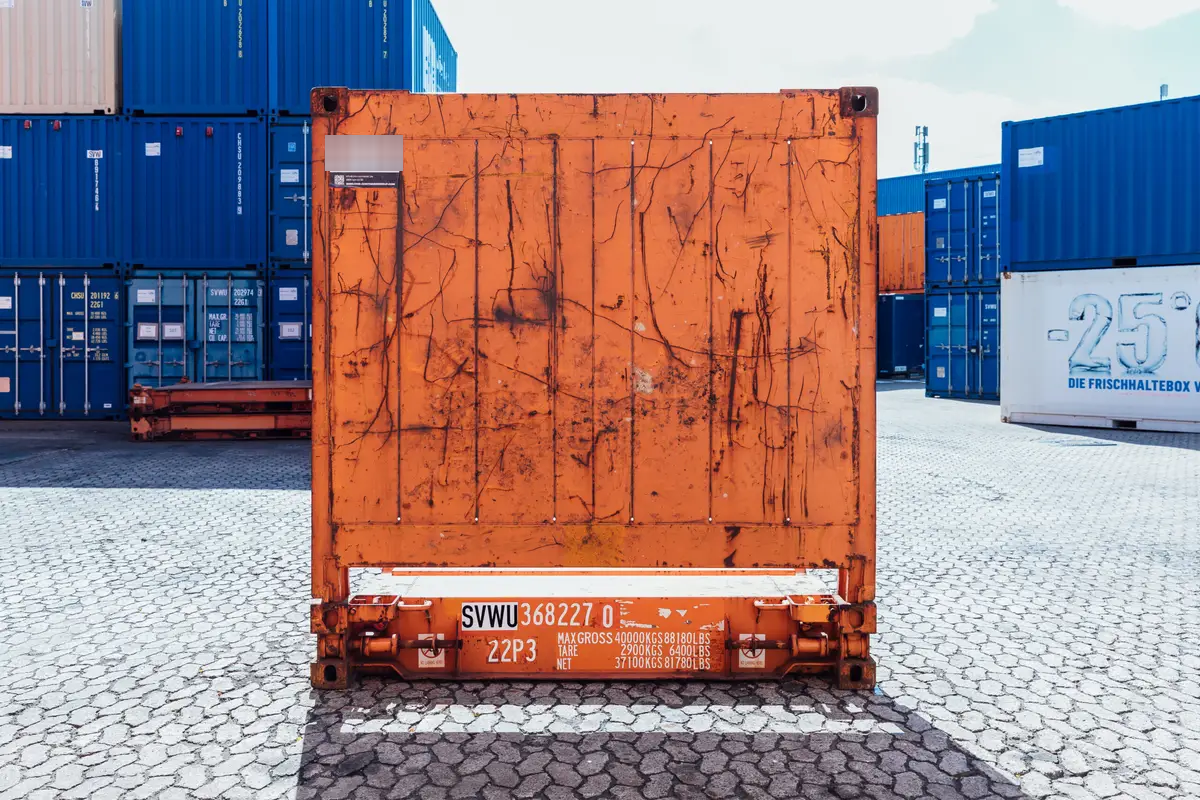
Die Innenhöhe von 223,30 cm ist die Höhe der Stirnwände, nicht die Höhe eines Daches. Sie sagt Ihnen, bis zu welcher Höhe seitliche Struktur vorhanden ist und wo die Wandoberkante im Verhältnis zu Ihrem Ladegut liegt. Das ist für die Zurrwinkel wichtig und für die Frage, ob sich ein Teil überhaupt an der Wand abstützen darf. Die 32,00 m³ sind ein rechnerischer Hüllwert für den Raum zwischen Deck und Wänden; reale Ladung ragt regelmäßig darüber hinaus, und genau dafür ist das Format gedacht.
Klappbare Stirnwände: Rücktransport, Lagerung und Überlänge
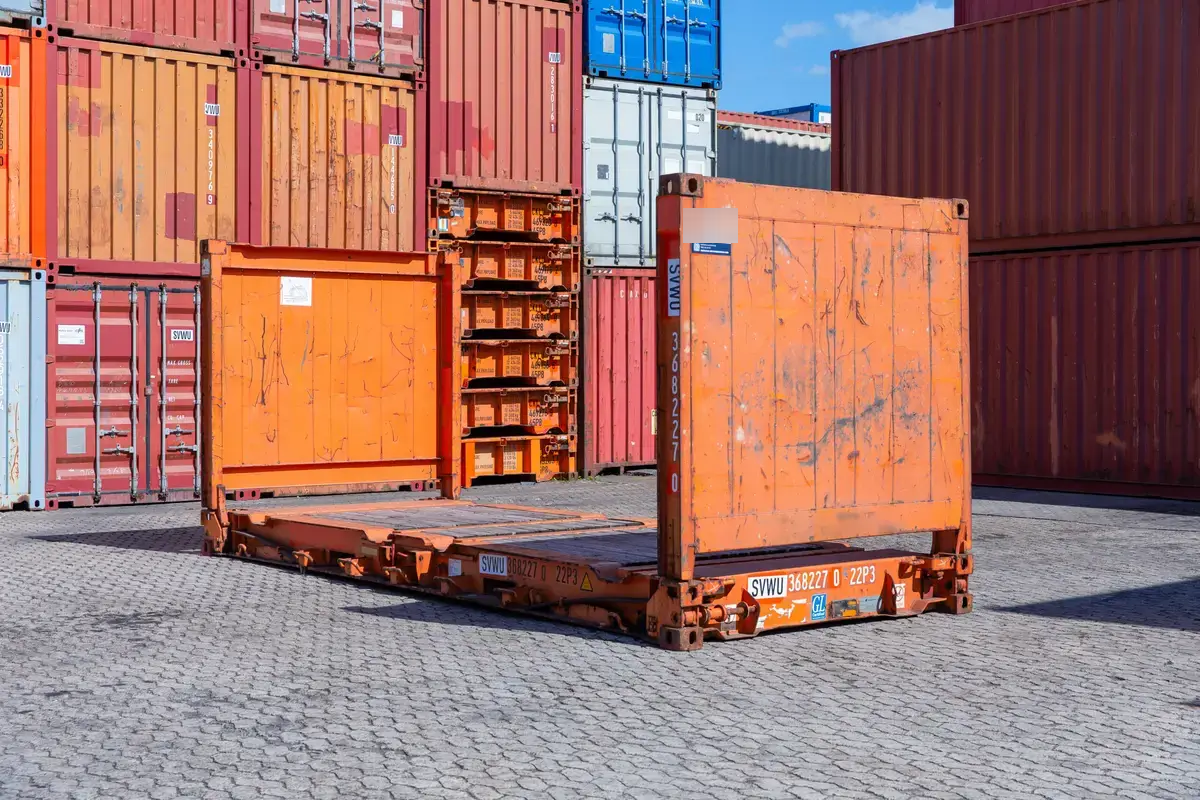
Bei der kollabierbaren Bauart lassen sich die Stirnwände flach auf das Deck klappen. Daraus ergeben sich drei praktische Vorteile.
- Leerlogistik: geklappte Racks lassen sich zu einem Bündel zusammenfassen, was Rückführung und Stellplatz im Hof erheblich verbilligt.
- Überlänge: bei abgeklappter Wand darf ein Träger oder ein Rohrstrang über die Decklänge von 561,11 cm hinausragen. Aus einem Ausschlusskriterium wird damit eine Frage der Stauung und Sicherung.
- Zugänglichkeit: ein Stapler kann von der Stirnseite auffahren, statt auf einen freien Kran zu warten.
Damit ist die Scharnier- und Verriegelungsmechanik das Herzstück der Einheit. Die Wände müssen sich ohne Hammer klappen lassen und spielfrei aufrecht verriegeln. Bei gebrauchten Einheiten sind festgerostete Bolzen, verbogene Knotenbleche und Wände, die nicht mehr rechtwinklig stehen, häufige Befunde. Prüfen Sie diesen Punkt zuerst, statt ihn vorauszusetzen.
Zurrösen, Lastverteilung und Punktlasten
Die Ladungssicherung findet im Freien statt, das Ladegut muss nach dem Zurren selbst eine stabile Einheit bilden. Einige Grundregeln entscheiden über das Ergebnis.
- Immer an Zurrösen und Rahmen sichern, niemals an Bodenbrettern oder Anbauteilen.
- Der Winkel bestimmt die Wirkung: steile Ketten wirken als Niederzurrung, flache als Direktzurrung gegen Verschieben. Meist braucht es beides.
- Reibung ist ein Sicherungsmittel: sauberes Deck und Antirutschmatten senken die Kräfte in den Zurrmitteln spürbar.
- Rad- und Kettenfahrzeuge brauchen Keile oder angeschweißte Anschläge sowie die vom Hersteller vorgesehenen Transportsicherungen.
- Unter schmalen Füßen, Kufen und kleinen Auflagerplatten gehören Kanthölzer oder ein Lastverteilungsträger aus Stahl.
Punktlasten werden am häufigsten unterschätzt. Eine Maschine auf vier kleinen Füßen leitet ihre gesamte Masse in vier kleine Flächen ein, während die Deckbelastbarkeit von verteilter Last ausgeht. Legen Sie Unterleghölzer so, dass schwere Auflagerpunkte über Querträgern und nicht in Feldmitte stehen, halten Sie den Schwerpunkt tief und mittig, und rechnen Sie Unterbau, Böcke und Zurrmittel mit in die 45.000 kg Gesamtmasse ein.
Gebrauchtprüfung vor dem Kauf
Ein Flat Rack arbeitet härter als ein Lagercontainer und zeigt das auch. Zustandsklassen sind nicht einheitlich definiert, deshalb zählen die schriftliche Zustandsbeschreibung und aussagekräftige Fotos.
- Eckbeschläge: Risse an den Öffnungen, Verformungen und Schweißreparaturen an den vier Lastpunkten.
- Querträger: Durchbiegung, tiefer Lochfraß, durchkorrodierte Stege und Reparaturen unbekannter Güte.
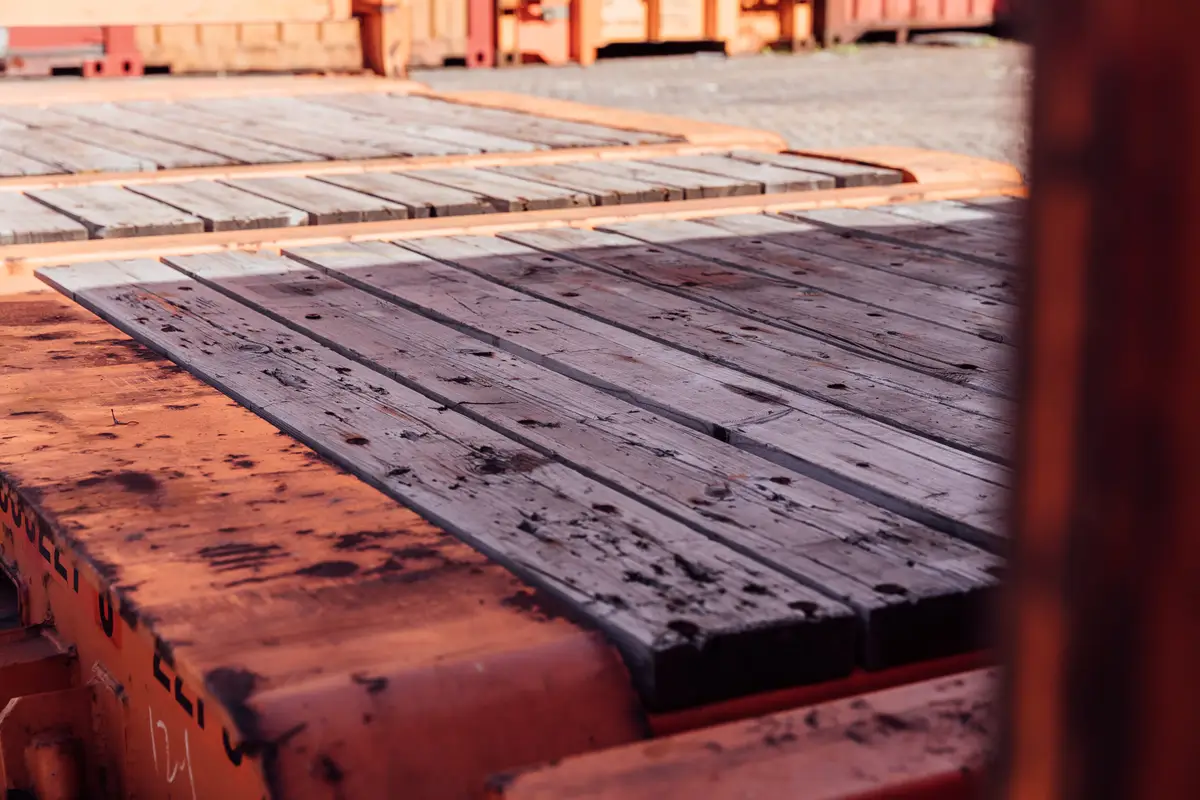
- Deck: weiches oder faules Holz, fehlende Schrauben, Delamination, bei Stahldecks Beulen und Wassersäcke.
- Stirnwände: klappen und verriegeln lassen, Scharnierspiel und Bolzenkorrosion prüfen.
- Zurrösen: Anzahl zählen, Schweißnähte und ausgelängte Ösen kontrollieren.
- Rahmengeometrie: an beiden Längsträgern entlangpeilen. Ein verwundener Rahmen sitzt nicht sauber im Twistlock.
Fragen Sie außerdem nach dem CSC-Schild. Es dokumentiert die Zulassung für den internationalen Verkehr samt Prüfterminen. Für einen weiteren Seetransport ist das wesentlich, für den stationären Einsatz im Hof nachrangig, und ein abgelaufenes Schild kann schlicht ein sachlicher Preisgrund sein. Lassen Sie sich zusagen, ob die Einheit als seetauglich oder nur für den stationären Gebrauch verkauft wird.
Umschlag, Transport und stationäre Nutzung
Angehoben wird an den Eckbeschlägen mit Spreader oder mit ausreichend bemessenen Anschlagmitteln. Staplerhandling ist nur möglich, wenn die Tragfähigkeit und die Gabellänge das wirklich hergeben. Verlässt ein Rack den Seeverkehr, wird es zu nützlicher Hofausstattung: als befestigte Standfläche für Maschinen, als Unterbau für Tank oder Aggregat, als Verladetisch, als Fahrplatte über weichem Untergrund oder als Montagebühne im Freien. In diesen Rollen ist die hohe Belastbarkeit der eigentliche Wert, und die fehlenden Wände stören nicht.
Typische Ladungen und was der Landverkehr verlangt
In der Praxis landen auf dem Deck vor allem Güter, die entweder zu schwer oder zu unförmig für den geschlossenen Container sind: Bagger und Radlader, Anbaugeräte, Transformatoren und Schaltanlagen, Werkzeugmaschinen mit hohem Eigengewicht, Stahlprofile und Trägerbündel, Rohre in Bündeln, Natursteinblöcke, Betonfertigteile, Kabeltrommeln, Bootsrümpfe sowie land- und forstwirtschaftliche Geräte. Gemeinsam ist ihnen, dass sie formstabil sind und Anschlagpunkte besitzen oder aufnehmen können. Empfindliche, weiche oder lose Güter gehören dagegen in einen geschlossenen Container, weil sie auf offener Ladefläche weder gegen Wetter noch gegen unbefugten Zugriff geschützt sind.
Auf der Straße endet die Normalität dort, wo die Ladung über die zulässigen Regelmaße hinausragt. Dann wird aus einem Standardtransport eine genehmigungspflichtige Fahrt mit fester Route, möglicher Begleitung und eigenen Zeitfenstern. Wer einen 20ft Flat Rack Container gebraucht für solche Sendungen einsetzt, sollte deshalb früh die tatsächlichen Maße der fertigen Ladeeinheit ermitteln, also Breite, Höhe und Länge einschließlich Unterbau, Wiege und überstehender Teile, und diese Werte allen Beteiligten in derselben Form weitergeben. Auch die Achslasten des Zugfahrzeugs und die Lage des Schwerpunkts auf dem Chassis gehören in diese Rechnung, denn ein zulässiges Gesamtgewicht sagt nichts darüber aus, wie sich die Masse auf die Achsen verteilt.
Im Seeverkehr gilt Ähnliches in anderer Form. Übermaßladung belegt Nachbarstellplätze, wird gesondert disponiert und kalkuliert und muss vor der Buchung mit korrekten Maßen und Gewichten angemeldet werden. Wer diese Angaben schätzt, riskiert Umbuchungen, zusätzliche Umschläge und Standzeiten, die den Preisvorteil der Gebrauchtbeschaffung schnell aufzehren.
Grenzen des Formats
Es gibt keinen Wetterschutz, keinen Diebstahlschutz und keinen abschließbaren Raum. Ladung reist offen, empfindliche Güter brauchen Folie, Haube oder Kiste. Ist Ihre Sendung nur überhoch, aber in der Breite regelkonform, ist ein Open-Top-Container meist die passendere Wahl, weil vier Wände und eine verschließbare Tür erhalten bleiben. Passt das Teil durch die Türöffnung, ist ein Standardcontainer günstiger. Das Flat Rack lohnt sich genau dann, wenn Gewicht oder Breite die Alternativen ausschließen.
Checkliste: einen 20ft Flat Rack Container gebraucht sicher beschaffen
- Maße und zulässiges Gesamtgewicht für die konkrete Einheit bestätigen lassen, nicht nur für den Typ.
- Funktion der klappbaren Stirnwände dokumentieren lassen.
- Anzahl und Zustand der Zurrösen sowie Deckmaterial klären.
- CSC-Status und Verwendungszweck schriftlich festhalten.
- Bereits ausgeführte Reparaturen und deren Ausführungsstandard erfragen.
- Hebemittel am Zielort und Tragfähigkeit des Untergrunds vorab planen.
Häufig gestellte Fragen
Wofür wird ein 20ft Flat Rack Container gebraucht eingesetzt?
Für alles, was nicht durch eine Containertür passt: Maschinen, Transformatoren, Boote, Stahlprofile, Rohrbündel und Betonfertigteile. Die Ladung wird von oben eingekrant oder von der Stirnseite aufgefahren und anschließend am Rahmen verzurrt. Da Seitenwände fehlen, begrenzen Stauung und Genehmigungen die Breite, nicht der Container selbst. Genau deshalb ist das Format im Sperrgutverkehr Standard.
Wie hoch ist die Nutzlast?
Erfasst sind 45.000 kg zulässiges Gesamtgewicht und 2.300 kg Leergewicht, rechnerisch also 42.700 kg Nutzlast. Darin enthalten sind neben dem Ladegut auch Unterbau, Böcke und Zurrmittel. Straßen-, Bahn- und Seetransportgrenzen können den tatsächlich nutzbaren Wert weiter einschränken, deshalb sollten die Streckenlimits vor der Planung einer schweren Partie geklärt sein.
Welche Maße hat die Ladefläche?
Die Innenmaße betragen 561,11 cm Länge und 243,80 cm Breite, was 14,49 m2 Ladefläche ergibt. Die Stirnwände stehen 223,30 cm über dem Deck. Die Außenmaße liegen bei 605,79 cm mal 243,79 cm mal 259,11 cm, der Fußabdruck bleibt also normgerecht. Die rechnerische Volumenhülle zwischen Deck und Wänden beträgt 32,00 m3.
Worauf ist beim Gebrauchtkauf besonders zu achten?
Auf die vier Eckbeschläge, die Querträger, den Deckbelag, die Zurrösen und die Geradheit der Längsträger. Klären Sie, ob frühere Reparaturen fachgerecht ausgeführt wurden, ob das CSC-Schild gültig ist und ob die Einheit seetauglich oder nur stationär verkauft wird. Lassen Sie sich diese Punkte schriftlich bestätigen, da Zustandsklassen nicht einheitlich definiert sind.
Kann das Flat Rack stationär genutzt werden?
Ja. Nach dem Ende der Seekarriere dient es häufig als belastbare Standfläche für Maschinen, als Unterbau für Tanks oder Aggregate, als Verladetisch oder als Fahrplatte über weichem Untergrund. In dieser Rolle ist ein abgelaufenes CSC-Schild unerheblich, entscheidend sind Rahmenzustand, Tragfähigkeit und ein tragfähiger, ebener Untergrund am Aufstellort.
Passende Container & Ausstattungsoptionen
Ähnliche Produkte