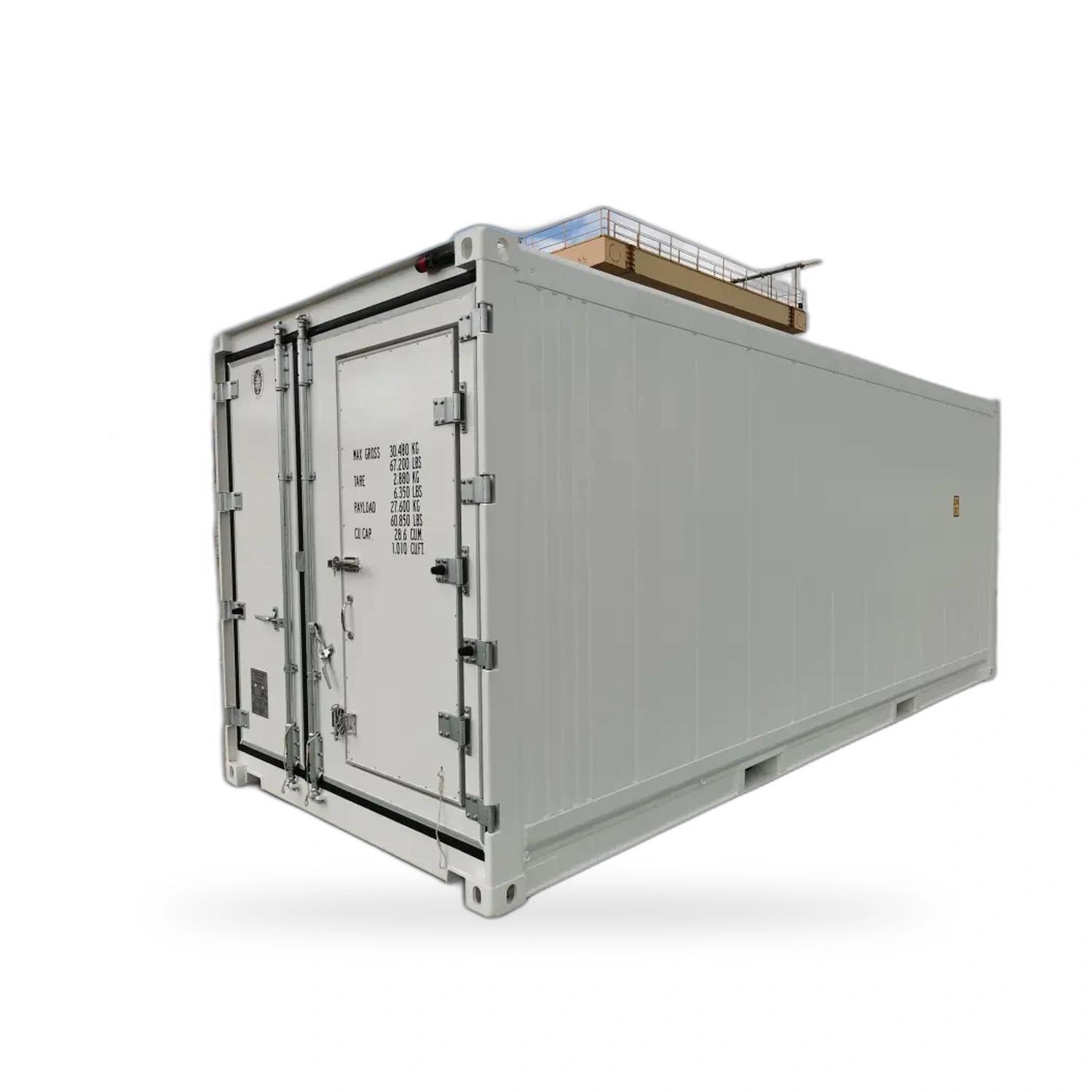
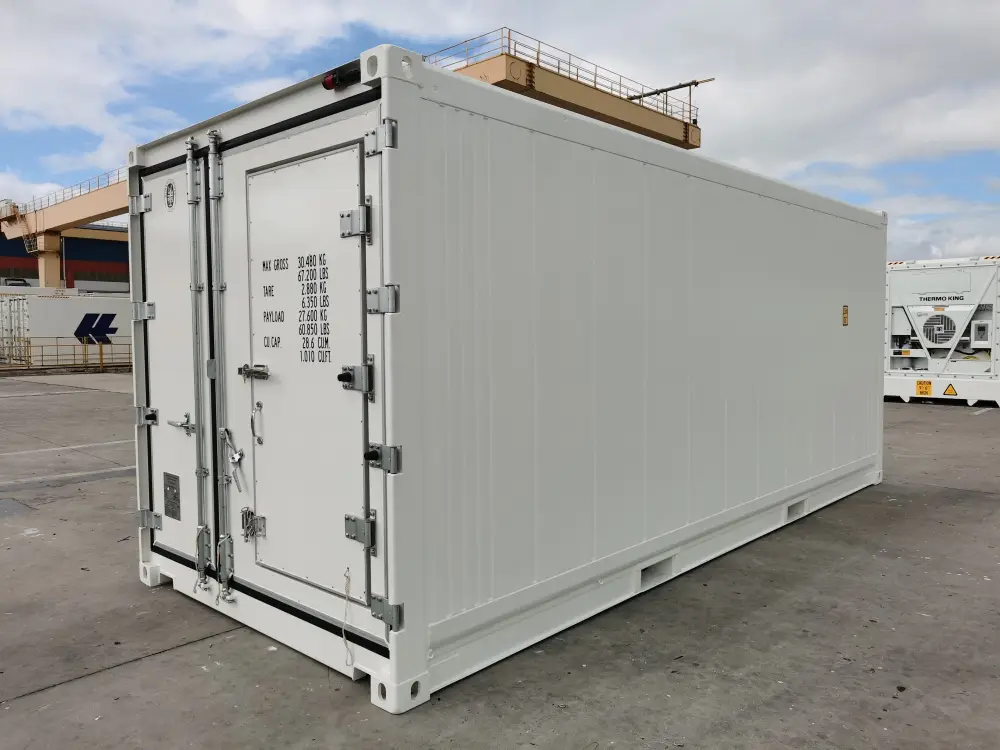
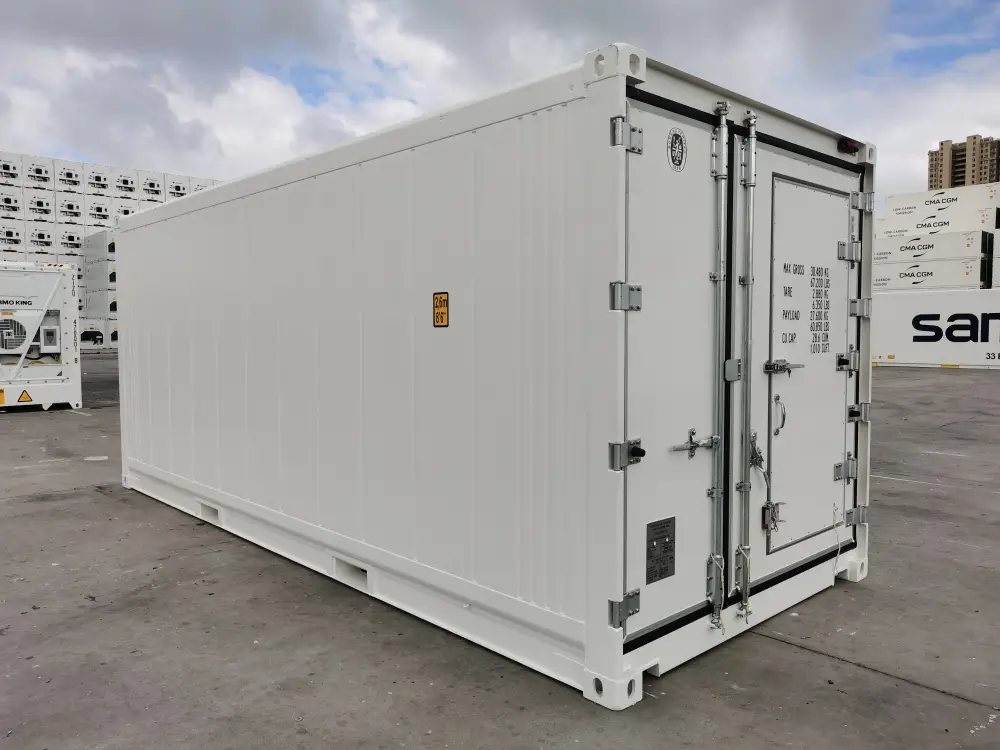
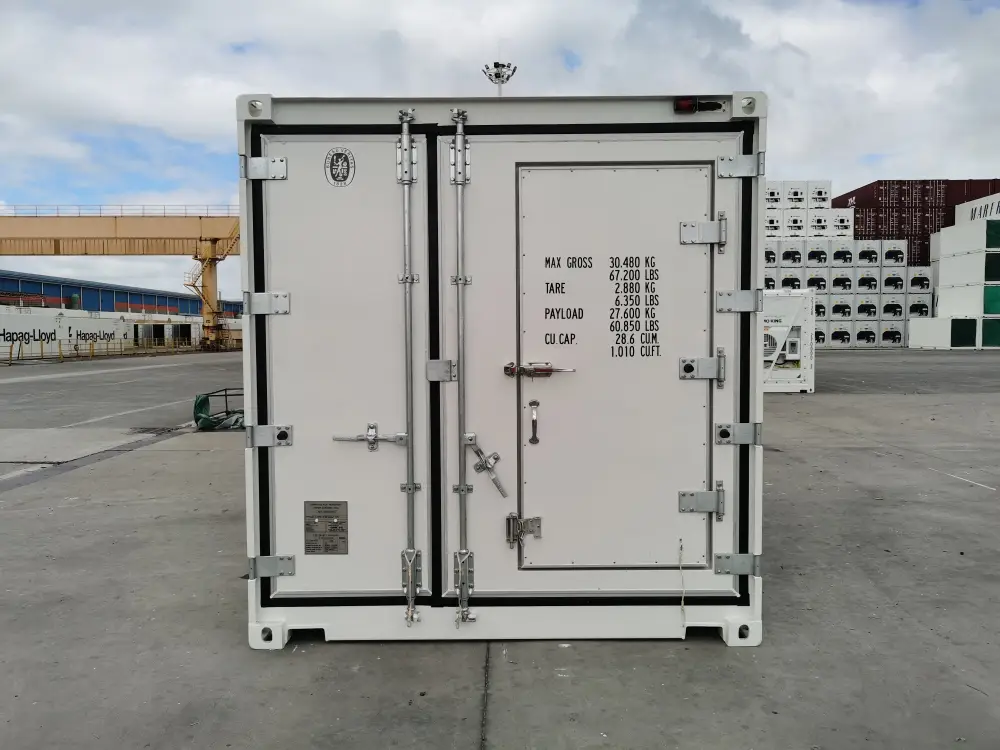
inkl. MwSt., zzgl. Versand · netto 10.950,00 €
Online bestellen
13.030,50 € inkl. MwSt. · Versand 702,10 € inkl. MwSt. (Kranwagen)
Zahlung per Überweisung (Bankverbindung sofort nach der Bestellung) oder per Karte / Wallet über Stripe. Bis zu 10 Einheiten sofort bestellbar, größere Mengen auf Anfrage.
Ähnliche Container
Beliebte Umbauten
Wer einen 20ft Kühlcontainer neu kaufen sollte
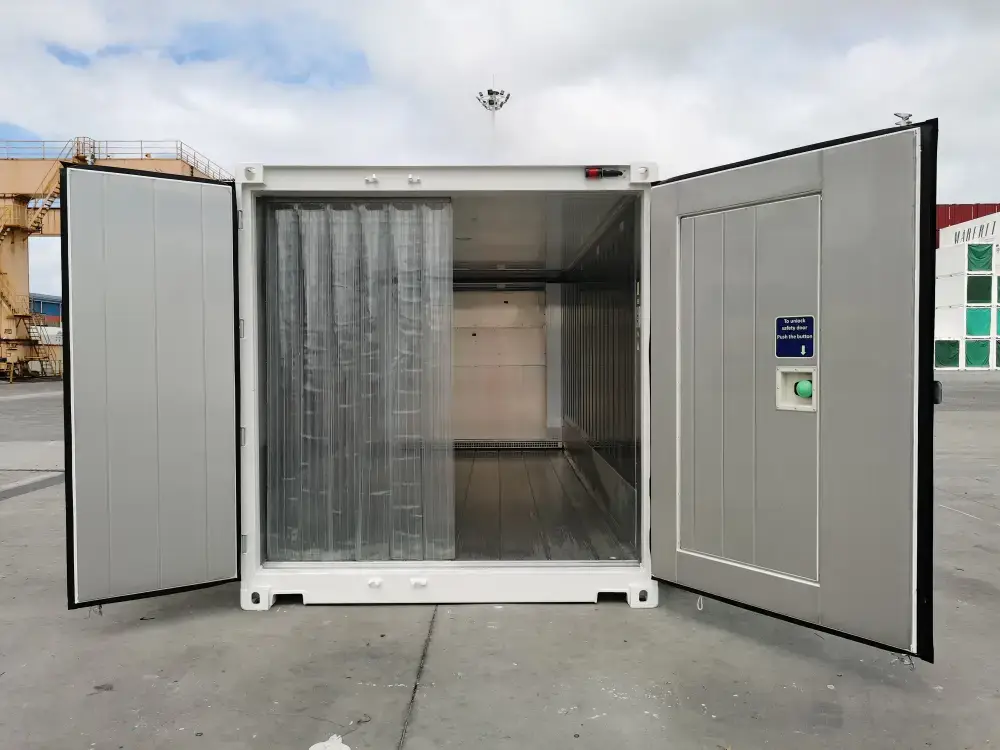
Wer einen 20ft Kühlcontainer neu kaufen möchte, erhält ein werkseitig gefertigtes und geprüftes Gerät mit vollständiger Restlebensdauer der Kältetechnik. Im Handel laufen solche Container als Einwegcontainer oder One-Trip-Container. Der Begriff bedeutet, dass die Einheit ab Werk genau eine beladene Reise in die Verkaufsregion hinter sich hat, und das ist der übliche Weg, auf dem ein neu gebauter Container nach Europa gelangt. Baulich und optisch ist er neu, die Innenverkleidung hat nie Ladung getragen und das Aggregat hat keine nennenswerten Betriebsstunden.
Bei Kühltechnik wiegt dieser Unterschied schwerer als beim Trockencontainer. Dort ist eine Delle kosmetisch. Beim Reefer ist jede Durchdringung des Paneels ein möglicher Weg für Feuchtigkeit in die Dämmung, und jede Betriebsstunde des Verdichters bringt den nächsten Serviceeinsatz näher. Der Neukauf beseitigt beide Unbekannten. Dazu kommen aktuelle Regelungstechnik, aktueller Umgang mit dem Kältemittel und ein Aggregattyp, für den Servicenetz und Ersatzteilversorgung über Jahre gesichert sind.
Maße und Sollwertbereich hängen von der Ausführung ab
Ein Punkt gehört vor alles andere. Innenmaße, Leergewicht und Sollwertbereich sind bei Kühlcontainern keine feste Eigenschaft der Baugröße. Sie ergeben sich aus dem verbauten Aggregat und aus der konkreten Ausführung, vor allem aus der Dämmstärke und aus der Bautiefe des Aggregats in der Stirnwand. Diese Werte gehören deshalb in das Angebot für die tatsächlich gelieferte Einheit und sollten dort schriftlich bestätigt werden, bevor Sie eine Belegungsplanung oder ein Stauschema festlegen. Alles Weitere in diesem Text beschreibt Aufbau, Regelung und Betriebspraxis, also die Punkte, die sich von Baureihe zu Baureihe nicht ändern.
Aufbau der Hülle und Dämmung
Ein Kühlcontainer ist eine Sandwichkonstruktion in einem Seecontainerrahmen. Außen liegt Stahl, und Eckbeschläge, Eckpfosten und Längsträger nehmen die Struktur und Stapellasten genauso auf wie beim Standardcontainer. Deshalb bleibt die Einheit kranbar, stapelbar und mit üblichem Umschlaggerät handhabbar. In den Hohlraum wird Polyurethanschaum unter Druck eingebracht. Er dehnt sich aus, füllt jeden Hohlraum, verbindet sich mit beiden Deckflächen und härtet zu einer geschlossenzelligen Schicht aus, die zugleich dämmt und das Paneel aussteift.
Die Innenseite besteht aus Edelstahl oder lebensmittelechtem Aluminium. Dafür gibt es zwei Gründe. Erstens die Hygiene, denn die Oberfläche muss wiederholte Nassreinigung mit Reiniger und heißem Wasser aushalten, ohne zu korrodieren oder etwas an die Ware abzugeben. Zweitens die Haltbarkeit, denn nur eine unverletzte Innenhaut hält den Schaum trocken. Durchfeuchteter Schaum ist der Schaden, der die Lebensdauer eines Reefers beendet. Die Innenverkleidung ist deshalb ein funktionaler Teil des Dämmsystems und keine Optik, und so sollte sie beim Beladen auch behandelt werden.
T Profilboden und Luftführung
Der Boden besteht aus Aluminium T Profilen in Längsrichtung. Die Oberkanten bilden die begeh und befahrbare Fläche, die Zwischenräume bilden einen durchgehenden Kanal unter der Ware. Die Luft tritt aus dem Verdampfer in diesen Kanal ein, läuft nach vorn durch, steigt durch das Ladegut auf, nimmt Wärme auf und kehrt unter der Decke zum Aggregat zurück. Das ist das gesamte Prinzip, und wer es verstanden hat, erkennt sofort den Unterschied zwischen einem Gerät, das seine Temperatur mühelos hält, und einem, das scheinbar zu schwach ist.
Zwei Gewohnheiten zerstören diese Führung. Die erste ist ein geschlossener Boden, sei es durch eine eingepasste Gummimatte, durch Plattenmaterial zur einfacheren Reinigung oder durch eine Palette, die mit dem Deck nach unten quer über die Kanäle gelegt wird. Die zweite ist eine Stauung, die den Rückweg blockiert, typischerweise durch Stapeln bis unter die Decke am Türende oder durch Ware, die dicht an die Verdampferfläche gedrückt wird. Bei atmender Ware muss das Ladegut so gestaut werden, dass die Luft hindurch und nicht daran vorbei strömt. Genau dafür gibt es belüftete Kartonagen, und sie gehören in Strömungsrichtung ausgerichtet.
Aggregat und Steuerung
Die Kälteeinheit ist eine geschlossene Baugruppe in der Stirnwand: Verdichter, luftgekühlter Verflüssiger, Verdampfer, Ventilatoren, Einspritzorgan, Schaltschrank und Steuerung. Es handelt sich um eine Drehstrommaschine. Das ist eine harte Anforderung und keine Empfehlung, und es ist der erste Punkt, den man für jeden Standort klären muss, an dem ein Reefer stehen soll.
Moderne Steuerungen leisten deutlich mehr, als einen Sollwert zu halten. Üblich sind ein Mikroprozessorregler mit Anzeige und Tastatur, wählbarer Kühl oder Tiefkühlbetrieb, bedarfsgeführte Abtauung statt starrer Zeitschaltung, Fehlerspeicher, Fühlerdiagnose und ein interner Datenlogger, der den Temperaturverlauf zum Auslesen aufzeichnet. Für atmende Ware gibt es eine Frischluftklappe, die Kohlendioxid abführt und Sauerstoff kontrolliert zuführt, und manche Ausführungen nehmen Technik für kontrollierte Atmosphäre auf. Wer Lebensmittel oder pharmazeutische Güter dokumentieren muss, sollte Logger und Auslesepfad ausdrücklich im Angebot festhalten lassen, denn eine spätere Nachrüstung ist aufwendiger als die richtige Bestellung.
Inbetriebnahme und PTI
Die übliche Funktionsprüfung heißt Pre Trip Inspection, kurz PTI. Dabei durchläuft das Gerät seine gesamte Steuersequenz, kühlt auf Sollwert ab, fährt eine Abtauung, alle Fühler werden gegen das erwartete Verhalten geprüft und Fehlercodes ausgegeben. Bei einem Neugerät ist die PTI eher ein Inbetriebnahmeprotokoll als eine Diagnose. Sie lohnt sich trotzdem, weil sie dokumentiert, wie sich die Maschine am ersten Tag verhalten hat. Dieses Protokoll gehört in die Serviceakte.
Praxis in der Kühlkette
Ein Kühlcontainer hält eine Temperatur, er erzeugt sie nicht. Die Ware sollte bereits mit der Temperatur ankommen, mit der sie gelagert werden soll, denn das Herunterkühlen einer warmen Ladung im Container dauert lange, kostet Energie und belastet die Maschine. Zudem ist die Außenseite der Ladung dabei kälter als der Kern. Kühlen Sie die leere Einheit vor, halten Sie Türöffnungen kurz und gebündelt statt häufig und beiläufig, und beladen Sie nach Plan, damit niemand mit offener Tür überlegt, wohin die Palette gehört.
- Leere Einheit vor der ersten Palette auf Sollwert vorkühlen
- Nur Ware einlagern, die bereits auf Zieltemperatur ist
- Bodenkanäle und Rückluftweg unter der Decke frei halten
- Türöffnungen bündeln und Türen zwischen den Bewegungen schließen
- Temperaturen dokumentieren und die Aufzeichnung der Steuerung sichern
- Türdichtungen regelmäßig prüfen, denn eine undichte Dichtung kostet jede Stunde Energie
Hygiene und Lebensmitteltauglichkeit
Die abwaschbare Innenverkleidung nützt nur, wenn sie auch gewaschen wird. Legen Sie eine zur Ware passende Reinigungsroutine fest: Reiniger, Nachspülen, bei Bedarf Desinfektion, dazu die Kontrolle, dass die Bodenkanäle über die gesamte Länge frei sind und die Kondensatabläufe durchgängig laufen. Verstopfte Abläufe sind die häufigste Ursache für stehendes Wasser in einem Kühlraum, und stehendes Wasser ist die häufigste Ursache für eine Beanstandung. Prüfen Sie die Verkleidung nach schwerer Beladung auf Durchstiche und verschließen Sie diese sofort.
Aufstellung im stationären Betrieb
Viele Käufer beschaffen ein Neugerät für einen festen Standort und nicht für den Transport. Stellen Sie es tragfähig und waagerecht auf, mit der Last auf den Eckbeschlägen, damit die Türen dichten und das Kondensat wie vorgesehen abläuft. Halten Sie vor dem Aggregat großzügig frei, denn der Verflüssiger gibt Wärme an die Umgebung ab und arbeitet gegen sich selbst, wenn er zugestellt ist oder seine eigene Abluft wieder ansaugt. Am Türende brauchen Sie Platz für den vollen Türanschlag und für das Wenden der Flurförderzeuge. Ein Vordach senkt den Sonneneintrag und damit die Betriebskosten.
Wartung und Serviceplanung
Klären Sie den Service vor der Lieferung und nicht nach der ersten Störung. Ein Reefer braucht regelmäßige Reinigung des Verflüssigers, Kontrolle der Abläufe, Prüfung der Dichtungen, Kontrolle von Ventilatoren und Abtauung sowie eine Prüfung des Kältekreises durch eine Fachkraft mit Sachkunde für Kältemittel. Fragen Sie, welches Servicenetz den angebotenen Aggregattyp abdeckt, welches Wartungsintervall für Ihre Betriebsweise empfohlen wird und ob Ersatzteile regional verfügbar sind. Ein Kühlraum, der nicht schnell instand gesetzt werden kann, ist unabhängig vom Baujahr ein Risiko.
Was in die Bestellung gehört
- Hersteller und Typ des Aggregats sowie das zugehörige Service und Ersatzteilnetz
- Verwendetes Kältemittel im Kreislauf
- Bestätigte Innenmaße, bestätigtes Leergewicht und bestätigter Sollwertbereich der gelieferten Ausführung
- Anforderung an den Stromanschluss, Steckertyp, Kabel und Reparaturschalter
- Funktionsumfang der Steuerung, Datenaufzeichnung und Auslesepfad
- Ob ein PTI Protokoll mitgeliefert wird
- Frischluftklappe, Überwachungsoptionen und zusätzliche Zurrmittel oder Einbauten
- Lieferart, Abladeverfahren und benötigte Zufahrt
Wer einen 20ft Kühlcontainer neu kaufen will, klärt im Wesentlichen diese Punkte vorab und lässt die Antworten in das Angebot schreiben. Die Konstruktion ist erprobt und die Regelungstechnik ausgereift. Was sich zwischen Angeboten unterscheidet, sind das verbaute Aggregat, die mitgelieferte Dokumentation und der Service dahinter. Genau darüber lohnt es sich zu verhandeln, wenn Sie einen 20ft Kühlcontainer neu kaufen und ihn über viele Jahre betreiben wollen.
Häufig gestellte Fragen
Welche Innenmaße hat ein Kühlcontainer, wenn ich einen 20ft Kühlcontainer neu kaufen will?
Das hängt von der Ausführung ab. Innenmaße, Leergewicht und Sollwertbereich ergeben sich aus dem verbauten Aggregat und aus der Dämmstärke der jeweiligen Einheit und sind daher keine feste Eigenschaft der Baugröße. Lassen Sie sich diese Werte für das konkret angebotene Gerät schriftlich im Angebot bestätigen und planen Sie die Belegung damit statt mit einer allgemeinen Tabelle.
Was bedeutet One-Trip oder Einwegcontainer?
Ein One-Trip-Container hat ab Werk genau eine beladene Reise in die Verkaufsregion hinter sich. Auf diesem Weg gelangen neu gebaute Einheiten üblicherweise nach Europa. Das Gerät ist damit praktisch neu: Die Innenverkleidung hat nie Kundenladung getragen, die Dämmung ist unverletzt und das Aggregat hat keine nennenswerten Betriebsstunden. Ein Gebrauchtcontainer ist etwas anderes.
Warum besteht der Boden aus Aluminium T Profilen?
Weil der Boden Teil der Luftführung ist. Die Zwischenräume der Profile bilden den Zuluftkanal. Die Luft verlässt den Verdampfer, läuft unter der Ware nach vorn, steigt durch das Ladegut auf und kehrt unter der Decke zurück. Wer die Kanäle mit Matten, Platten oder einer flach aufgelegten Palette verschließt, unterbricht dieses Prinzip und erhält ungleichmäßige Temperaturen und höheren Verbrauch.
Kann ein Kühlcontainer warme Ware herunterkühlen?
Dafür ist er nicht ausgelegt. Ein Reefer hält eine Temperatur, er erzeugt sie nicht. Die Ware sollte bereits mit Zieltemperatur ankommen. Das Abkühlen einer warmen Ladung im Container dauert lange, verbraucht viel Energie, belastet die Maschine und kühlt die Außenlagen deutlich schneller als den Kern. Sinnvoller ist es, die leere Einheit vor dem Beladen vorzukühlen.
Welcher Stromanschluss ist erforderlich?
Kühlaggregate arbeiten ausnahmslos mit Drehstrom. Klären Sie deshalb vor der Bestellung, welcher Anschluss am Standort vorhanden ist. Lassen Sie die Typenschilddaten des angebotenen Aggregats von einer Elektrofachkraft bewerten, die Zuleitung, Schutzorgan und Reparaturschalter auslegt und den Anlaufstrom gegen die Verteilung prüft. Steckertyp und Kabel gehören in das Angebot.
Welche Wartung ist einzuplanen?
Regelmäßige Reinigung des Verflüssigers, Kontrolle der Kondensatabläufe, Prüfung der Türdichtungen, Funktionskontrolle von Ventilatoren und Abtauung sowie eine Prüfung des Kältekreises durch eine Fachkraft mit Sachkunde für Kältemittel. Regeln Sie die Serviceabdeckung vor der Lieferung und nicht nach der ersten Störung, und klären Sie die regionale Ersatzteilversorgung für den angebotenen Aggregattyp.
Passende Container & Ausstattungsoptionen
Ähnliche Produkte