inkl. MwSt., zzgl. Versand · netto 4.349,00 €
Technische Daten
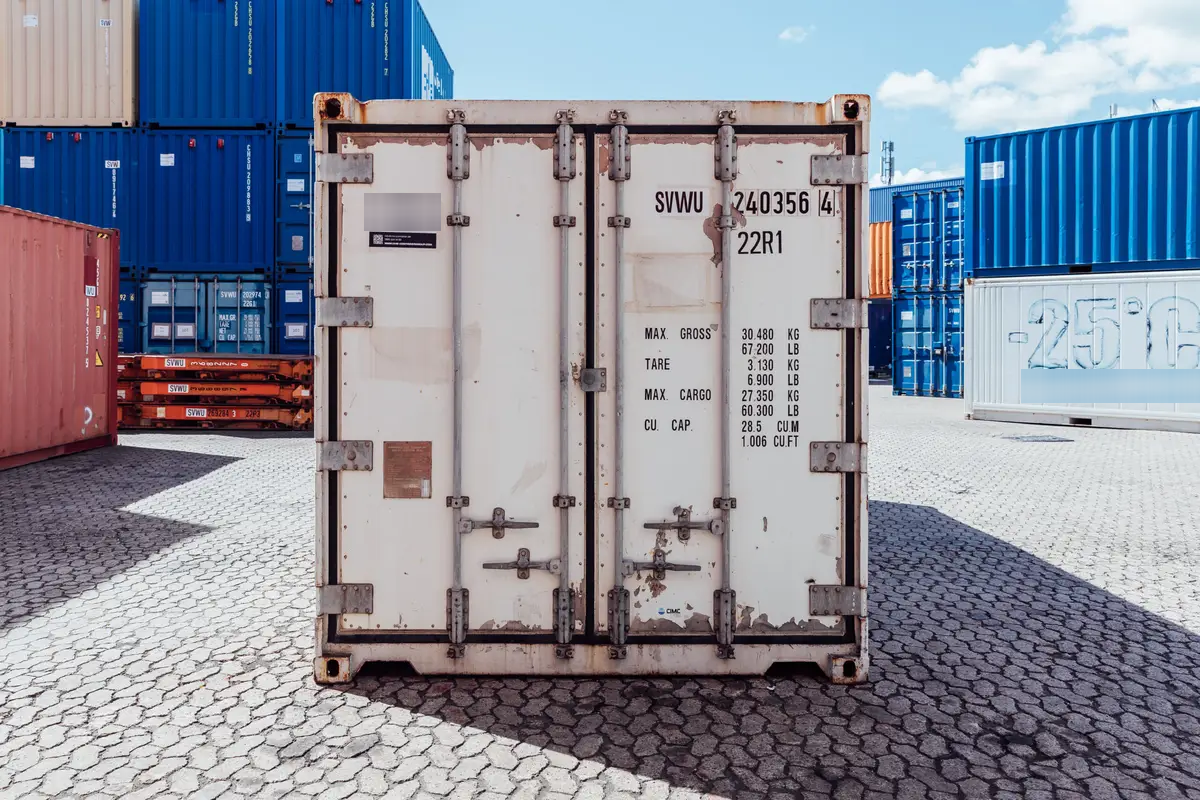
605.79 x 243.79 x 259.11 cm
2,300 kg
28 m³
Online bestellen
5.175,31 € inkl. MwSt. · Versand 702,10 € inkl. MwSt. (Kranwagen)
Zahlung per Überweisung (Bankverbindung sofort nach der Bestellung) oder per Karte / Wallet über Stripe. Bis zu 10 Einheiten sofort bestellbar, größere Mengen auf Anfrage.
Technische Daten im Detail
| Abmessungen | |
|---|---|
| Außenlänge | 605.79 cm |
| Außenbreite | 243.79 cm |
| Außenhöhe | 259.11 cm |
| Innenlänge | 545.00 cm |
| Innenbreite | 228.00 cm |
| Innenhöhe | 215.90 cm |
| Breite | 229.00 cm |
| Höhe | 226.40 cm |
| Gewichte und Kapazität | |
| Bodenfläche innen | 12.48 m² |
| Volumen | 28.00 m³ |
| Nettogewicht | 2300 kg |
| Max. Bruttogewicht | 30480 kg |
| Weitere Angaben | |
| Innenbodenfläche | 12.48 m² |
Ähnliche Container
Beliebte Umbauten
Ein 20ft Kühlcontainer gebraucht als stationärer Kühlraum
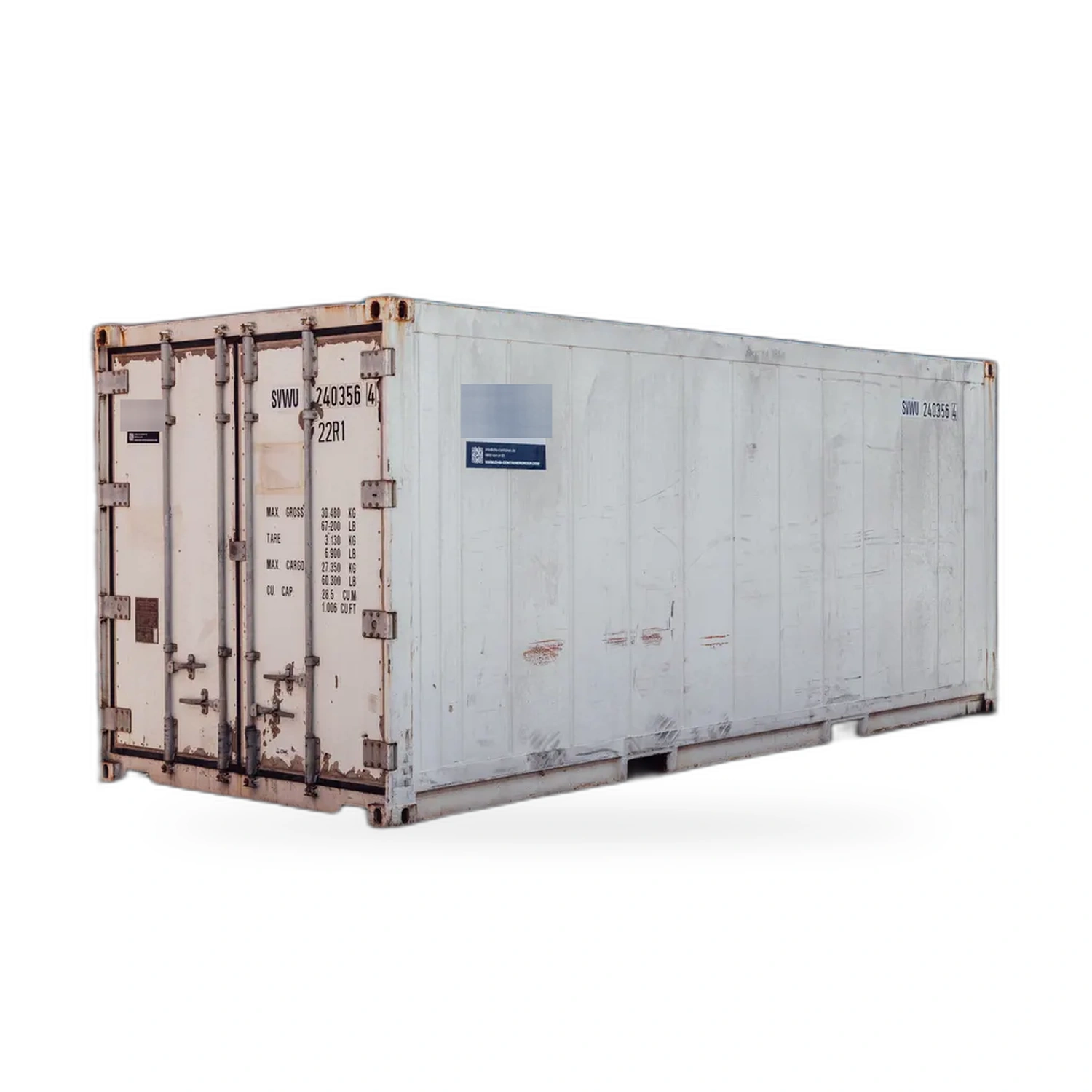
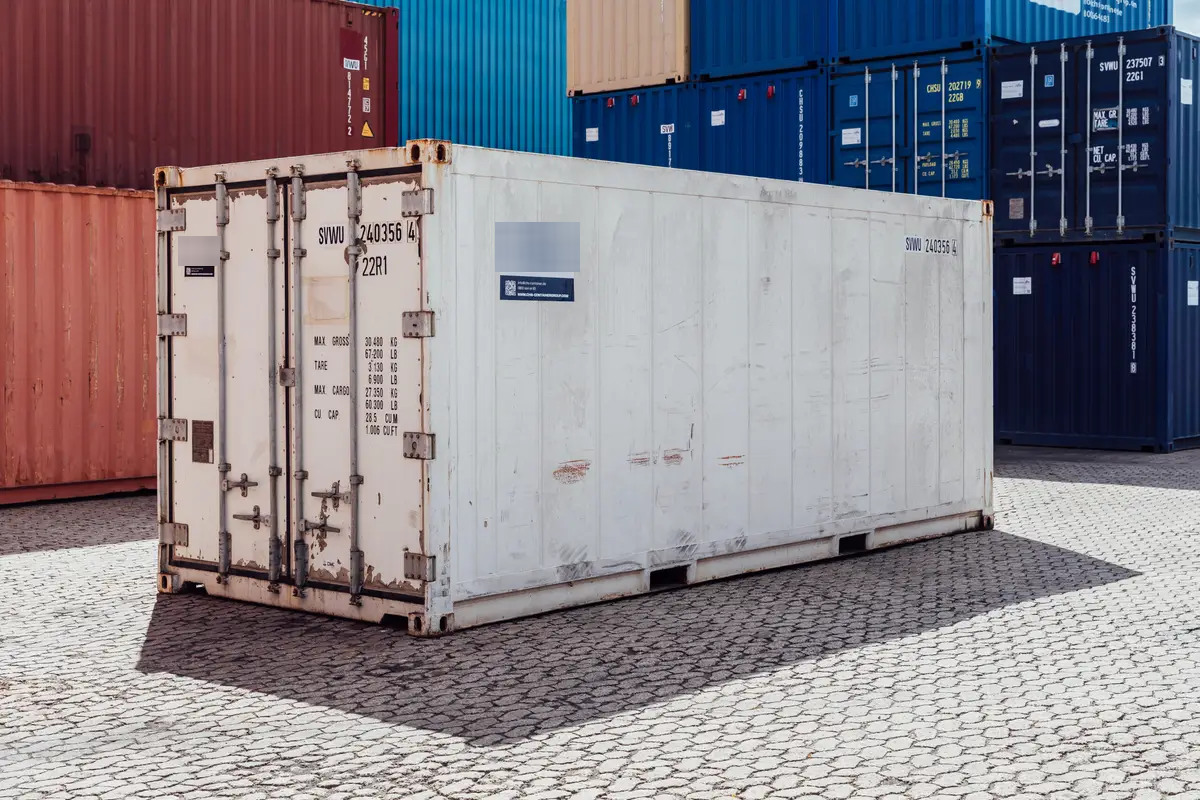
Wer einen 20ft Kühlcontainer gebraucht kauft, übernimmt in aller Regel ein Gerät, das seine Jahre im Seeverkehr hinter sich hat und nun stehen bleiben soll. Genau darin liegt der Reiz. Ein ausgemusterter Reefer ist ein fertiger, wetterfester und isolierter Kühlraum mit eigener Kältemaschine, der sich zügig per Kran auf eine vorbereitete Stellfläche setzen lässt. Gärtnereien, Metzgereien, Brauereien, Caterer, Blumengroßhändler, Labore und Veranstalter nutzen diese Bauform als Lagerkühlung, weil der Aufwand gegenüber einer gemauerten oder aus Paneelen gesetzten Kühlzelle erheblich kleiner bleibt.
Der Unterschied zur gebauten Kühlzelle liegt weniger in der Kältetechnik als in der Beschaffung. Eine Zelle verlangt Bodenplatte, Montage, Verrohrung, Kälteanlage und Inbetriebnahme durch mehrere Gewerke. Der Container bringt all das bereits integriert und werkseitig aufeinander abgestimmt mit. Dafür kauft man den Zustand mit, den das Gerät nach seinem Seeleben tatsächlich hat. Deshalb entscheidet die Prüfung über den Erfolg des Kaufs und nicht der Preis auf dem ersten Angebot.
Aufbau von Wand, Boden und Innenverkleidung
Der konstruktive Aufbau ist bei Kühlcontainern über die Baureihen hinweg gleich. Außen liegt eine Stahlhaut, die die Lasten über die Eckbeschläge abträgt, sodass Stapelbarkeit und Kranbarkeit erhalten bleiben. Dahinter sitzt eine dicke Schicht Polyurethanschaum, die in den Hohlraum eingeschäumt wird und sich mit beiden Flächen verbindet. Die Innenverkleidung besteht aus Edelstahl oder lebensmittelechtem Aluminium. Dieses Material verträgt wiederholte Nassreinigung ohne Korrosion und gibt nichts an die eingelagerte Ware ab.
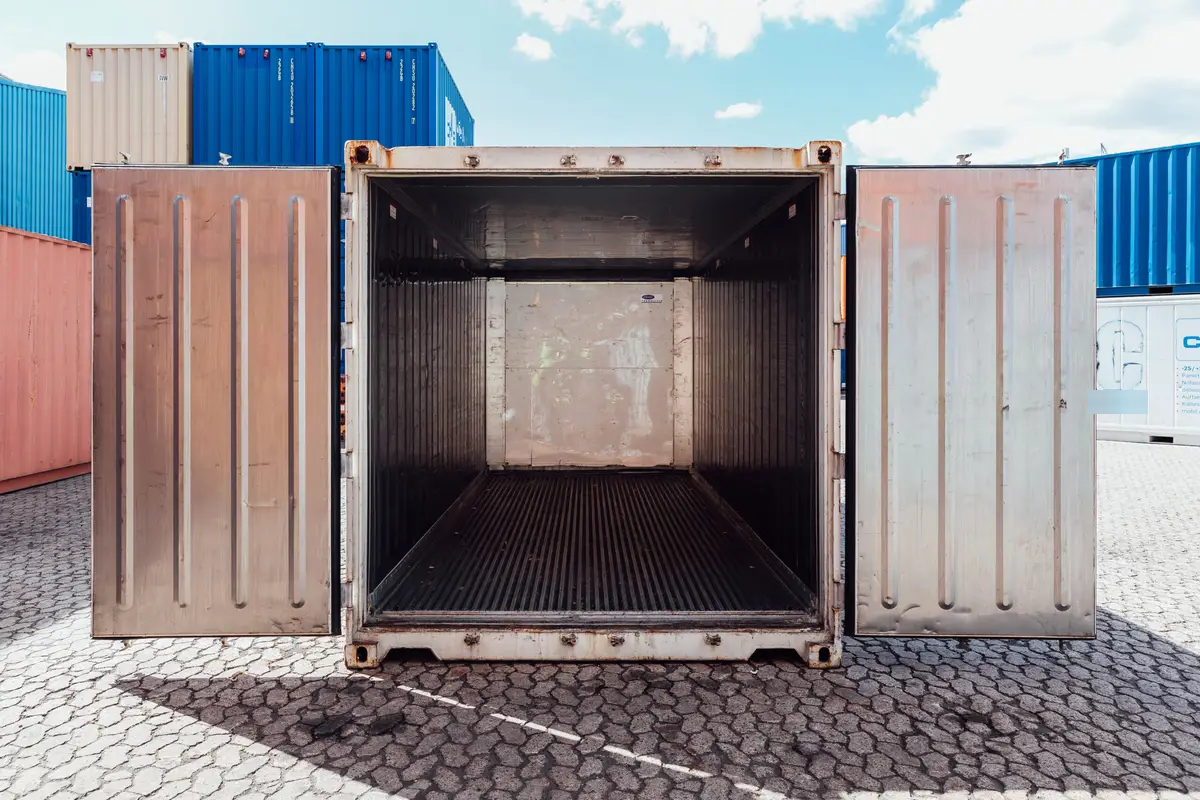
Der Boden unterscheidet einen Reefer am deutlichsten vom Standardcontainer. Statt eines Bodens aus Sperrholz liegen dort Aluminium T Profile in Längsrichtung. Die Oberkanten dieser Profile bilden die begeh und befahrbare Fläche, die Zwischenräume sind der Zuluftkanal. Die kalte Luft verlässt den Verdampfer, strömt unter der Ware nach vorn, steigt durch das Ladegut auf und kehrt unter der Decke zurück. Wer diese Kanäle mit einer geschlossenen Matte, einer flach abgelegten Palette oder dicht an die Stirnwand geschobener Ware blockiert, zerstört diese Luftführung. Das Aggregat läuft dann länger, das hintere Ende driftet in der Temperatur und der Stromverbrauch steigt. Der Verdichter kann dafür nichts.
Erfasste Maße
Für dieses Gerät sind die folgenden Werte erfasst. Nutzen Sie diese Angaben für die Planung und nicht eine allgemeine Reefer Tabelle, denn die Dämmstärke unterscheidet sich zwischen Baureihen und verschiebt die Innenmaße entsprechend.
| Angabe | Wert |
|---|---|
| Innenlänge | 545,00 cm |
| Innenbreite | 228,00 cm |
| Innenhöhe | 215,90 cm |
| Türöffnung Breite | 229,00 cm |
| Türöffnung Höhe | 226,40 cm |
| Außenlänge | 605,79 cm |
| Außenbreite | 243,79 cm |
| Außenhöhe | 259,11 cm |
| Ladefläche innen | 12,48 m² |
| Innenvolumen | 28,00 m³ |
| Max. Bruttogewicht | 30.480 kg |
| Leergewicht | 2.300 kg |
Zwei Werte bestimmen die Planung. Die Ladefläche von 12,48 m² legt fest, wie viele Palettenstellplätze überhaupt Platz finden, und die Türöffnung von 229,00 cm Breite und 226,40 cm Höhe legt fest, was hinein und wieder heraus kommt. Diese Öffnung nimmt einen Hubwagen mit beladener Palette auf, ohne dass die Ladung gekippt werden muss, und das ist im Tagesgeschäft wichtiger als das reine Volumen. Das Innenvolumen von 28,00 m³ ist der Wert, den ein Kältetechniker braucht, wenn Sie ihn zur Abkühlleistung für ein bestimmtes Produkt befragen. Die Differenz zwischen erfasstem Bruttogewicht und erfasstem Leergewicht ergibt die nominelle Nutzlast, die im stationären Betrieb selten die Grenze setzt, weil zuerst die Fläche ausgeht.
Das Kälteaggregat beurteilen
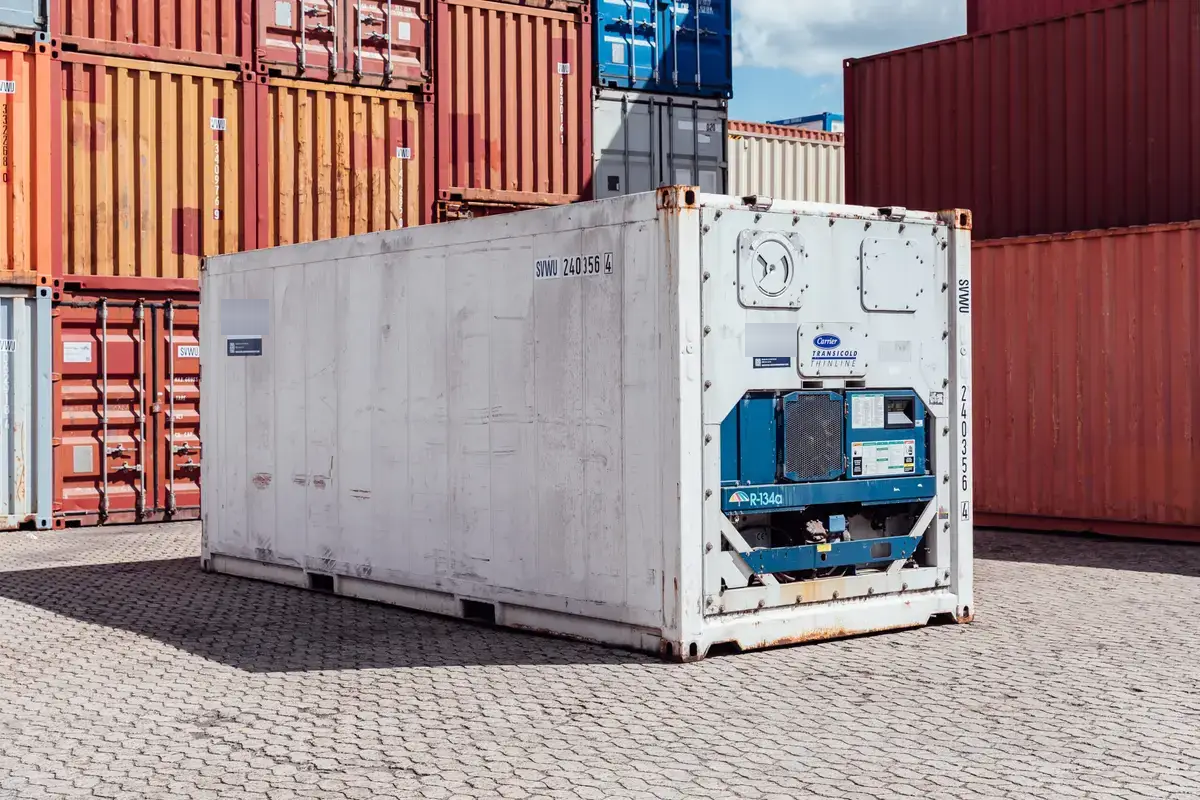
Das Aggregat sitzt als geschlossene Einheit in der Stirnwand: Verdichter, Verflüssiger, Verdampfer, Ventilatoren, Einspritzorgan, Steuerung und bei den meisten Geräten eine Frischluftklappe für atmende Ware wie Obst und Gemüse. Der Antrieb erfolgt über Drehstrom. Diese eine Tatsache schließt viele kleine Gewerbe und Privatstandorte aus. Klären Sie deshalb den vorhandenen Anschluss, bevor Sie weiter planen, denn eine nachträgliche Drehstromversorgung ist meist der größte Einzelposten des ganzen Vorhabens.
Die übliche Funktionsprüfung heißt Pre Trip Inspection, kurz PTI. Dabei durchläuft das Gerät seine Steuersequenz, kühlt auf Sollwert ab, fährt einen Abtauzyklus, die Fühlerwerte werden geprüft und Fehlercodes ausgelesen. Ein Gerät mit aktuellem PTI Protokoll ist etwas völlig anderes als ein Gerät, das ohne Prüfung im Ist Zustand verkauft wird. Fragen Sie, ob eine PTI durchgeführt wurde, wann das geschehen ist und ob das Protokoll mitgeliefert werden kann.
Diese Fragen gehören vor den Kauf
- Liegt eine aktuelle PTI vor und kann das Ergebnis übergeben werden?
- Welcher Hersteller und welcher Aggregattyp, und gibt es dafür noch Ersatzteile und Service?
- Welches Kältemittel ist im Kreislauf und hält die Füllmenge?
- Wie viele Betriebsstunden zeigt die Steuerung an?
- Lässt sich die Steuerung noch auslesen und der Temperaturverlauf herunterladen?
- Ist die Dämmung trocken? Durchfeuchteter Schaum ist der einzige Schaden, der sich nicht wirtschaftlich beheben lässt.
- In welchem Zustand sind die T Profile im Boden, ist etwas verbogen oder blockiert?
- Sind die Türdichtungen weich und durchgehend, schließen die Türen sauber?
- Was wurde zuletzt transportiert? Fisch, Zwiebeln und manche Chemikalien hinterlassen Geruch in der Verkleidung.
- Welcher Stecker, welches Kabel und welcher Reparaturschalter sind dabei?
Die Dämmung verdient die Aufmerksamkeit, die sie in dieser Liste bekommt. Polyurethanschaum wirkt über das Gas in seinen geschlossenen Zellen. Ist über ein beschädigtes Paneel, eine schlecht abgedichtete Reparatur oder eine korrodierte Bodenkante Wasser eingedrungen, wird der Schaum schwer und leitet Wärme, statt sie zu bremsen. Das Symptom ist ein Gerät, das nahezu durchläuft und den Sollwert trotzdem nicht hält, oft begleitet von Schwitzwasser oder einem Frostfeld an immer derselben Stelle der Außenhaut. Eine günstige Instandsetzung gibt es dafür nicht.
Stromanschluss und Betriebskosten
Die Betriebskosten hängen an fünf Größen: dem gewählten Sollwert, der Umgebungstemperatur, dem Zustand der Dämmung, der Häufigkeit und Dauer der Türöffnungen und der Menge warmer Ware, die auf einmal eingelagert wird. Tiefkühlbetrieb kostet mehr als Kühlbetrieb. Ein Gerät in der vollen Nachmittagssonne kostet mehr als dasselbe Gerät unter einem Vordach. Diese Zusammenhänge ändern sich mit keinem Fabrikat, weshalb das Einsparpotenzial vor allem beim Standort und bei der täglichen Disziplin liegt.
Lassen Sie die Typenschilddaten des Aggregats vor dem Kauf von einer Elektrofachkraft bewerten. Sie dimensioniert Zuleitung, Schutzorgan und Reparaturschalter und prüft, ob die vorhandene Verteilung den Anlaufstrom trägt. Ein eigener Zähler auf dieser Zuleitung kostet wenig und zeigt genau, was der Kühlraum verbraucht. Das hilft bei der Kalkulation und bei der Fehlersuche, denn ein steigender Verbrauch bei gleichem Sollwert ist meist das erste Anzeichen für einen beginnenden Defekt.
Aufstellung, Entwässerung und Bedienung
Stellen Sie das Gerät auf tragfähigen, ebenen Untergrund und nehmen Sie die Last an den Eckbeschlägen auf, nicht in der Mitte der Bodenlängsträger. Beton, schwere Gehwegplatten oder Bahnschwellen unter den Ecken erfüllen diesen Zweck. Die waagerechte Aufstellung ist aus zwei Gründen wichtig: die Türen dichten nur dann sauber ab, und das Kondensat des Verdampfers läuft nur dann so ab, wie es vorgesehen ist. Planen Sie eine Tropfstelle ein, die nicht auf einem Laufweg liegt, wo sie im Winter vereist.
Halten Sie den Bereich vor dem Aggregat frei. Der Verflüssiger gibt Wärme an die Umgebungsluft ab und braucht Raum zum Ansaugen und Ausblasen. Er darf also nicht dicht an einer Wand stehen oder mit Ware zugestellt werden. Am Türende brauchen Sie Platz für den vollen Türanschlag und für das Wenden eines Hubwagens. Wird direkt vom Fahrzeug beladen, klären Sie den Höhenunterschied und ob eine Rampe oder eine Hebebühne nötig ist. Dieser Punkt fehlt in vielen Kalkulationen.
Reinigung und Vorbereitung für Lebensmittel
Vor der ersten Beladung wird der Innenraum mit einem geeigneten Reiniger gewaschen und nachgespült, die Bodenkanäle werden über die gesamte Länge auf freien Durchgang geprüft und die Abläufe auf Funktion kontrolliert. Prüfen Sie die Verkleidung auf Durchstiche, denn jedes Loch im Innenblech ist ein Weg für Feuchtigkeit in die Dämmung. Bleibt Geruch zurück, hilft ein Leerlauf auf Betriebssollwert bei geöffneter Frischluftklappe und ein zweiter Reinigungsgang. Führen Sie ein einfaches Reinigungsprotokoll, wenn Lebensmittel eingelagert werden.
Kühlcontainer oder Standardcontainer
Man sollte offen sagen, was die Dämmung an Raum kostet. Für den 20ft Standardcontainer sind 13,84 m² Ladefläche und 33,16 m³ Volumen erfasst, hier dagegen 12,48 m² und 28,00 m³. Die Differenz sind Schaum und Aggregat, und das ist der Preis der Temperaturführung. Wer keine Temperaturführung braucht, bekommt im Trockencontainer mehr Raum für weniger Geld. Wer sie braucht, findet keinen Ersatz dafür.
Für den Gebrauchtkauf spricht ein weiteres Argument. Selbst wenn das Aggregat eines Tages wirtschaftlich am Ende ist, bleibt die gedämmte Hülle brauchbar. Viele Geräte enden als ungekühltes, aber trockenes und temperaturträges Lager oder werden mit einer modernen Verflüssigereinheit nachgerüstet. Dieser Restwert ist ein Grund dafür, dass ein 20ft Kühlcontainer gebraucht gekaufter Kühlraum eine kalkulierbare Anschaffung bleibt und kein Glücksspiel.
Was im Angebot stehen sollte
- Hersteller und Typ des Aggregats sowie ob ein aktuelles PTI Protokoll beiliegt
- Kältemittel und Bestätigung, dass die Anlage die Füllung hält
- Anforderung an den Stromanschluss sowie mitgelieferter Stecker oder Kabel
- Zustandsbeschreibung von Außenhaut, Innenverkleidung, T Profilboden und Türen
- Verkauf geprüft und funktionsfähig oder ausdrücklich im Ist Zustand
- Lieferart, Abladeverfahren und die benötigte Zufahrt für das Fahrzeug
Wer einen 20ft Kühlcontainer gebraucht mit diesen sechs Punkten schriftlich fixiert, hat die wesentlichen Unsicherheiten aus dem Kauf genommen. Danach bleibt die einfache Aufgabe, die erfassten Innenmaße mit dem tatsächlichen Warenbestand abzugleichen und den Stromanschluss fertig zu haben, bevor das Gerät auf den Hof gestellt wird.
Häufig gestellte Fragen
Worauf sollte man achten, wenn man einen 20ft Kühlcontainer gebraucht kauft?
Zuerst auf die Dämmung, denn durchfeuchteter Polyurethanschaum lässt sich nicht wirtschaftlich instand setzen und führt zu einem Gerät, das durchläuft und den Sollwert dennoch verfehlt. Danach folgen ein aktuelles PTI Protokoll, Hersteller und Typ des Aggregats, das Kältemittel, die Betriebsstunden und die Frage, ob die Steuerung noch auslesbar ist. Zuletzt Bodenprofile, Türdichtungen und Verkleidung prüfen.
Welchen Stromanschluss braucht ein Kühlcontainer?
Das Aggregat arbeitet mit Drehstrom. Ein Standort mit reinem Wechselstrom muss vorher ertüchtigt werden. Lassen Sie die Typenschilddaten des konkret angebotenen Aggregats von einer Elektrofachkraft bewerten. Sie legt Zuleitung, Schutzorgan und Reparaturschalter aus und prüft den Anlaufstrom gegen die vorhandene Verteilung. Ein separater Zähler auf dieser Leitung macht den Verbrauch sichtbar und erleichtert die spätere Fehlersuche.
Wie viel Lagerraum steht innen zur Verfügung?
Erfasst sind 12,48 m² Ladefläche und 28,00 m³ Innenvolumen bei einer Innenlänge von 545,00 cm, einer Innenbreite von 228,00 cm und einer Innenhöhe von 215,90 cm. Die Türöffnung misst 229,00 cm in der Breite und 226,40 cm in der Höhe. Damit passt ein Hubwagen mit beladener Palette hindurch, ohne dass die Ladung gekippt werden muss.
Warum besteht der Boden aus Aluminium T Profilen?
Die T Profile bilden den Zuluftkanal. Die kalte Luft verlässt den Verdampfer, strömt unter der Ware nach vorn, steigt durch das Ladegut auf und kehrt unter der Decke zum Aggregat zurück. Alles, was diese Kanäle verschließt, etwa eine geschlossene Bodenmatte oder eine flach abgelegte Palette, unterbricht die Luftführung und führt zu ungleichmäßigen Temperaturen und höherem Verbrauch.
Was passiert, wenn das Aggregat ausfällt?
Die gedämmte Hülle bleibt nutzbar. Sie ist weiterhin ein wetterfester Raum mit abwaschbarer Innenverkleidung und hoher Temperaturträgheit, der sich als trockenes Lager verwenden lässt. Alternativ rüsten manche Betreiber eine neue Verflüssigereinheit mit Verdampfer nach. Dieser Restwert ist ein wesentliches Argument für den Gebrauchtkauf, weil das Gerät auch im Störfall nicht wertlos wird.
Bietet ein Kühlcontainer weniger Raum als ein Standardcontainer?
Ja, und die erfassten Werte zeigen es deutlich. Für den 20ft Standardcontainer sind 13,84 m² Ladefläche und 33,16 m³ Volumen erfasst, hier dagegen 12,48 m² und 28,00 m³. Die Differenz entfällt auf die Dämmstärke und auf das Aggregat in der Stirnwand. Dieser Raumverlust ist der Preis für eine geregelte Temperatur im Inneren.
Passende Container & Ausstattungsoptionen
Ähnliche Produkte