Delivery included · Sales tax, where applicable, is added on the invoice
Specifications
1371.60 x 243.79 x 289.61 cm
4,000 kg
86 m³
Order online
$4,440.00 delivery included
Pay by bank transfer (bank details shown immediately after ordering) or by card / wallet via Stripe. Price includes delivery to the contiguous United States. Sales tax, where applicable, is added on the invoice.
Full specifications
| Dimensions | |
|---|---|
| External length | 1371.60 cm |
| External width | 243.79 cm |
| External height | 289.61 cm |
| Internal length | 1355.60 cm |
| Internal width | 235.00 cm |
| Internal height | 269.49 cm |
| Width | 234.01 cm |
| Height | 260.10 cm |
| Weights and capacity | |
| Interior floor space | 31.79 m² |
| Volume | 86.00 m³ |
| Net weight | 4000 kg |
| Max gross weight | 30480 kg |
| Other details | |
| Innenbodenfläche | 31.79 m² |
Related containers
Popular modifications
The box that is designed around the pallet, not the ship
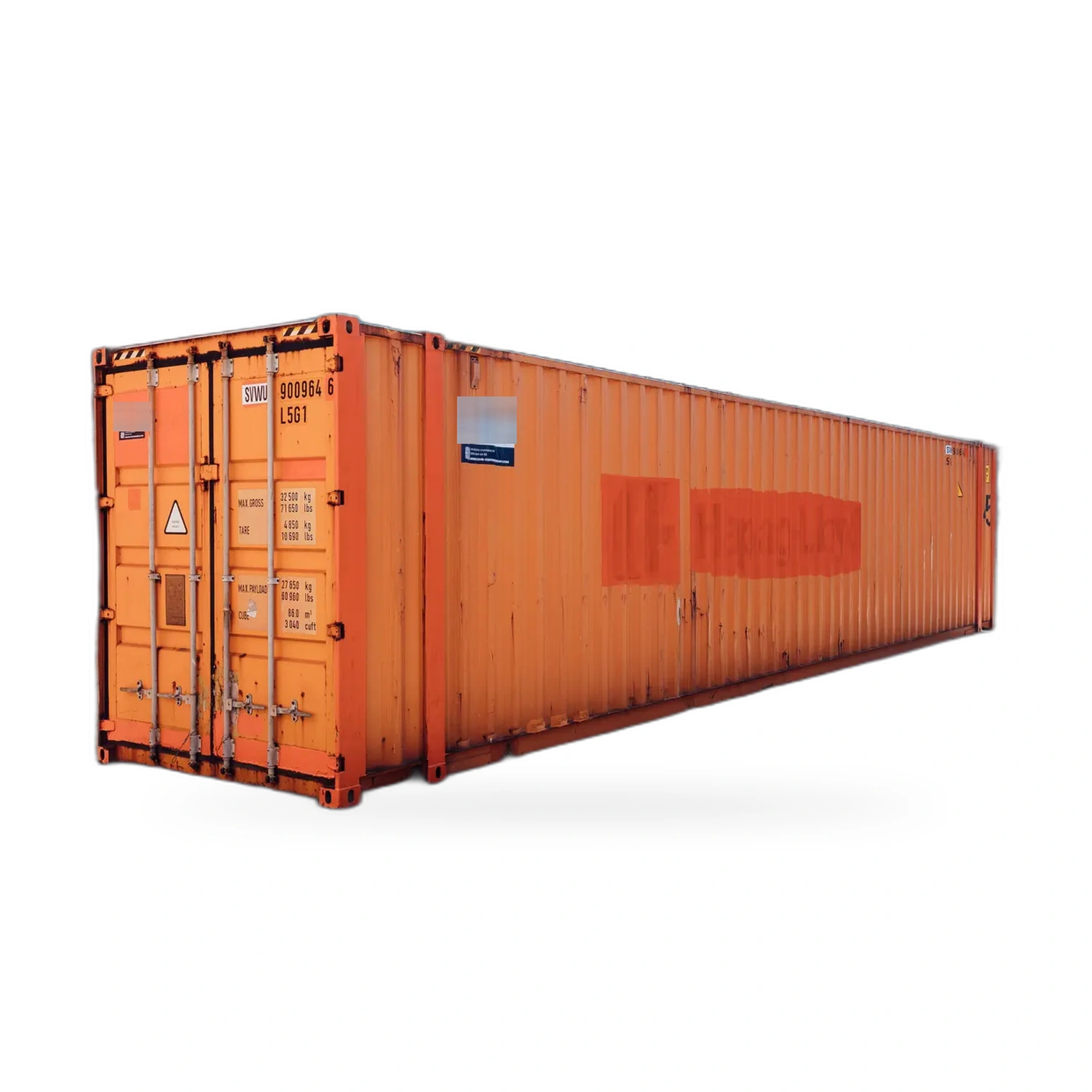
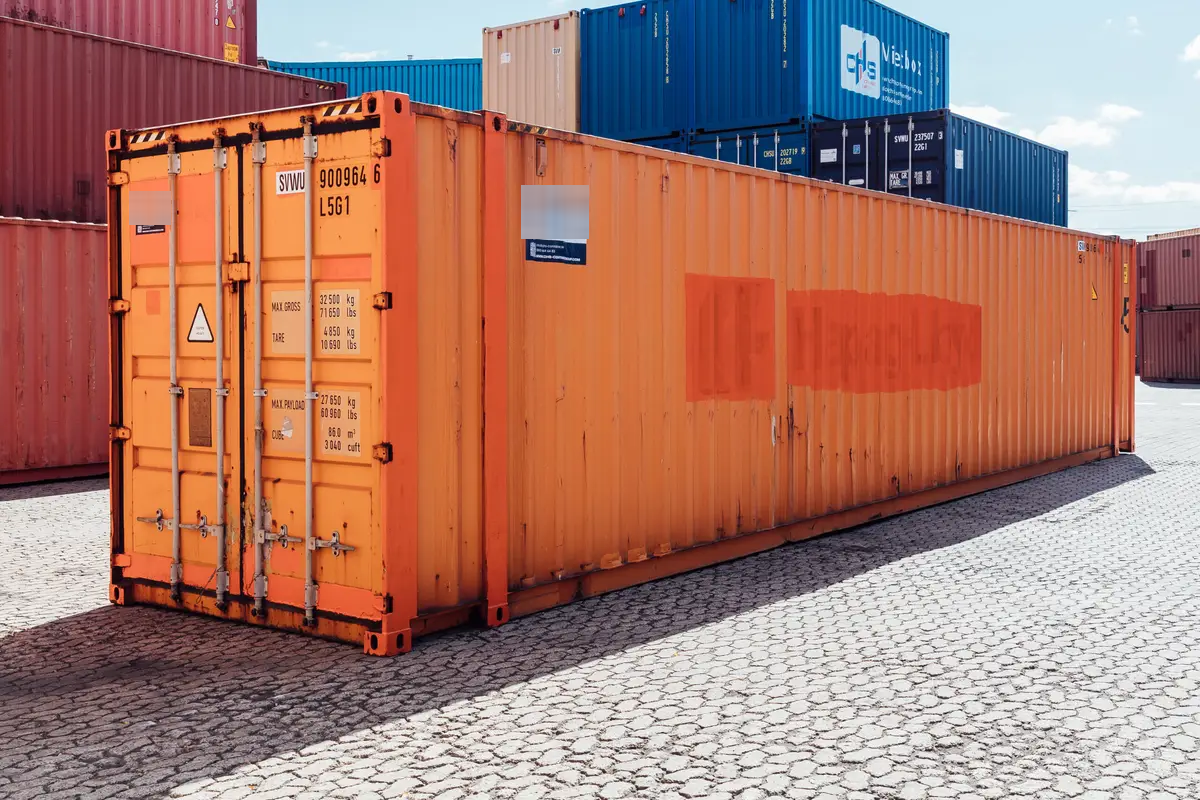
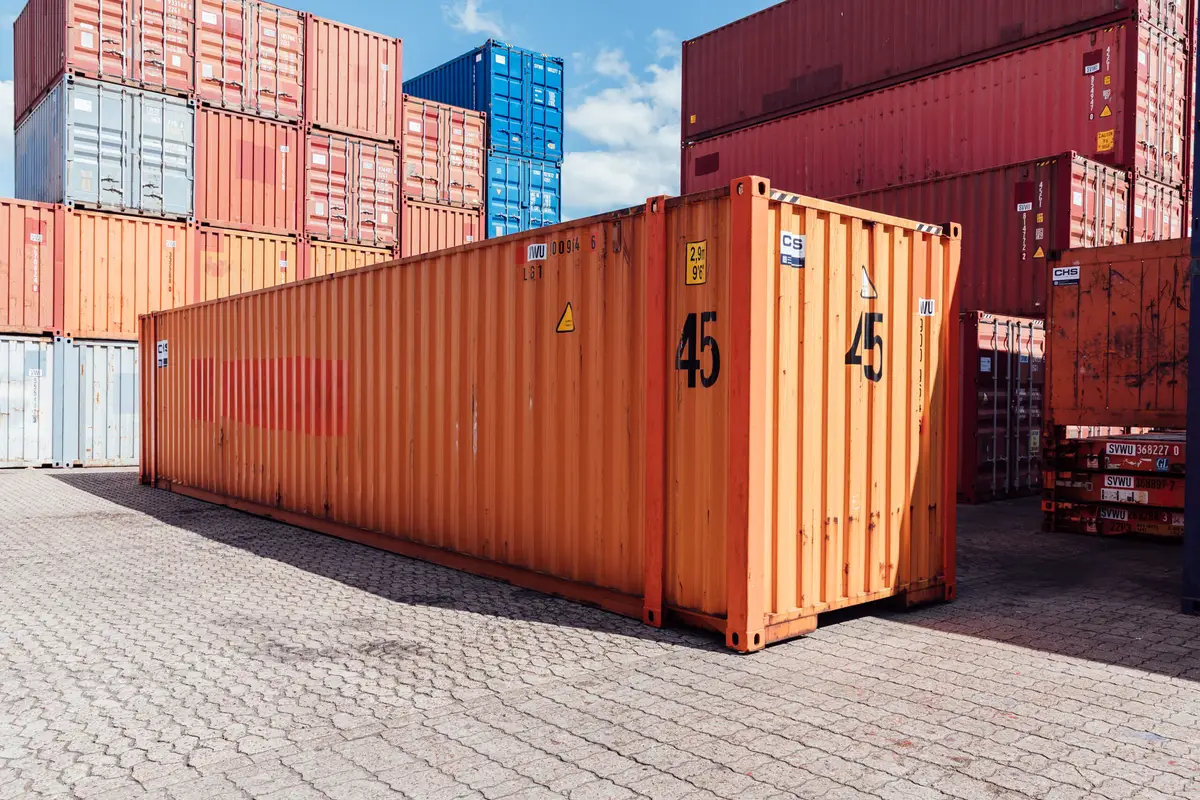
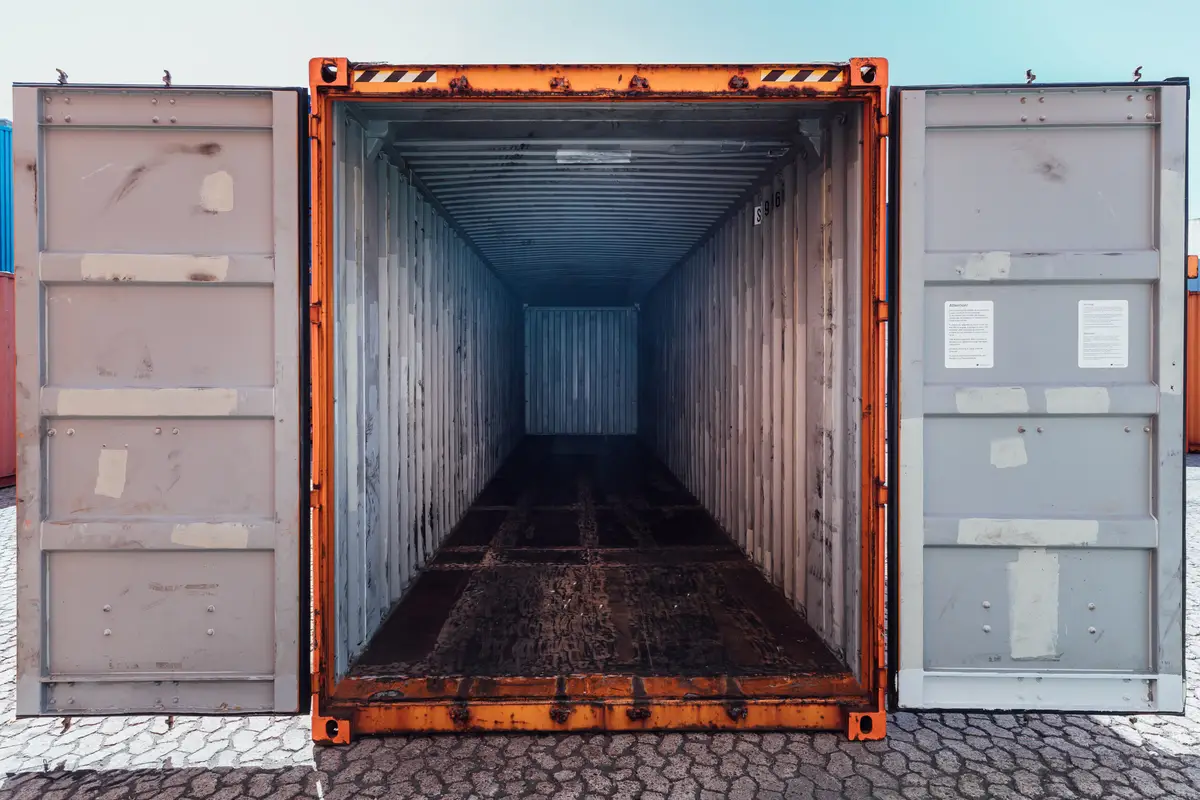
Most freight containers are sized by the transport system. A 45ft pallet wide high cube container is sized by what goes inside it. The starting point is the pallet module used across European industry: the euro pallet at 1.20 m by 0.80 m and the industrial pallet at 1.20 m by 1.00 m. Every centimetre of internal width and length either works with those modules or is wasted as a strip of dead floor running the whole length of the box. The recorded figures for this unit are an internal length of 1355.60 cm, an internal width of 235.00 cm and an internal height of 269.49 cm, giving 31.79 m² of floor and 86.00 m³ of volume. Externally it measures 1371.60 cm by 243.79 cm by 289.61 cm.
Recorded dimensions and weights
| Figure | Recorded value |
|---|---|
| Internal length | 1355.60 cm |
| Internal width | 235.00 cm |
| Internal height | 269.49 cm |
| External length | 1371.60 cm |
| External width | 243.79 cm |
| External height | 289.61 cm |
| Door opening width | 234.01 cm |
| Door opening height | 260.10 cm |
| Interior floor space | 31.79 m² |
| Volume | 86.00 m³ |
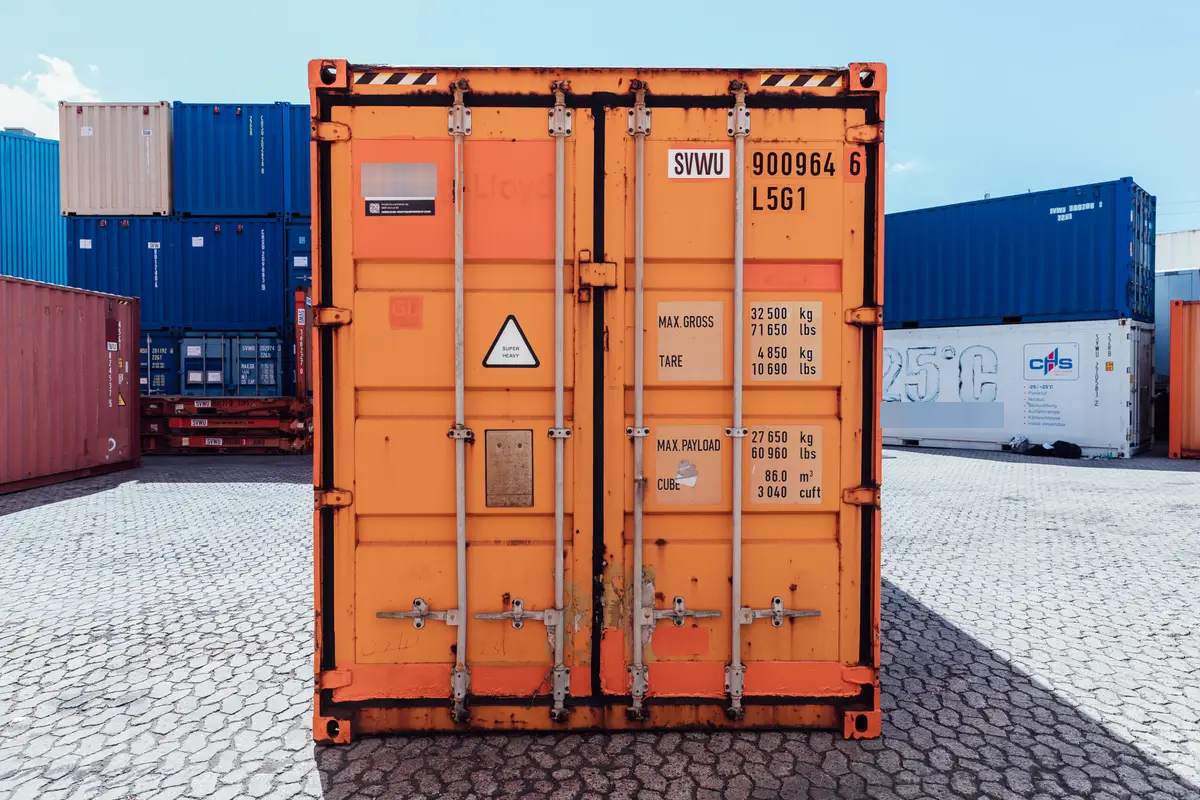
| Max gross weight | 30,480 kg |
| Net (tare) weight | 4,000 kg |
Subtracting the tare from the maximum gross leaves 26,480 kg of carrying capacity. Read alongside 86.00 m³ of volume, that gives an average density of roughly 308 kg per cubic metre before the box is full and heavy at the same time. Very little general cargo is that dense, which is the practical reason large volume boxes exist: for palletised goods, packaging, textiles, furniture, insulation, plastics and most retail freight, floor area and cubic capacity run out long before the weight rating does.
Doing the pallet arithmetic honestly
Across the width
Work from the recorded internal width of 235.00 cm. Two euro pallets set with their 1.20 m side across the container would need 240 cm, which is more than the recorded width, so that particular pattern does not close on these figures. Two euro pallets with their 0.80 m side across use 160 cm and leave 75 cm. One pallet at 1.20 m across beside one at 0.80 m across uses 200 cm and leaves 35 cm, which is a workable clearance for lashing and for getting hands or a pallet truck to the load. Two industrial pallets at 1.00 m across use the same 200 cm and leave the same 35 cm. This is arithmetic from the recorded internal width, not a loading table, and the useful conclusion is a practical one: the difference between a width that closes a two across or three across pattern and a width that misses it by a few centimetres is worth confirming in writing before you order. Ask for the measured internal width and the door opening width of the specific unit offered if a particular pattern is essential to your operation.
Along the length
The recorded internal length of 1355.60 cm divides by the 1.20 m pallet dimension eleven times with about 35.6 cm to spare, or by the 0.80 m dimension sixteen times with about 75.6 cm to spare. Eleven rows of two pallets is the simple uniform arrangement that the recorded figures support. Pinwheel and mixed orientation patterns can improve on a uniform layout, and experienced loaders routinely do better than the naive calculation, but the achievable number depends on how far the goods overhang the pallet, whether the load is shrink wrapped or strapped, whether it is double stacked, and how much room the handling equipment needs at the door end. Treat any pallet count as something to prove with your own load plan rather than a specification.
Height, and why the door sets the limit
The internal height is recorded at 269.49 cm and the door opening height at 260.10 cm. The gap of just under 10 cm is the door header and the top rail, and it is the number that actually governs loading. A load that fits under the roof but not through the aperture has to be built inside the box, which is slow, or loaded from above with the roof open, which this unit is not designed for. The same applies across the width, where the door opening is recorded at 234.01 cm against an internal width of 235.00 cm. When a load is close to the aperture, the handling method changes: low profile skates, roller tracks and pallet trucks buy back the centimetres that forks take up.
Moving a 45ft box in Europe
On the road
The single most common mistake with this size is treating it as a slightly longer forty foot box. It is not, from a transport point of view. At 1371.60 cm external length it needs a chassis, an extendable skeletal trailer or a flatbed rated and configured for 45ft, with twistlock positions that match the unit. Ask which lifting and securing positions the specific unit offers, because 45ft intermodal boxes are commonly built with corner castings at the 45ft ends and additional fittings at forty foot spacing for handling and stacking. That detail decides whether a standard yard spreader or a standard chassis can take it. Maximum vehicle dimensions and weights on European roads are set by the EU framework as transposed into each member state, and both the combination length and the total height with the external height of 289.61 cm sitting on a chassis deck need checking with the haulier for the actual route.
Rail, short sea and terminals
Large volume boxes of this length are a normal sight in European intermodal traffic, in short sea services and on rail, precisely because the extra internal length pays for itself on high volume, low density freight. What varies is handling: not every depot, crane, reach stacker or storage yard is set up for the length, and not every stacking arrangement accepts it. If the unit will move rather than sit still, confirm with your operator that the terminals on your route accept the size, and ask about the CSC safety approval plate and its examination status, since a CSC plate is what evidences approval for international transport and requires periodic examination.
Standing one on site
As static storage the extra length is straightforwardly useful, but it changes the site drawing. You need a clear run for delivery and collection that is longer than the box itself, room for the vehicle to swing, and a level bearing surface under all four corners, because the whole mass is carried through the corner castings. A long unit is also less forgiving of an uneven surface than a short one: a small dip under one corner puts a twist into the frame across a greater span, and the first symptom is doors that will not close cleanly. Concrete pads, sleepers or load spreading plates under each corner solve it. Take the same care with drainage and airflow, so the underside can dry.
New or used
This size is available new or used, and the choice usually comes down to what the box has to do. A new unit gives you an unmarked interior, uniform paint and undamaged door gear, which matters if the box will be photographed, branded, converted, lined or used for goods that are sensitive to what the previous cargo left behind. A used unit gives up cosmetic condition and gains on price. For yard storage, buffer stock, site equipment or seasonal overflow, cosmetic wear is irrelevant as long as the unit is sound. Either way, judge the individual box: roof condition, floor condition, door gaskets and locking gear, and corrosion at the lower rails and door sill.
What to confirm before you order a 45ft pallet wide high cube container
- The measured internal width and door opening width, if a specific pallet pattern depends on them.
- Whether the unit has a gooseneck tunnel, which affects both chassis compatibility and the internal floor at the front end.
- Which corner castings and lifting positions are fitted, and whether your depot and haulier can handle them.
- The condition and paperwork on the individual unit, including any CSC plate if it will travel.
- The access route, the turning space and the bearing surface at the delivery point.
- The tare, which is recorded here at 4,000 kg, since it comes off the permitted gross of 30,480 kg on the road as well as at sea.
Used properly, a 45ft pallet wide high cube container is the most volume you can put on a single road movement in this family of boxes: 86.00 m³ and 31.79 m² of floor in one unit. The reason to choose it is almost always the same, and it is a good reason. Your freight is bulky rather than heavy, and the constraint you are trying to beat is space.
Frequently Asked Questions
How many euro pallets fit in a 45ft pallet wide high cube container?
No manufacturer pallet count is recorded, so treat any number as a load plan rather than a specification. From the recorded internal length of 1355.60 cm and width of 235.00 cm, a uniform arrangement of eleven rows with two pallets across is what the arithmetic supports. Mixed orientations often improve on that, depending on overhang, wrapping and handling room.
What is the payload?
The recorded maximum gross weight is 30,480 kg and the net or tare weight is 4,000 kg, which leaves 26,480 kg of carrying capacity. With 86.00 cubic metres of volume, that works out at roughly 308 kg per cubic metre before both limits are reached together. Most palletised general cargo fills the space long before it reaches the weight.
Why is the door opening smaller than the internal dimensions?
The door aperture is recorded at 234.01 cm wide by 260.10 cm high, against an internal width of 235.00 cm and an internal height of 269.49 cm. The difference is the door header, the top rail and the frame. Because everything is loaded through that aperture, it is the door figure and not the internal figure that governs whether a tall or wide item can go in.
Can any lorry carry a 45ft container?
No. At 1371.60 cm external length the unit needs a chassis, extendable trailer or flatbed configured for this length with matching twistlock positions. The external height of 289.61 cm also adds to the loaded height on the road. Confirm the combination length, height and permitted weight with the haulier for the actual route before ordering delivery.
Should I buy new or used at this size?
It depends on the job. New gives an unmarked interior, uniform paint and undamaged door gear, which matters for conversions, branding or sensitive goods. Used trades cosmetic condition for price and is normally fine for yard storage or buffer stock. Whichever you choose, judge the individual unit on roof, floor, gaskets, locking gear and corrosion at the lower rails.
Related Containers & Options
Related Products